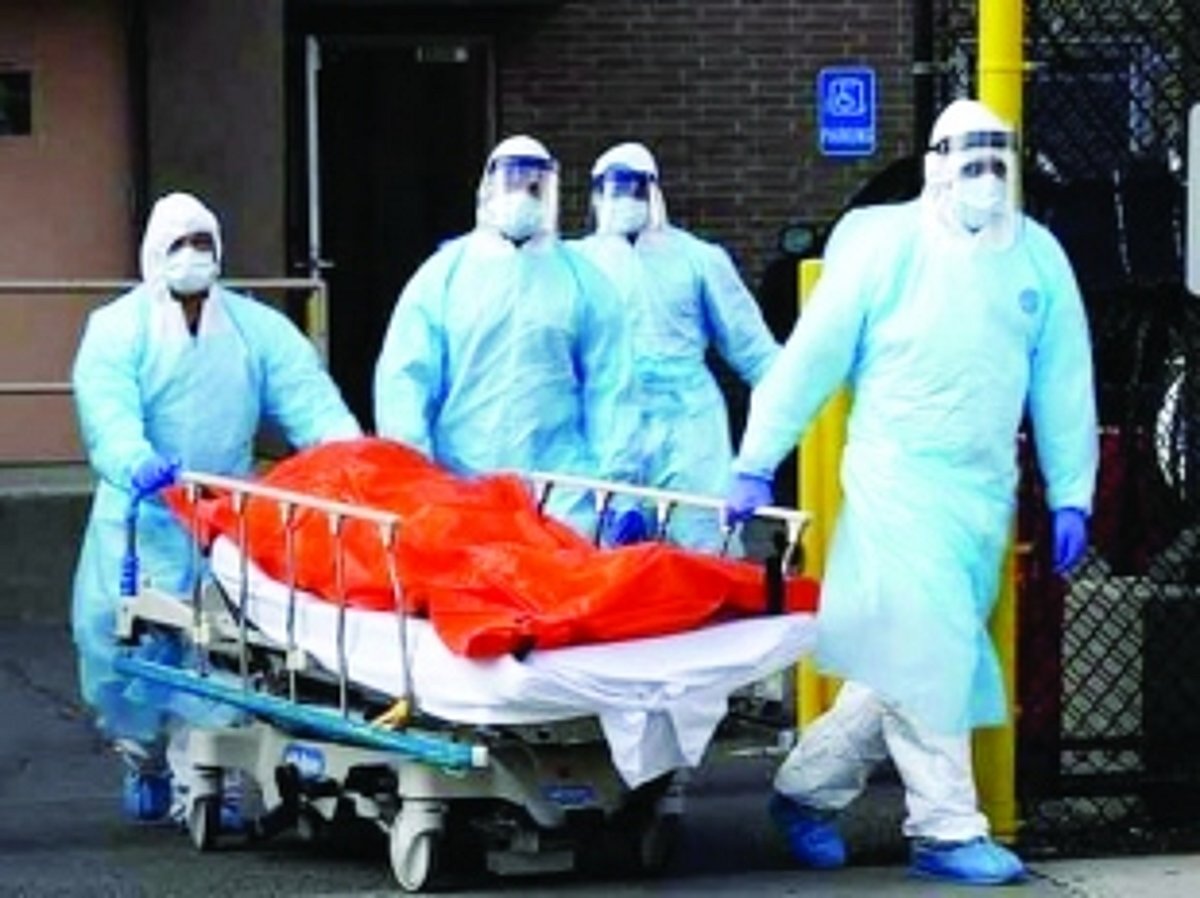
The question ‘what counts as human life?’ forces its way into our minds as we face sickness, death and loss in the wake of the global pandemic. Maybe we have to be a bit nuanced in raising this question. American feminist thinker, Judith Butler might be of help to fine-tune the question on our minds. She asks ‘whose life count as life?’ This question appears to bring light on our open question, ‘what counts as human life?’ tens of thousands of people have lost their lives in our country. It means thousands of people are facing the death and the loss of their loved ones. This tragic condition forces us to ask an even deeper question: whose life is receivables? The pandemic has reduced the death of near ones to statistic. Families do not have time to grief and even give a dignified final farewell to their loved ones. Like most things in our country even in death, the families of the dead, as well as the dead corpses, had to stand in line for their turn.
Our Government, particularly our iconic Prime Minister has gone missing at many levels. Unfortunately along with this abdication of responsibility, we saw politics over the pandemic and oxygen supply between the centre and the States. We even saw a paralysis in our vaccination drive over needless politics. Forced by a compulsion to save its image it is said that our Governments left several of our dead ones uncounted. They did not even have minimum dignity of being counted among the dead. Several Indians become deadwood because our Government wanted to save its face. This is why the question, ‘whose life is worthy of grieving?’, might manifest several shades of our society which we may best like not to see.
We have seen shortages of beds, medicines, vaccine mismanagement and depleting oxygen supply for those battling for their lives. The ugly head of black, yellow and white fungi attacking our loved ones even after surviving Covid-19 has sent shivers down our spine. We also saw some heartless insensitive among us who traded on our misery and helplessness. We also saw saints in our battle against the deadly virus which became even more lethal during the second wave. As the rising tide of the second wave is receding back amidst fears of the coming of the third wave, we still have to come to terms with the death, loss and disruption we have suffered so far. We all need a closure of the losses that are inflicted on us. The tens and thousands of families that have lost their loved ones, several among them have lost their sole bread earning member, many children have been left without their parents. Every one of these is looking for closure. We are all united in our loss and have become a grieving nation. Loss and vulnerability have become our story. But whose lives are worthy of grieving is still a question that haunts us? Our collective loss can give us a sense that it is a select minority that seems to have the luxury to grief their dead. The rest of us Indians are disposable as it is getting clear that we do not matter.
We cannot suppress the loss of our dear ones. Their memory haunts us those who are left behind. We saw disturbing images of people helplessly looking for a dignified final journey for their dead ones. We saw people burying their dead loved ones on the bank of rivers hoping the river gods will assist them in their final journey. Our River Ganga become the funeral pyre as hundreds of bodies of the dead were seen floating into it. We are haunted by the tragic loss and devastation. Our memory is short but when it comes to loss and pain of this gravity, it becomes political and will not forget all of it so easily.
We are all mourning our losses in different ways trying to bring to closure the unimaginable loss that we all are going through. Our grieving is left in the private sphere with the hope of neutralising its political sting. The memory of the loved ones is refusing to be de-politicised. All memories of pain and trauma are political and are cries for justice.
While the first wave with its hash lockdown has shown that the lives of the working-class were disposable. The sad images of our working-class making a hard and painful walk home are still lingering in our minds. But second wave became even more traumatic flashing the images of the dead and their denial of the final resting place haunting us even today. We in Goa went through a tragic dark hour in the night in our premier hospital. We witnessed the horror of our loved ones dying in the dead of the night. No one seems to have given us any reasonable explanation about these tragic events. This is why the question, ‘whose life is grievable?’ haunts us too. It opens us to the sad fact that only a few, a small minority seems to be treated as in-disposable and the rest all of us exit de facto and not de jure.
Our plight under pandemic has shown us that even the nationalism that had come to hold its sway over us could not render us countable among the privileged minority. To us who have allowed our constitution to lay dormant and had become a republic of hate and division that reduced the minorities, women, Dalits and the tribal to lesser Indians, life seems to have come full circle. The devastating pandemic has not just rendered us lesser Indians but took us further down this slippery slope and reduced us to a pathetic state of being less human. While we try to come to closures with our tragic losses, it is time that we understand the lives of all Indians matter and we cannot reduce them and their precious lives to the condition of disposability.
(Fr Victor Ferrao is an independent researcher attached to St Francis Xavier Church, Borim, Ponda)