The world has observed yet another grim human rights day. Yet another occasion to take stock of the human rights violations that are taking place.
If one looks at the situation in Goa, sadly many Goans have been forced to migrate for employment because of joblessness taking advantage of the Portuguese citizenship still available. The rights of these Goans to return to their homes are threatened by the Citizenship Amendment Act 2019, because they may not be able to return to their homes if they speak their mind out about the destruction and usurpation of land rights that is happening in their homeland. They also do not have a right to vote, which means that they cannot make felt through the ballot, their response to the Goa Government’s acquiescence to recently enacted Central laws like Major Port Authorities Act 2021, and the National Waterways Act, 2016. As a matter of fact, even those of us who have not affirmed the Portuguese citizenship, do not have a voice in the decision making with respect to the areas now coming under the purview of some statutory authorities. Not any more, the possibility of discussions at gram sabhas with regard to these areas. This is also the case with the Smart City Mission, where a body called the Special Purpose Vehicle is provided the autonomy to take decisions.
As if that is not enough, the Railways Act has been invoked for acquiring land for double tracking although the Act clearly provides that the act can be invoked only for Special Railway Projects, when there is nothing special about the double tracking that the Government has proposed. It is clear that the Railways Act was invoked to circumvent State obligations under The Right to Fair Compensation and Transparency in Land Acquisition, Rehabilitation and Resettlement Act, 2013, which was enacted for the very purpose that its name suggests.
Looming large on the Indian firmament is a vague construct of an Uniform Civil Code, which it is feared will neither respect the rights of women in the family, nor their rights to their religious or secular beliefs. The discussion is veered towards ‘uniformity’ rather than rights, causing one to wonder whether this Code is not meant to bull doze one upmanship of one religion over all the rest and to achieve a bland equality that makes sense to no one and does not speak to the lived experiences of women, with family laws, including the family laws of Goa that are loosely called the Portuguese Civil Code.
Also labour codes have been enacted that have the effect of putting workers at the disposal of the whims and fancies of corporates, although posited as laws that are consolidated for easy access. The gig economy, the work from home, the IT and IT Enabled services, and home based work, are all casualties of these labour codes. Just like the farmer laws were although they were dressed up as pro farmer laws. It is a challenge today for farmers to sustain their livelihoods through farming due to climate change which has resulted from not heeding the calls of people and environmentalists to the impending disaster. If we have no fields and we unduly focus on tourism, “when my son grows up, what will he eat – tourists, transistors or stones?” the Malaysian poet Cecil Rajendra had once asked.
The rights of Scheduled Caste and Scheduled Tribe persons to employment are threatened because the Constitutional protection of right to equality in the form of reservations is not upheld by the State. The State seems to somehow find a way not to hold accountable those who do not duly get their post-based rosters duly verified.
As for the human rights of persons with disability, they are threatened first because of lack of physical access to the forums for justice like the courts, and also because methods of quantifying the extent of disability when it comes to those with disabilities of mental illness are not duly prescribed yet.
If one looks at the access of people to basic utility services and administrative services and to basic infrastructure like toilets, these are severely threatened by an unaccountable administration that makes people run from pillar to post, get this document and that, with no criteria properly set out as to what documents work and what documents don’t, the citizens charters notwithstanding.
As for migrant workers, laws related to contract labour and to migrant workers are far from implemented. A peep into how many workers have been registered as migrant workmen will tell you the grim story of how these laws are effectively evaded, appropriate services not provided, resulting in many migrant workers defecating in public and for no fault of theirs, earning the ire of the local people, when in fact it is the employers who should be held accountable.
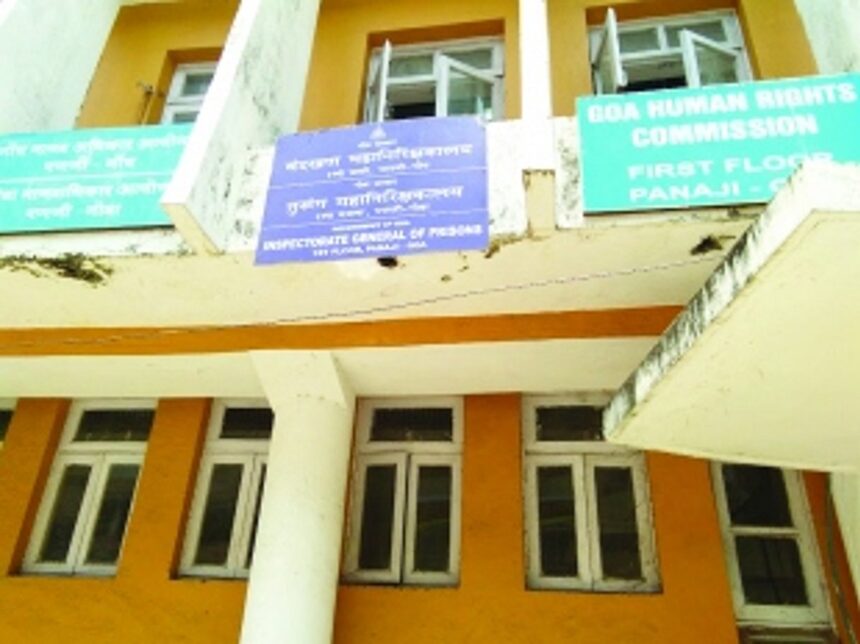
The Human Rights Institutions like State Human Rights Commission, State Commission for Protection of Child Rights, and State Commission for Women, are an eye-wash, because the autonomy they should have had is completely restricted by the fact that the purse strings for their functioning are held by the State. These bodies therefore become like the proverbial monkeys held by the strings of the state. Sadly, none of the current incumbents of these bodies have even gone public about the restrictions, thereby actively contributing in reducing these bodies to a farce.
However, the time tested message that the Government must get loud and clear is that repression begets revolt. Today women’s rights groups, children’s rights groups, Dalit rights groups, trade unions, farmers groups, are forming a bond of solidarity to raise both their common issues, as well as the specific concerns of the particular segment of society. The active solidarity among these marginalised sectors can alone foster the change we want to see – of justice with peace and equity.
(Albertina Almeida is a lawyer and human rights activist)