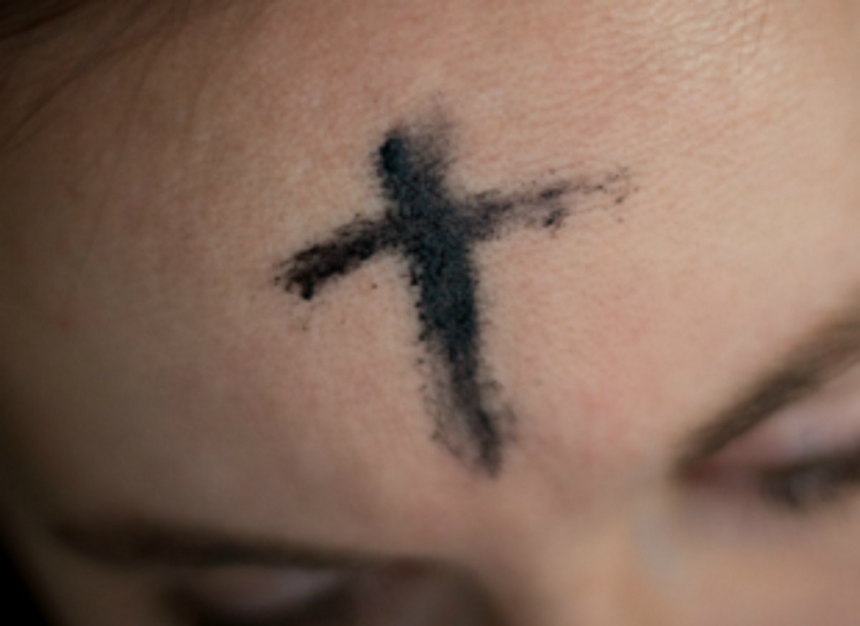
Ash Wednesday is a solemn reminder of human mortality and the need for reconciliation with God and marks the beginning of the penitential Lenten season. It is commonly observed with ashes and fasting. In the modern Roman Catholic Church, the ashes obtained by burning the palms used on the previous Palm Sunday are applied in the shape of a cross on the forehead of each worshipper on Ash Wednesday.
Together with Good Friday which marks the crucifixion of Jesus before Easter, Ash Wednesday is an obligatory day of fasting and abstinence, where only one full meal and no meat are to be consumed. Ash Wednesday is a holy day of obligation. It is traditionally one of the most heavily attended non-Sunday masses of the liturgical year.
The origins of Ash Wednesday can be traced back to ancient Rome. There, sinners and penitents dressed in sackcloth were sprinkled with ashes to start their period of public penance on the first day of Lent. The ashes symbolise both death and repentance. During this period, Christians show repentance and mourning for their sins, because they believe Christ died for them.
Also, on Ash Wednesday, Good Friday and all Fridays during Lent, adult Catholics over the age of 14 abstain from eating meat. When priests mark Christian’s forehead with the ashes they often say, “Repent and believe in the Gospel,” or “Remember that you are dust, and to dust you shall return.” This special day begins our Lenten journey. It is the start of 40 days of prayer, penance and almsgiving as we prepare ourselves to celebrate the resurrection of our Lord Jesus Christ on Easter Sunday. But why does Lent begin on a Wednesday, and what is the significance of ashes?
The word Lent is from an Old English term meaning springtime, and by the second century the term was being used to describe the period of individual fasting, almsgiving and prayer in preparation for Easter. Initially, people fasted all 40 days of Lent. They ate one meal a day and only an amount of food that would sustain survival. But the Church taught, and people believed then as now, that fasting is not about what we eat, it is about changing hearts, interior conversion, reconciliation with God and others.
It’s about living in an austere way, giving from our abundance to the poor. So when we go to that early Mass on Ash Wednesday morning and receive the blessed ashes on our forehead, we are repeating a pious act that Catholics have been undergoing for over 1,500 years. Like all those before us, we unhesitatingly embrace this invitation to sanctity, this time to turn away from sin.
We are part of that great number of witnesses who through all the ages have donned the ashes, publicly acknowledging that we are Christians, Christians who have sinned and seek to repent. We acknowledge that “we are dust and to dust we shall return.”