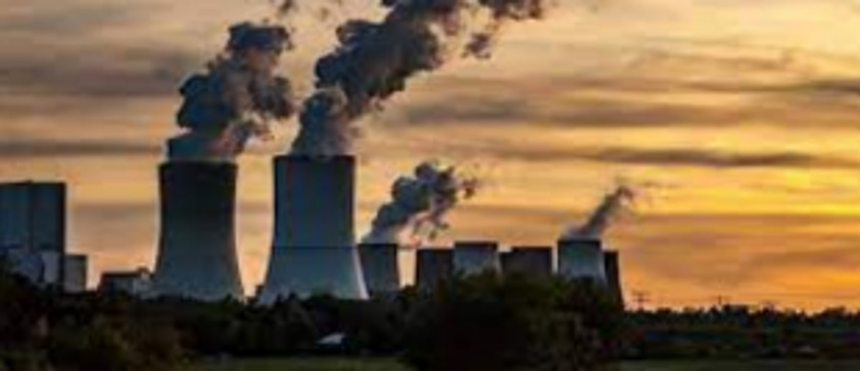
It has been a while since global warming has been knocking at our doorstep, but all the policy makers did not want to acknowledge the elephant in the room. Inter-governmental Panel on Climate Change (IPCC) has released its sixth Assessment Report (AR6) and has rung alarm bells for all the countries with its explicit statement “Global warming is unequivocally caused by anthropogenic activities”. This is the first time when all the scientists have had a consensus.
Each of the IPCC reports has developed ’emission scenarios’, that are actually ‘predictions’ with each of them having equal likelihood of occurrence. Such predictions are much bigger unknowns than the variables from the past assumed to calculate such scenarios.
I, along with other geologists did ascribe the global warming phenomenon to be largely controlled by geological processes rather than human. These include strength of the Sun, changes in the Earth’s orbit, axial tilt and precession, quantity of greenhouse gases in the atmosphere, ocean currents and carbon dioxide content, volcanic eruptions, meteorite impacts and changes in land cover. About 18000 years ago, the world was 6 degrees cooler than today. In contrast, at the AR3 (in 2001), scientists predicted about 6 degrees warmer world in the worst case scenario by 2100. In 2021, this prophecy has partly come true (in AR6) when the temperatures are poised to rise by 1.5 degrees by the next 20 years and by 2 degrees by the end of 2050. The planet has been recording many firsts in quick successions in terms of highest average temperature, incessant rainfalls, frequency of floods and droughts, forest fires, heat-waves to name a few evidenced by higher number of extreme weather events (227 between January-July 2021 as opposed to 157 in 2011).
It is also harshly true that even if all the countries meet the zero-emissions target immediately, the planet is still going to see temperature stabilisation of up to 1.5 degrees warmer due to Earth’s thermal time lag. The natural carbon sinks (oceans, forests and soils) of the planet have reached their tipping points. Though India’s share in the global CO2 budget was a mere 3 per cent for the period between 1870 and 2019, India can be the torchbearer for innovations in climate solutions. Energy derived from fossil fuels, the main drivers of climate change since the industrial revolution, has been at a centre stage of any discussion. It has been hard for countries to drive fossil fuels off the table due to their easy availability and utilisation.
The primary implication of global warming is climate extreme. Goa has been slowly threatened by higher average temperatures, erratic & excessive rainfall, lowering duration of winters, lesser agricultural productions, destruction of crops & landslides in hilly areas. The next critical effect of global warming is the melting of permafrost regions leading to rising sea levels. Major towns of Goa are situated close to the coast, thus, even a metre rise in sea level threatens to inundate such areas.