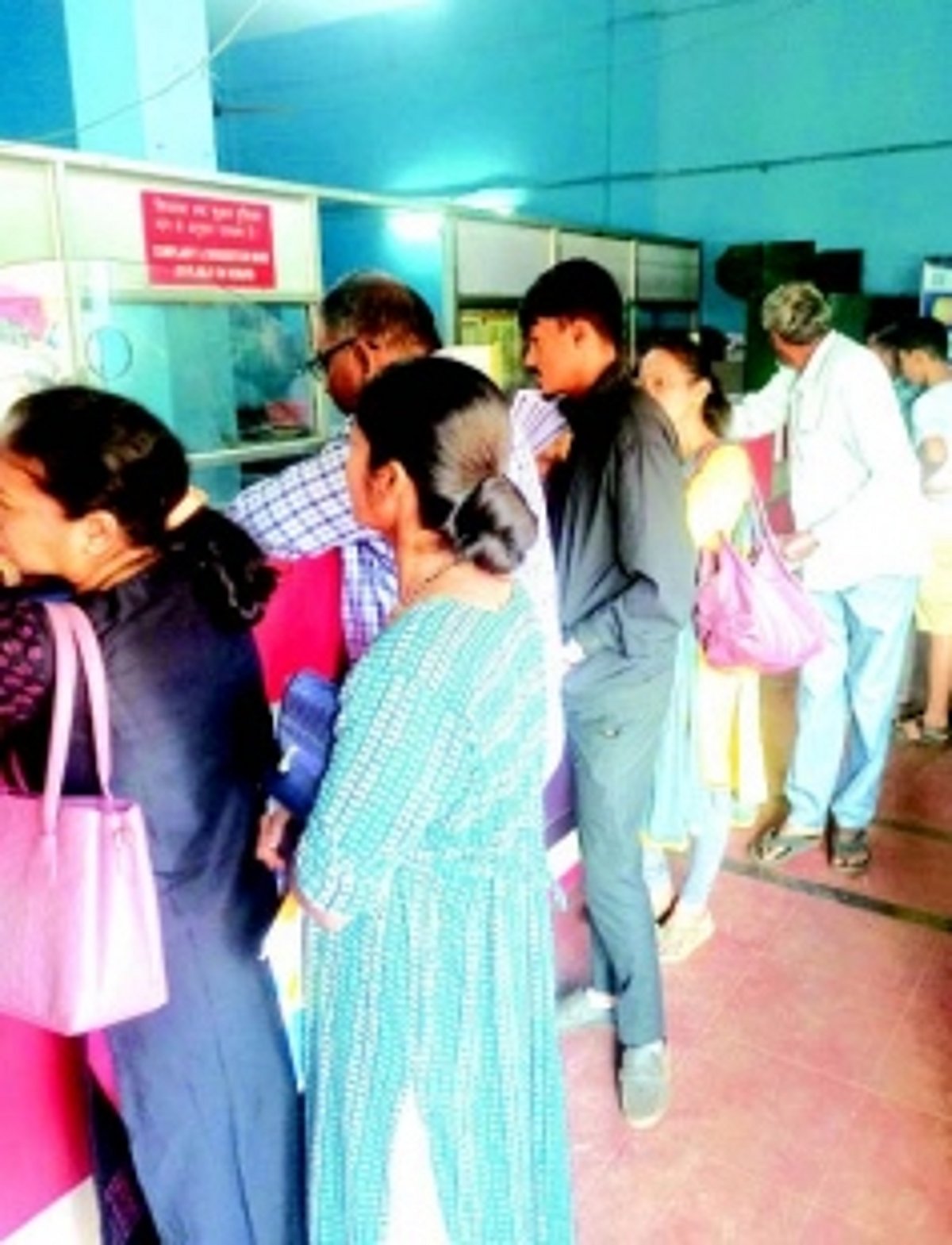
Hunger has been described by Nobel laureate Amartya Sen as ‘quiet violence’. Every day 3 out of 4 Indians bear this quiet violence in their lives. The 2023 report on food security and nutrition which was released by the United Nations on December 12, this year said that 74.1 percent of Indians (over a billion people) could not afford a healthy diet in 2021.
The report from the Food and Agriculture Organisation and other UN agencies has estimated that India’s proportion of undernourished population at 16.6 per cent during 2020-22. This report echoed the 2023 Global Hunger Index which was released a couple of months ago. India’s position in the GHI has slid into a horrific 111th rank among 125 countries.
Though the Centre did not accept either of the reports, experts pointed out a contradiction between the government’s denial and its own estimate that around 813 million people require food assistance. Last month, the Union cabinet extended the scheme for five more years.
On the UN estimation of over a billion underfed Indians versus govt’s estimation of 813 million, Raj Shekhar, national coordinator with the Right to Food Campaign, a non-govt network campaigning for food security said, “The 813 million estimate is based on the 2011 census – the next census is overdue by two years. Without the new census, many needy people won’t have the ration cards that will entitle them to PMGKAY benefits.”
Economists pointed out that over 10 crore deserving Indians would not get the benefit of the five-year extension of the free ration programme for the poor because of the govt’s failure to conduct the population census.
Amid rising hunger and poverty, India has produced more billionaires than many developed countries. As per the data from the World of Statistics, India is home to 169 billionaires – the third highest in the world after the USA (735) and China (495). India, where over a billion people could not afford a healthy diet, has more billionaires than developed countries like Germany (126), Russia (105), Italy (64), Canada (63), UK (52), Australia (47) and Japan (40).
Manmohan Singh once said, “India happens to be a rich country inhabited by very poor people.” It highlighted the contrast between our resources and poverty. The time has come to say that India happens to be a country of very poor people inhabited by many billionaires. It will highlight a glaring inequality in India.
As per the 2022 World Inequality Report, the economic reforms adopted by India have benefited the top 1%. It is observed that the deregulation and liberalisation policies implemented since the mid-1980s have led to “one of the most extreme increases in income and wealth inequality in the world”. It suggested that a modest progressive wealth tax be levied on multimillionaires as it could generate significant revenues for the govt because of the high concentration of wealth.
Contrary to the prescription to levy more tax on the super rich, write-off of huge amounts of bank loans has been done for some rich businessmen without much ado while subsidies to the poor are questioned as rewdis.
The report points out that 31.7% of children of our country under five years of age are the victims of stunted growth. Policy makers must pay heed to what the former World Bank president, Jim Yong Kim had said on hunger and child stunting in India a few years ago, “This is the bottom line: if you walk into the future economy with 40% of your workforce having been stunted as children, you are not going to be able to compete.” Our first priority should be to improve the health of our children.