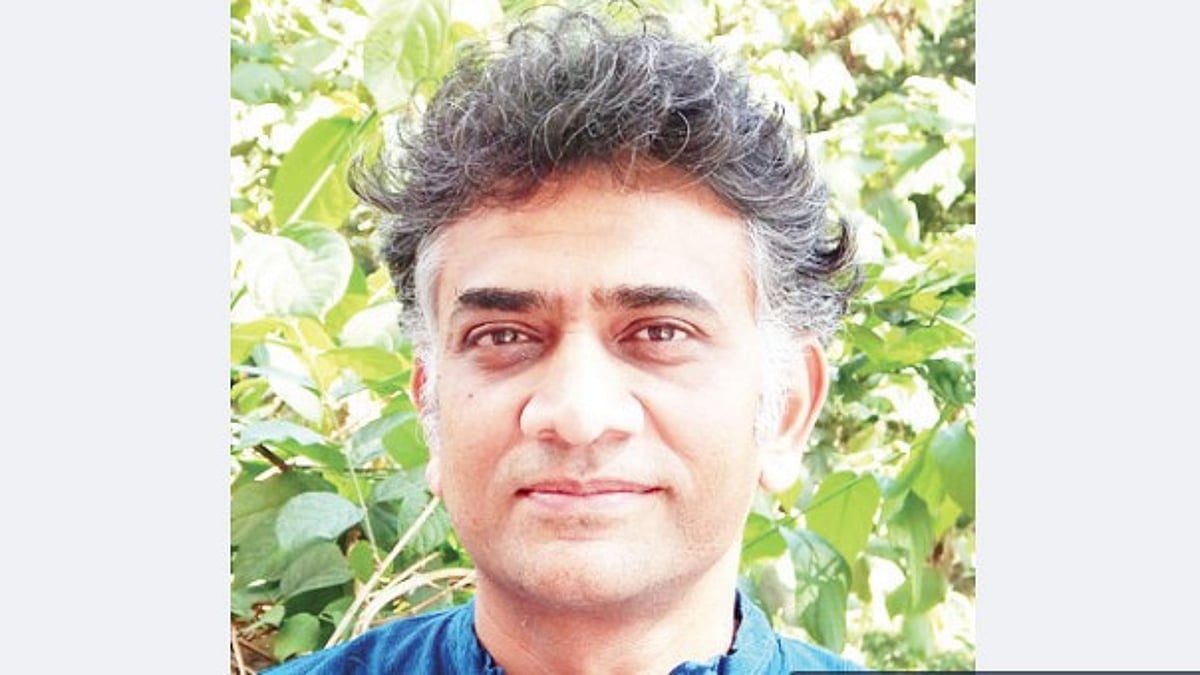
In the last two days, two significant statements have come from two prominent leaders in Goa. Chief Minister Pramod Sawant and former Railway Minister Suresh Prabhu. Both statements reflect contrasting views on Goa’s development trajectory, raising fundamental questions about governance, public participation, and the price of progress.
Chief Minister Pramod Sawant, speaking at a programme in Betul, accused certain groups of deliberately opposing development projects and hindering progress. He remarked that while critics are quick to highlight the dust pollution caused by mining, they ignore the financial benefits and employment it generates. According to Sawant, this opposition stems from a reluctance to see the upliftment of ordinary citizens. In contrast, Suresh Prabhu, speaking at the Shigmotsav programme in Quepem, emphasised that Goa’s development must be carried out with the consent and involvement of the local population. He reminded the government of its legal obligation to hold public hearings before approving any major project, warning that failure to do so would make such projects vulnerable to legal challenges.

This stark difference in perspectives underscores the widening gap between the government’s development agenda and the people’s right to be heard. While Sawant views opposition as a barrier to progress, Prabhu highlights the democratic deficit in the decision-making process. The most critical issue that Prabhu raised—public hearings—exposes a glaring flaw in Goa’s development model. How many of the major projects approved in recent years have undergone public scrutiny?
Legally, public hearings and Environmental Impact Assessments (EIA) are mandatory for mining, thermal power, and large infrastructure projects such as roads, highways, ports, and airports. Mining projects in Goa have faced public scrutiny, but infrastructure projects are often approved without consulting the affected communities. Why is this happening? Why are public hearings bypassed when projects threaten to alter the social and environmental fabric of the state?
Take the case of the proposed Borim Bridge. Farmers have consistently demanded an EIA and a public hearing, fearing that the project would destroy the centuries-old Khazan land, which serves as the backbone of their agricultural livelihood. Despite this, the government has proceeded with the project without addressing these concerns. The affected farmers have been forced to approach the National Green Tribunal (NGT) for relief. Instead of engaging with the local community, the government has chosen to delay presenting its case in court—effectively stalling the legal process while pushing ahead with the project.
A similar pattern of high-handedness can be seen in the controversial railway double-tracking project. Locals in Velsao claim that the land being used by the Railways for expansion is their ancestral property dating back to the Portuguese era. Their demand is simple: verify the ownership records before proceeding. But instead of addressing this legitimate concern, the railway authorities have gone ahead with landfilling and construction, cutting off access to local roads and damaging the residents’ properties. The government’s response? A familiar shrug of helplessness—claiming that they cannot interfere with railway work. This abdication of responsibility reflects a deeper governance failure. Public hearings were never held, and local voices were effectively silenced.
Against this backdrop, Sawant’s statement that “development comes with dust” reflects a troubling mindset that pollution and environmental degradation are acceptable trade-offs for economic progress. This cavalier attitude toward environmental protection is mirrored in the State’s growing legal battles over development projects. Numerous cases have been filed against the government in the High Court, challenging land acquisition, environmental damage, and procedural violations. The recent Bombay High Court ruling, striking down Section 17(2) of the Town Planning Act, is a clear rebuke of the government’s tendency to bypass democratic norms to favour vested interests.
If Goa’s development is to be truly inclusive, the government must abandon its dismissive stance toward public opposition. Projects that affect people’s lives and livelihoods cannot be imposed without meaningful consultation and consensus. Development at the cost of democratic values and environmental stability is not progress—it is regression. Goa deserves better.