Maharashtra Navnirman Sena (MNS) chief Raj Thackeray on Saturday questioned why actors Vivek Oberoi and R. Madhavan have chosen to live in Dubai despite publicly praising Prime Minister Narendra Modi and his government’s development agenda.
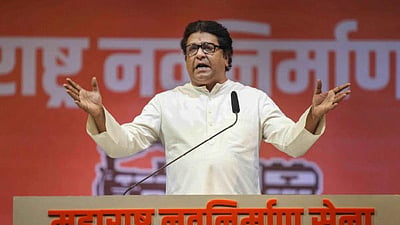
Addressing the 20th anniversary celebrations of the Maharashtra Navnirman Vidyarthi Sena, the student wing of the MNS, in Mumbai, Thackeray launched a sharp attack on the BJP-led Central government, alleging that many industrialists have left India in recent years while supporters of the government have chosen to settle abroad.

Referring to Vivek Oberoi, who portrayed Prime Minister Narendra Modi in the 2019 biographical film PM Narendra Modi, Thackeray said it was contradictory for the actor to reside outside India while expressing support for the Prime Minister.
“Vivek Oberoi, who made a film on Modi and played Modi’s role in it, has also gone to live in Dubai,” Thackeray said during his speech.
He then turned his attention to actor R. Madhavan, questioning his decision to settle in Dubai despite his praise for the Prime Minister.
“Ask where R. Madhavan stays. He lives in Dubai. If you love India so much, if you love PM Modi, and if you believe that PM Modi is developing India, then why are you living in a foreign country? Why are you living in Dubai with your families?” Thackeray asked.
The MNS leader also used the occasion to criticise the Centre’s economic policies, claiming that thousands of industrialists had “packed up their bags and left” India. He argued that those who publicly endorse the government’s development narrative should also choose to live and invest in the country.
Thackeray’s remarks came during an address marking the student wing’s 20th anniversary and are the latest in a series of political attacks directed at the BJP-led government. His comments quickly drew attention on social media, where they sparked debate over whether public figures’ choice of residence reflects their political beliefs or personal and professional considerations.
Neither Vivek Oberoi nor R. Madhavan had publicly responded to Thackeray’s remarks at the time of writing.
The comments add a new dimension to the political discourse in Maharashtra, where the MNS has often targeted national issues while positioning itself as a vocal critic of the ruling establishment. With political activity intensifying ahead of upcoming elections, Thackeray’s statements are likely to remain part of the broader debate over governance, development and the choices made by prominent public personalities.