The villagers of Saleli were united and leaving peacefully despite facing lot of hardships due to the rising dust pollution caused by a stone-crushing machine installed by their landlord, Rane (not Pratapsingh Rane) family.
This was before December 28, 2005. But that December afternoon everything changed for the village. Prithiviraj Rane, son of late Krishnarao Rane, had come to inspect another site for a stone-crusher in the village. The frustrated and agitated villagers attacked him and Rane was killed by the mob with the entire village witnessing the incident.
Since then, there is an unspoken but deeply felt divide in the village between the rich landlords, the Ranes, and the Gaonkars, many of them tenants of the village. Time may have thawed tensions a wee bit but the scars are still fresh.
Now 12 years later, Pandurang Artharkar, the then driver of Vishwajit Krishnajirao Rane, whose brother was killed by a mob in Saleli in 2005, has recorded and released a video, where he purportedly narrated, how his employer had killed Shanu Gaonkar in 2006, a year later, in a revenge attack. Rane, again according to the driver’s video, believed that Gaonkar was involved in the killing of his brother a year ago.
Saleli is a small village at the edge of the Western Ghats in Sattari taluka with 150 odd houses. A decade ago the village lived on its agricultural produce, while others worked as farm hands or labourers. A few more worked in private and government offices in the area.
Nature and the environment were close to the hearts of the villagers since there was no other source to make their livelihood. Since the stone-crushing activity in the area created a lot of pollution, villagers started resenting their landlords, the Ranes, who, earned from stone crushing activities, a village elder explained to Herald.
“It was not only the issue of tenancy rights but it affected their livelihood and their health which deteriorated day by day due to the pollution caused by the crushing machine in the village,” said another villager.
Herald spent a day in the village to relive the memories of 2005 and 2006 with the villagers of Saleli. Some of the people are still living on a land which does not belong to them but some others have either purchased the land or are in the process of taking the ownership of their residential areas.
People are reluctant to speak openly and are afraid of disclosing their names fearing a backlash from their landlord.
“We had spent almost four months at the temple post the incident, no one was residing in their houses. It is not in the protest but we all were united in the village, the unity is still there,” another resident told Herald.
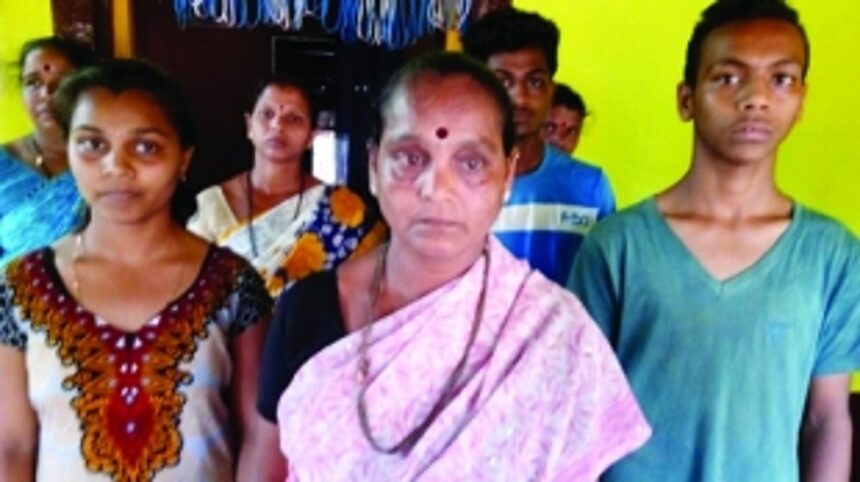
There were six people from the village against whom charges were framed (for allegedly having a hand in the killing of Prithiviraj Rane, the brother of Vishwajit Krishnajirao Rane, the BJP candidate from Poriem in the 2017 elections). They were put behind bars but the court acquitted all of them in September 2009. All six are now living in the same village. While some are working in private sector others have turned to agriculture to make their livelihood.
The division between the tenants and the landlord is not openly visible but can be felt in the conversation with the villagers. Though Vishwajit Rane doesn’t show the difference, he claims he has forgotten the past. “We have to live in a same village with the same villagers,” he said.
Saleli is a beautiful village at the foot of the Western Ghats with around 150 houses and 750 voters divided in three vaddos (wards). The distance of hardly one metre between the houses indicates the unity and peace prevailing in the village, which the elders seek more than violence.
But this is just the surface. The recent video has made a tear on this peaceful fabric.