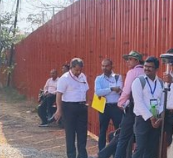
84 workers having a field day at Ela Farm
By Bindiya Chari
PANJIM, AUG 1
Why does Ela Farm at Old Goa have 84 field workers even though it has less area under cultivation than other farms of the agriculture department?
In fact, 84 fields workers at Ela Farm are virtually having a field day while the agriculture department continues to bear huge expenditure in terms of salaries of staff to the tune of Rs 2. 12 crore annually , while it’s income has been meagre Rs 11.83 lakhs for 2009-2010.
Most field workers posted at Ela Farm hail from the constituency of Agriculture Minister, Vishwajit Rane.
In the last three years 94 persons were recruited by the agriculture department with majority of the recruitments being from Sattari taluka .
“After their recruitments they were posted at various farms of the department but they managed to revoke their transfer orders,” an agriculture officer informed on condition of anonymity.
“Most of them don’t do any work and run home early but they are not questioned for obvious reasons,” he complained .Information obtained by this reporter under the Right to Information (RTI) Act revealed that Ela Farm has 13.75 hectares of area under cultivation with 84 field workers whereas Coddar farm in Ponda has 58.02 hectares of area under cultivation with hardly 29 workers to cater to mango, cashew, oil palms and arecanut plantations. Plus, it also grows vegetables and needs more fields workers to maintain the large plantations.
So also Kalay Farm in Sanguem taluka which has about 47 hectares of area under cultivation with major crops being cashew, mango, coconut, oil palms and vegetables has 49 field workers.
Even Pernem farm which has 10 hectares of area under cultivation has only eleven field workers.
The agriculture department owns nine farms, of which, seven are operational and have been maintained at a very huge cost (see box down) and the recruitment of “unproductive” field workers has further enhanced burden of the department.
84 workers having a field day at Ela Farm
PANJIM, AUG 1 Why does Ela Farm at Old Goa have 84 field workers even though it has less area under cultivation than other farms of the agriculture department?