It’s been nine months since their huts were demolished. But the much promised dawn in the lives of these tribals in Ponda taluka, has not broken.
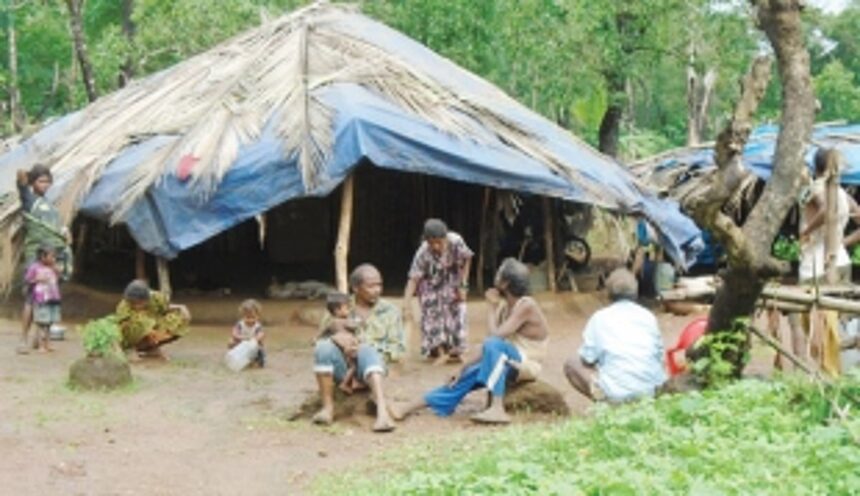
The members of the Vanarmare tribe of Nirankal have been are forced to lead a primitive life. They are hoping that the government will improve their standard of living by providing them with houses, thereby fulfilling their long-awaited dream.
The ground reality at Nirankal is that the tribe members live in temporary huts with a solar lamp. While there are streetlights in their area, their homes are not lit by electricity.
Herald travelled to the Nirankal to see how the forgotten Vanarmare tribals were doing. The Vanarmare tribe leader Gopal Powar, said, “It’s nearly nine months since our huts were demolished at Gawalwada at Nirankal in Bethora Panchayat and our standard of living has not improved. The government after inspecting the area provided temporary relief in the form of streetlights, water tank etc. but it has failed to provide us with houses and toilets forcing us to go out in the open to answer nature’s call.”
“We have been kept waiting for our dream house,” Gopal Powar complained saying that the area being hilly, rainwater floods their huts during monsoon as there are no gutters. “We have dug a trench but during monsoons, we are forced to spend sleepless nights due to the damp conditions in our huts. As a solution, we have covered the floor with plastic.”
He further informed that recently the Ponda Deputy Collector visited the area following reports of flooding in some of the huts and had called for remedial measures.
“Last year, we were assured by the government that it will provide us with houses and toilets. But it’s nine months and there is no word from the government. Our main dream is to get proper houses, education and jobs,” he said.
Powar said, “We have Aadhaar, ration and election cards and voted during the recently concluded assembly and panchayat elections. We even promised the politicians, who visited us during the elections, votes, to improve our conditions.”
Thanking the media for highlighting their plight, he said, “Due to the media coverage, we got solar light in our huts, electricity poles have been installed, and water tanks too have been provided and but we now hope that the government will fulfil our dream by providing us with houses.”
Currently there are 16 huts with around 90 people including 45 senior citizens and school students residing in them.
Powar further complained that the tribe members work as labourers in the bagayats and in some fields owned by the locals but they are paid comparatively lower wages.
Ponda Deputy Collector Navnath Naik informed that he recently visited the area twice and found that the rainwater was flowing in the area. He said he had directed to take remedial measures to control the situation.
He said the government has provided relief by providing water storage tanks, streetlights and monetary aid as compensation. The tribe members have also been provided with cement poles and plastic covers to cover the roofs.
Naik said that the PWD AE has been directed to construct toilets for the tribe members and assured that the same will be constructed soon.
“Around 17 families are residing in the area and we are trying our level best to provide them with the basic amenities, he said.
When asked to reply to the pucca houses demand, he said, “We have sent the proposal to government and are awaiting further instructions.
It may be recalled that fearing their permanent settlement at Nirankal, some unknown locals allegedly damaged their huts and threatened them to leave.
However, when an NGO approached the Human Rights Commission, it directed Government to provide basic amenities to the tribe members. The villagers refuted the allegations from the tribe members that the sarpanch and a group of locals had damaged their huts. The locals had demanded that the State or Maharashtra government to rehabilitate the tribe members out of the village.
At present two policemen have been posted in the area to provide round-the-clock security.