LOUTOLIM: The villagers of Loutolim haven’t forgotten the sleepless nights spent grappling with ways to protect their ancestral agricultural land and the decision to take away this land without considering stakeholders’ viewpoints, resulting in hundreds of farmers taking to the streets, weighs heavily on their minds.
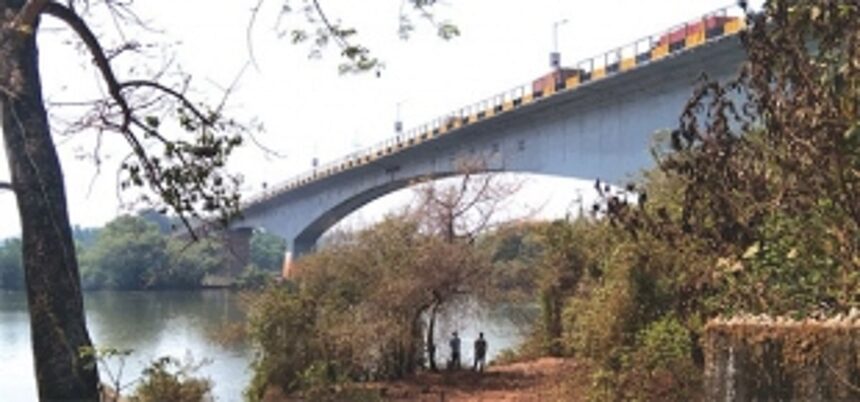
The land acquisition process for the proposed new Borim bridge has left a lasting impact, highlighting the need for fair and inclusive decision-making that respects the heritage and livelihoods of those affected.

The revelation that the decision on who to vote for will hinge on this issue in Loutolim reflects a deep concern at rhe loss of identity and livelihoods.
The alignment proposed by the Public Works Department (PWD) and approved by the Union Ministry of Road, Highways, and Transport has sparked strong criticism from the villagers of Loutolim.
They believe that their voices have been disregarded in the decision-making process, with little consideration given to the potential environmental impacts.
The Loutolim gram sabha members previously voiced strong criticism against the government for neglecting to engage the panchayat or villagers in discussions regarding the project.
The selected alignment faced vehement objections due to its substantial environmental implications, especially concerning Khazan lands and Coastal Regulation Zone (CRZ) areas.
Additionally, outdated traffic studies suggested a decrease in traffic on the Margao-Ponda section after 2022, casting doubt on the effectiveness of the chosen alignment.
Of particular concern is the plan to build the bridge on stilts and columns, which, according to the villagers, would necessitate the construction of an approach road for transporting materials. This road, they argue, would inevitably lead to the filling of Khazan lands and the destruction of crucial agricultural fields.
The discontent within the community has been formalized through a unanimous resolution passed by the Loutolim gram sabha. In response to widespread protests within the village, the gram sabha firmly rejected the land acquisition for both the new Borim Bridge and the associated bypass road.
Joana Fernandes, the Sarpanch of the Village Panchayat Loutolim, said that the issue had upset the villagers. She emphasised that this discontent may lead villagers to carefully consider their voting decisions.
Even the panchayat body was kept uninformed about the land acquisition process for the new proposed Borim bridge. This lack of transparency and consultation with local bodies suggests a disregard for their input and undermines their role in decision-making processes, she stated.
Sarpanch reiterated a fundamental principle: there is no justification for pursuing development at the cost of environmental destruction.
While bridges and roads can be rebuilt, the same cannot be said for agricultural land and the broader environment once they are destroyed, said Sarpanch.
Pascoal Costa, a farmer from Loutolim, voiced his anger and frustration at the decision that threatened to destroy both livelihoods and the fertility of the land.
“The decision to acquire land for a new bridge will destroy our livelihood and the fertility of the land. The land currently being without the use of chemical fertilizers cannot be simply replaced. Using agricultural land for infrastructure projects like the new Borim bridge will destroy farming,” Costa said.
The main concern
The plan is to build the bridge on stilts and columns. This will need the construction of an approach road for transporting materials. This would lead to the filling of Khazan lands and the destruction of agricultural fields.