In a country where serious illness often forces families into debt, long hospital visits and quiet compromises, a deeply personal account by a Goa entrepreneur has struck a chord far beyond the State, reopening conversations on survival, self-reliance and preparedness in middle-class Indian homes. Writing about an experience that shaped his childhood and adult life, Raj Kunkolienkar recalled being in the fifth grade when he first learned to read his parents’ silence. They were talking late at night in the kitchen, “in that particular hush that parents use when they think children are asleep”. He caught fragments – “Bombay. Tests. Something about a doctor.” The next morning, everything appeared normal. Chai, school, the shop. “But I had heard the frequency shift,” he wrote.
It was 2004. His father was 39. The family had just moved out of the room behind their kirana store – a chawl on the outskirts of Panjim – into a proper apartment. Their first EMI had begun. Things, he wrote, were “looking up in the way they do for Indian middle-class families… slowly, carefully, one calculated risk at a time”. Then came the diagnosis: Stage 3 follicular lymphoma. As a child, he did not know what lymphoma meant. “There was no internet to tell me, no Google to spiral into” Cancer, he believed then, was something from movies “something that happened to people in cities, in dramatic hospital scenes with violins”. Not, he wrote, “to shopkeepers in Goa. Not to fathers who opened shutters at 7 am and counted change at night.”

His parents kept him in the dark, believing it was best not to disturb his studies. “The logic was simple: don’t disturb the boy’s studies.” So he went to school, came home and did homework. And in the margins of that ordinary life, his father was taking buses to Mumbai for chemotherapy. “A biopsy, then a bus. Chemo, then the overnight journey back. Tata Memorial to Kadamba bus stand.” The same man who winced when he cut his finger slicing onions was now travelling eight hours each way with poison in his veins, “because what else was there to do?” Goa did not have the facilities, and the family did not have the money for flights or hotels. While his father travelled for treatment, his mother ran the shop not helped out, but ran it. “Wholesale orders, inventory, customers, credit books, all while scans showed the cancer spreading. “The word ‘spreading’ did a lot of work in those days,” he wrote.
He remained a child through much of it, and admits to being selfish in the way children often are -“not out of cruelty, but out of not knowing”. His father was alive and “not going bald”, so he assumed things were fine. He remembers crying for days because he wanted a geared cycle. “All my friends had them.” He remembers his parents’ faces when he would not let it go “that particular exhaustion of people who cannot explain why they’re saying no, because the explanation would break something”.
Every rupee mattered, though he did not yet know it. He did not know that the family was borrowing money from friends, relatives and sometimes even customers – “the same aunties who haggled over soap prices” quietly lending cash to keep his father alive. “That’s the thing about the Indian middle class,” he wrote. “The safety net is made of relationships.” His father later spent 40 days in Mumbai for radiation therapy, staying with elderly parents while his wife kept the shop open back home. He never spoke about those days, “Men of that generation don’t,” Kunkolienkar wrote. “They just endure, and then they come home, and life continues as if nothing happened.”
By 2007, the cancer was in remission. But remission, he wrote, “doesn’t mean freedom”. It means waiting. “Every annual check-up is a held breath.” The knife, he said, “never really leaves it just hangs higher for a while.”
Financially, the impact lasted far longer than the illness itself. It took the family until 2015 to recover – eleven years. “A whole decade of my adolescence was spent in the aftermath of something that happened in three months,” he wrote. In 2012, he received admissions to colleges abroad. His mother urged him to reconsider. She did not say they could not afford it. She asked one question: “What if it comes back?” He stayed back, studied in India on scholarship and made what he described as “the practical choice… the safe choice”. The cancer did return in 2022, this time in a more aggressive form. His father underwent treatment again, including CAR-T therapy as part of a clinical trial. There was a brief remission. Then there was not. He passed away in 2023.
This time, Kunkolienkar wrote, things were different – not emotionally, “you’re never ready for that”-but financially. He could go “all out”. Best doctors. Best facilities. No borrowed money. No overnight bus journeys. “When the bill came, I could pay it.”
“The CAR-T didn’t work. Cancer won anyway,” he wrote, “But I sleep at night.” He sleeps knowing he did everything that could be done, without the tormenting question of whether more money might have changed the outcome. “That guilt would have eaten me alive. It would have been worse than grief.” The account, written in his own words, was read by over 5.8 lakh people within a day, drawing responses from across social media and reflecting how widely its themes of illness, uncertainty and survival resonated.
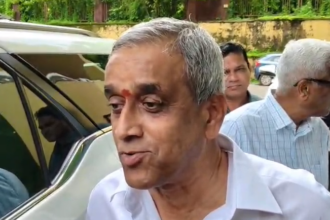
Responding later, Kunkolienkar said he had been meaning to write the account for some time and was overwhelmed by the response it received. “Did not expect this,” he wrote, asking readers to take care of their families. Sharing a video of his father recorded during a brief remission in 2023, he described him simply as “a fighter”. Kunkolienkar, who is from Panjim, is married to Renuka Figueiredo of Aldona, and the couple has twin baby girls. At its heart, the account carries a simple message to families quietly grappling with medical crises and financial strain. “Get some insurance,” he wrote. “And take your parents out for dinner while they’re still around.”