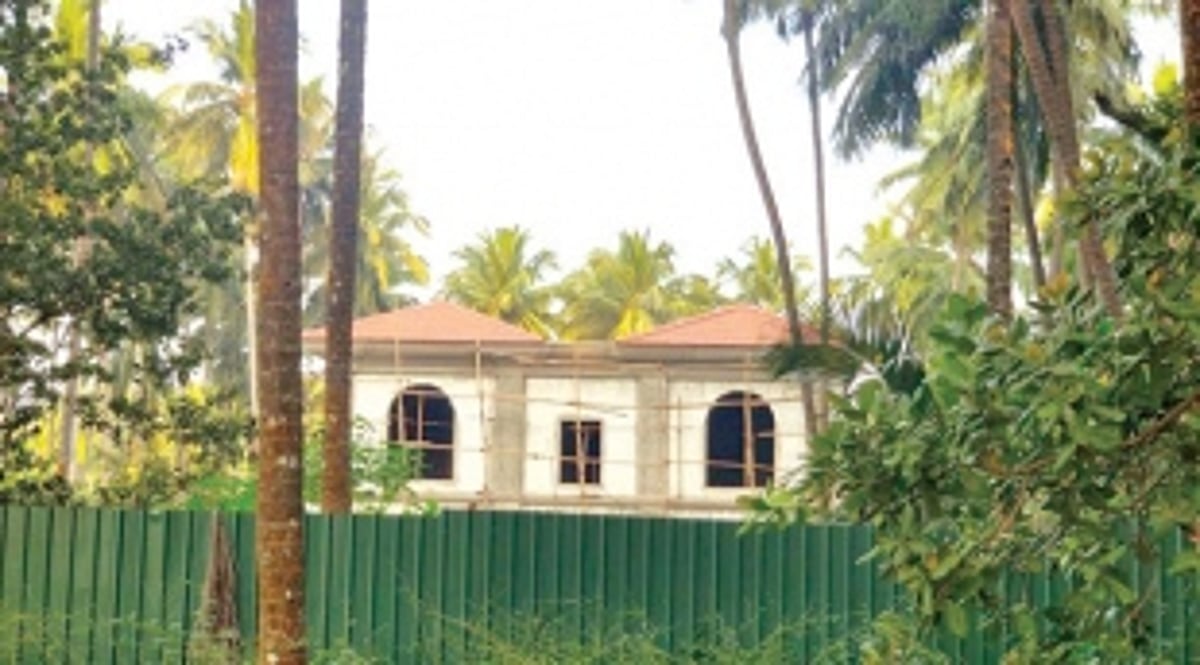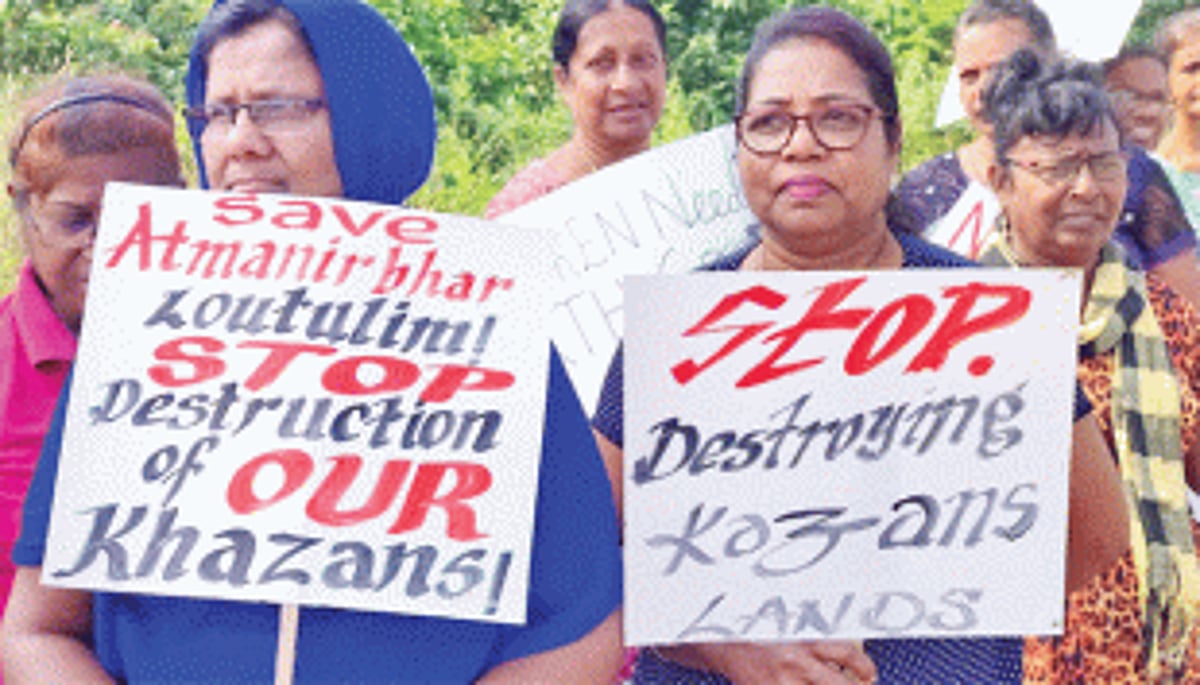
MARGAO: Loutolim villagers put up a monumental display of resistance at the gram sabha meeting on Sunday against land acquisition plans for construction of new Borim Bridge along with approaches across river Zuari and the bypass road to Borim Bridge, by unanimously passing a resolution rejecting the project.
It was also resolved that the Loutolim Panchayat would write to the Principal Chief Engineer (CE), PWD, the Special Land Acquisition Officer, the Executive Engineer, WD XV, PWD and the Deputy Secretary, Ministry of Road Transport and Highways (MoRTH), asking them to cancel the land acquisition notification with immediate effect.
Representatives of Technogem Pvt Ltd, the consultants for the proposed high-level Borim Bridge, and PWD’s Assistant and Junior Engineers from DIV XV, Ponda, who were present for the intense GS, were grilled by the villagers.
Local resident Ramiro Mascarenhas, highlighted the potential devastation caused by the government’s proposal, particularly the destruction of approximately two lakh sq mtrs of fertile khazan lands, which are ecologically sensitive and fall under the Coastal Regulation Zone (CRZ) law. He emphasised the inconsistency of destroying productive fields— crucial for rice, fish breeding and vegetable cultivation—while the state simultaneously promotes an Agriculture Policy.
“We are adamant that we will not yield an inch of our land. Loutolim is already under strain due to industrial areas, missing road links on the Margao-Ponda highway, flawed CZMP plans and the nationalisation of rivers,” he added.
The proposed project route raised suspicion, with allegations that it primarily benefits coal transportation, minimising distances from the Mormugao port, rather than serving the villagers’ needs. Residents vehemently opposed the initiative during the protest rally held earlier, marching from the Rassaim-Loutolim border to Vanxem, to Loutolim Church and the panchayat hall, where the single-agenda gram GS meeting was convened.
At the Gram Sabha, the Sarpanch highlighted the panchayat’s attempts to engage the PWD in a dialogue, revealing that despite their request to explain the alignment and discuss alternatives with the local residents first, the PWD released a land acquisition notification in local newspapers.
The PWD officials presented the proposed route alternative, which passes through the Carbot Cantor and Vatlaim khazans, but failed to adequately respond to inquiries posed by the villagers.
The members criticised the government for failing to consult or inform either the panchayat or the villagers about the project or alignment selection process and the fact that finalised alignment (alternative 7), is the most destructive among the options considered.
“PWD has completely ignored the khazans and CRZ areas that are going to be affected if ‘alternative 7’ is pursued. The entire area under acquisition in Loutolim village is within CRZ while a large part of the area in Borim village along River Zuari is also within CRZ, but there is no mention of these massive CRZ areas. If this fact was considered, ‘alternative 7’ would have not been selected,” said the villagers.
Some of the other objections resolved around the disregard for the economic and social impacts on communities reliant on khazan lands, which include paddy cultivation, fisheries and vegetable farming or that the land acquisition was being initiated without an environmental impact assessment (EIA) or studies on flooding, traffic impact and economic losses, overlooking the severe implications on communities and the environment.
Continued analysis revealed that the selected alternative presented multiple flaws, including ignoring CRZ areas, neglecting Khazans’ significance, and overlooking essential environmental impacts. The Gram Sabha highlighted the discrepancies in the traffic studies conducted pre 2016, indicating a substantial reduction in traffic post 2022 on the Margao-Ponda section, rendering the chosen alternative less efficient.
Further, the absence of detailed reports, Environment Impact Assessment (EIAs), and the commencement of land acquisition proceedings without adequate information to affected individuals, drew severe criticism.
The Gram Sabha members vehemently rejected the selected alternative due to its adverse impacts on Khazans, biodiversity, heritage sites, and the potential ecological and socio-economic losses faced by local communities. Concerns of potential flooding due to khazan land filling and detrimental impacts on agriculture and local livelihoods remained pivotal in the rejection of the proposed alternative.
“The khazans of Loutolim and Borim are world heritage sites displaying the highest productivity and unmatched engineering of the khazans, which must be protected as an agricultural wonder. However, the consultant does not even consider the khazans,” the villagers added.
The Gram Sabha emphasised the need for a more comprehensive and inclusive assessment considering environmental, social and economic implications before proceeding with such projects. They stressed that the entire village stands united, committed to defending their land and resources against potentially detrimental development initiatives that could severely impact their way of life.
At the meeting a crucial note written by Chief Engineer (CE) of PWD National Highway (NH) to the Union MoRTH Chief Engineer on May 4, 2017, recommending that ‘alternative 7’ was approved, was read out to the members.
Here, the PWD NH CE stated, “The various aspects including that of the missing link at Loutolim at ch.12/00 (i.e. end of the proposed Borim Bridge alignment which is already under construction and considering that the shortest distance for traffic on NH-17B leading to Mormugao Port (MPT) and its priority) the alternative 7 is recommended for approval.”
The Gram Sabha members said this made it clear that the PWD CE had selected this alternative even though it would cause maximum damage to the environment and people for the sole purpose of helping the coal transportation from MPT to achieve a lesser travel distance.