Team Herald
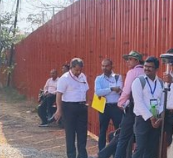
PANJIM: With reports emerging about the bad plight of children of the nomadic tribal children at Nirankhal Ponda, the Goa State Commission for Protection of Child Rights (GSCPCR) Chairperson, Peter F. Borges along with others visited the area to carry out assessment.
The assessment was carried out by staff of Human Touch Foundation, Applesta Da Costa and Sherly Fernandes, under guidance of Dr Sachin Tendulkar who has been working with this community for many years now.
Amongst the major findings was that 42 of the children’s birth have not been registered.
“Without legal proof of identity, children are left uncounted and invisible. It is a critical step missing to establish a child’s legal proof of identity. Without it, children are invisible to their government, meaning they could miss out on their rights being protected and upheld, as well as essential services like health care and education,” said Peter.
GSCPCR added that this will be expedited on war footing and will be completed in a few months and that they plan to have Aadhar card camp so that they get access to social protection schemes.
They also observed that education still remains a distant dream for these children and further COVID-19 pandemic has derailed it. Currently, there is no access to education since the start of the pandemic and the Commission has stated that they will engage with the education department to address this.
“There is a need to address menstrual hygiene practices, besides interventions in WASH (Water and Sanitation Hygiene) practices which have direct bearing on the health of girls and women,” said Peter.
GSCPCR plans to engage with NGOs to address aspects such as improved hygiene practices, using toilets and washing hands with soap.
“This is a complex issue there and open defecation is a deeply rooted habit. There is a move to build toilets and the Commission will follow up this,” he added.
GSCPCR also observed that there are signs of malnourishment noticed in the majority of the children and added that this will be further assessed with the engagement of the health system for proper interventions.
The Commission will also engage with community-based NGOs for behaviour change related interventions in the children and adolescents, focusing on their rights and using an empowerment approach.
“We aim to foster social movement among the community and create an aspiration for every household. We will ensure that children have a key role to play as agents of change in establishing new norms in the community,” Peter added.