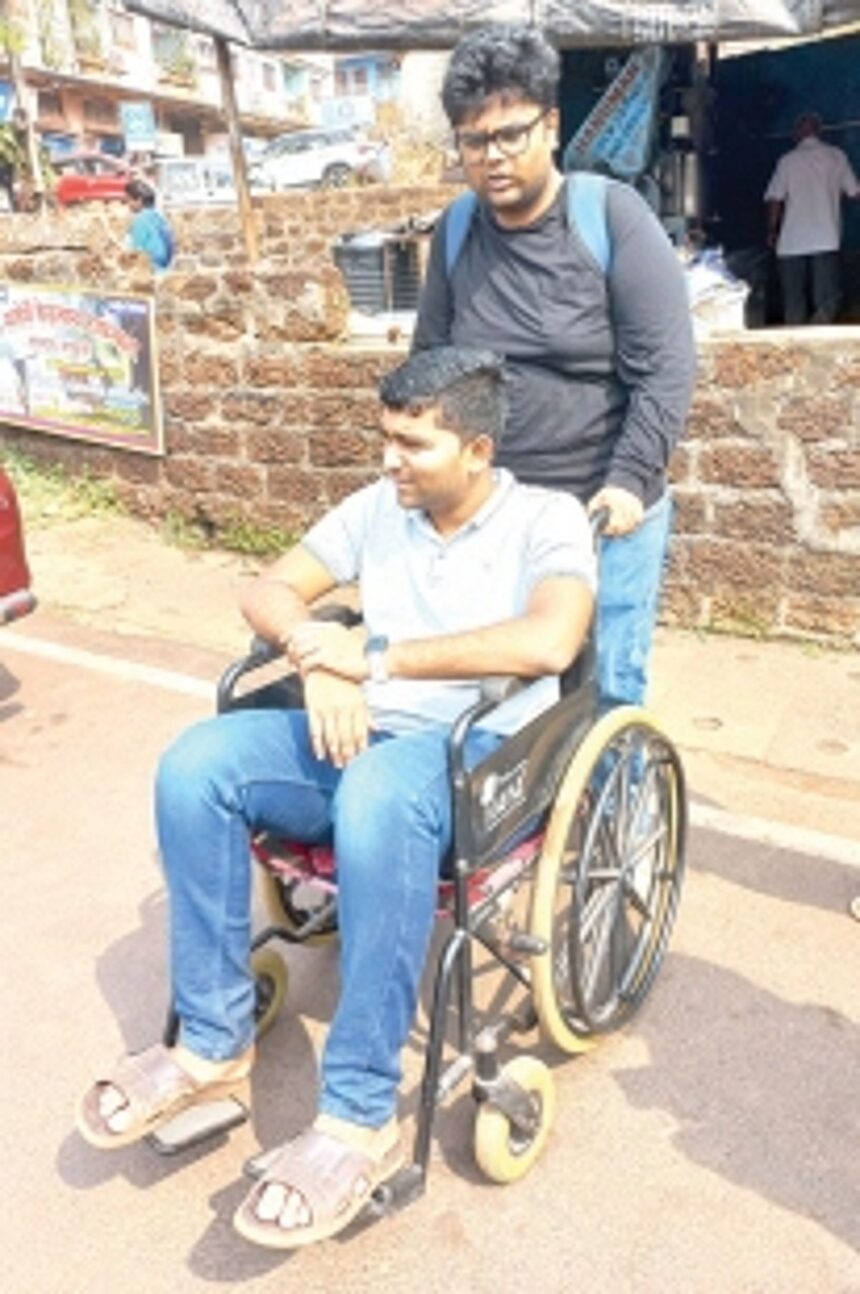
PANJIM: A majority of the ATMs in Goa aren’t disabled-friendly, neither are public bus stands or State government’s websites, especially those which deal with public utility services, according to the findings of a seven-month long survey and audit conducted by students of the Goa Institute of Management (GIM) of public utility facilities in the State from a disability perspective.
The survey and audit is a part of the B-school’s ‘Give Goa’ initiative which has been commissioned by the Confederation of Indian Industry and Young Indians (CII-Yi). The study was conducted by the students of GIM mentored by Professors V Padmanabhan, Mantasha Firoz, Arpita Amarnani and Kingshuk Sarkar.
According to the 2011 Census, two percent of the population in Goa comprises persons with disabilities, and accessibility still remains a challenge in the various aspects of an individual’s day-to-day life. Therefore, addressing accessibility gaps in the public services sector is crucial to creating a more inclusive society with equal access to basic amenities.
Explained Prof V Padmanaban, “The ATM audit covered 100 randomly chosen cash-dispensing kiosks in rural and urban parts of Goa and the findings indicate that faulty error messages or audio cues, lack of Braille-powered ATMs, improper ramp designs and complicated transactions were major issues.”
The GIM-CII study has recommended that each locality should have at least one fully disabled-friendly ATM.
Bus stands are crucial for mobility for people without access to private transportation, particularly the elderly or persons with disabilities from low income groups. The audit has revealed that the design and functionality of bus stands should meet the needs of its diverse and less privileged user base. Ten bus stands, including the busiest KTC Bus Terminus,Panjim and the Porvorim Depot were audited. Most bus stands were found lacking in basic accessibility features due to poor construction, lack of communication channels and awareness of disability-related issues.
The elaborate audit also identified gaps, including lack of funds for training workshops, unfilled reserved seats in Industrial Training Institutes for disabled persons and a lack of awareness among disabled students about career opportunities, leading to such individuals being relegated to back-end roles in the industry.
Lastly, an accessibility audit of 50 public utility websites owned by the Goa government found that most were not user-friendly for persons with disabilities. Official websites of ‘Fire and Emergencies Services’ and ‘River Navigation’ departments reported a score of 3.12 and 3.85 respectively making them the two most unfriendly websites for persons with disabilities, states the survey report.
The Goa Tourism Development Corporation (GTDC) website had a score of 6.13 with complaints with regard to the photo-sensitive content which according to the audit could potentially lead to seizures in individuals prone to epilepsy.The audit has also advocated a rehaul and streamlining of the Goa Police website because of its unfriendly design and cluttered content negatively impacting individuals who are visually impaired and those with cognitive disabilities.
The audit rated the websites on the parameters of ease of accessibility and quality of information. The study focused on the needs of people with physical or mental disabilities, visual and hearing deficiencies and the audit team identified the importance of incorporating special accessibility-friendly features into the websites.