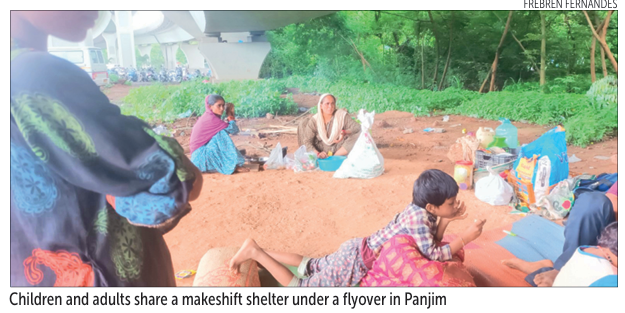
Just metres from the Kadamba bus stand, one of Panjim’s busiest en try points, migrant families with young children are living in makeshift shelters under flyovers, amid dust, open defecation and a lack of basic sanitation — ex posing a stark gap between the government’s ‘Smart City’ pitch and the reality on the ground. The families have set up temporary living spaces on roadside pavements, cook ing, eating and sleeping in the open while taking shelter under the bridge during the monsoon.
Young children are also staying with them, rais ing questions over hygiene, safety and the absence of any visible civic intervention at a key transit point used by thousands of visitors. The contrast is difficult to miss. While the government continues to invest heavily in urban infrastructure and promote Panjim and Goa as modern, tourist-friendly destinations, visitors enter ing the capital through the bus stand are confronted with a scene of poverty and inadequate civic facilities. Local residents and civ ic observers note that the sight undermines the city’s public image at a time when the government is actively attempting to boost Goa’s tourism branding.

The families said they come to Goa from Pune dis trict in Maharashtra every year around the Ganesh Chaturthi season. They come to sell traditional goods, including massage oils. “We are poor daily-wage earners who come every year for business around the festival season. Because of the ongoing heavy monsoon rains, we have taken temporary shelter be neath the bridge,” said a vendor staying at the location. The family said their children are accompanying them during school holidays and will return home to resume for mal schooling after the festive sales season.
When questioned about municipal permissions to oc cupy public spaces, the family noted that as temporary daily-wage labourers, they do not possess formal permits, though local authorities have previously directed them to clear the area. Yet the issue goes beyond whether the pavement is le gally occupied. If authorities are aware of the families’ presence, the absence of even basic sanitation or a safe temporary arrangement points to a larger failure of civic management.