On the eve of the National Day of Portugal, a Professor from Goa who is on a short visit to Lisbon to build bridges and partnerships in the field of academics and research etc with Portugal, indicated how squeamish he felt, at the narrative of the Goa Chief Minster to diminish curtail or even obliterate Goa’s Portuguese linkages or “signs”.
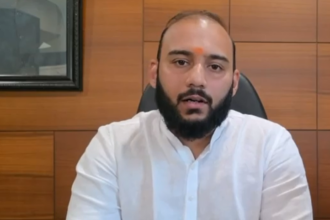
This is the context in which the Chief Minister’s statement was made. Addressing an event at Betul on the 350th anniversary of Chhatrapati Shivaji’s coronation, the Chief Minister said, “After 60 years, we should wipe out signs of the Portuguese. We need to start afresh. We are celebrating the 75th year of India’s independence…how Goa should be and what Goa is going to be when India celebrates 100 years of independence, we have started thinking of it now.”
Leaving aside the macro view that needs to be taken to holistically look at the statement, its impact, its relevance and its efficacy, which isn’t the subject matter of this Scrutiny; there are many Goans in Goa, who are feeling equally uncomfortable at these narratives, as the Goa professor currently in Lisbon.
The “signs” are beyond monuments, structures and even signages.
Simply put, the linkages with “signs of the Portuguese”, goes a little beyond monuments, structures and even signage. Moreover, the context is not even national or international. It’s simply a vibe, a culture and a milieu. It’s the fineness of growing up as a child into an adult in those times, times that are a part of the bloodstream, the heartstrings and the momentous memories of many Goans. It’s a feeling beyond nationality or history. The “signs” are of music played each evening, of the family meeting over a meal with the daughter playing the piano, of rides on buses to the nearest towns, of cycle rides through the village, and all of this through Portuguese as the language of communication and linkages.
Can you wipe out the signs linked to your mother tongue, the milieu at home as you grew from a child to an adult, the chatter in the kitchen, the joy of preparing feats and partaking in festivities, the pleasure and satisfaction of prayer? These were not signs of the Portuguese. They were signs of “home’.
The feeling of home is beyond nationalities
And the people who felt these signs are sons and daughters of the soil of Goa, and India, a country they embrace, cherish and serve. These are the same signs of home felt by the Portuguese Prime Minister and his relatives in Margao, and an MLA from Salcete. But it doesn’t make the Honourable Prime Minister less of a Portuguese, or an MLA here, less of an Indian. This is because, the feeling of home is beyond nationalities.
A Goan daughter from Ponda is an internationally renowned fadista
The cultural and academic institutions of the Portuguese in Goa have served to establish deep educational, cultural and heritage linkages. Art, poetry, music and literature have all been shared and exchanged between Goa and Portugal.
A Goan daughter from Ponda is an internationally renowned fadista, as well as a soulful singer in Konkani, regaling Goan music lovers in both languages.
Goan industrialists and businessmen have maintained and strengthened relationships with Portugal in many forms including regular exchanges between them.
In 2015, Goa University became the centre of Portuguese language studies in India establishing a Chair in Portuguese studies in the name of scholar Joaquim Heliodoro da Cunha Rivara in Portuguese studies, after it received a proposal from the Camões Instituto da Cooperaçâo e da Lingua, Portugal.
Do re -read what the then Goa University Registrar Vijayendra Kamat had stated then about the Chair “It also aims at strengthening the intellectual dialogue between India and Portugal and strives to make Goa University a hub of Indo-Portuguese and Lusophone studies in Asia”. These ‘signs’ were welcomed then.
All of this brings us back to where we all belong- home. And this is where these ‘signs’ became very personal, cultural and emotional, but not ‘national’. A home is where the heart is. Can these signs be wiped off?