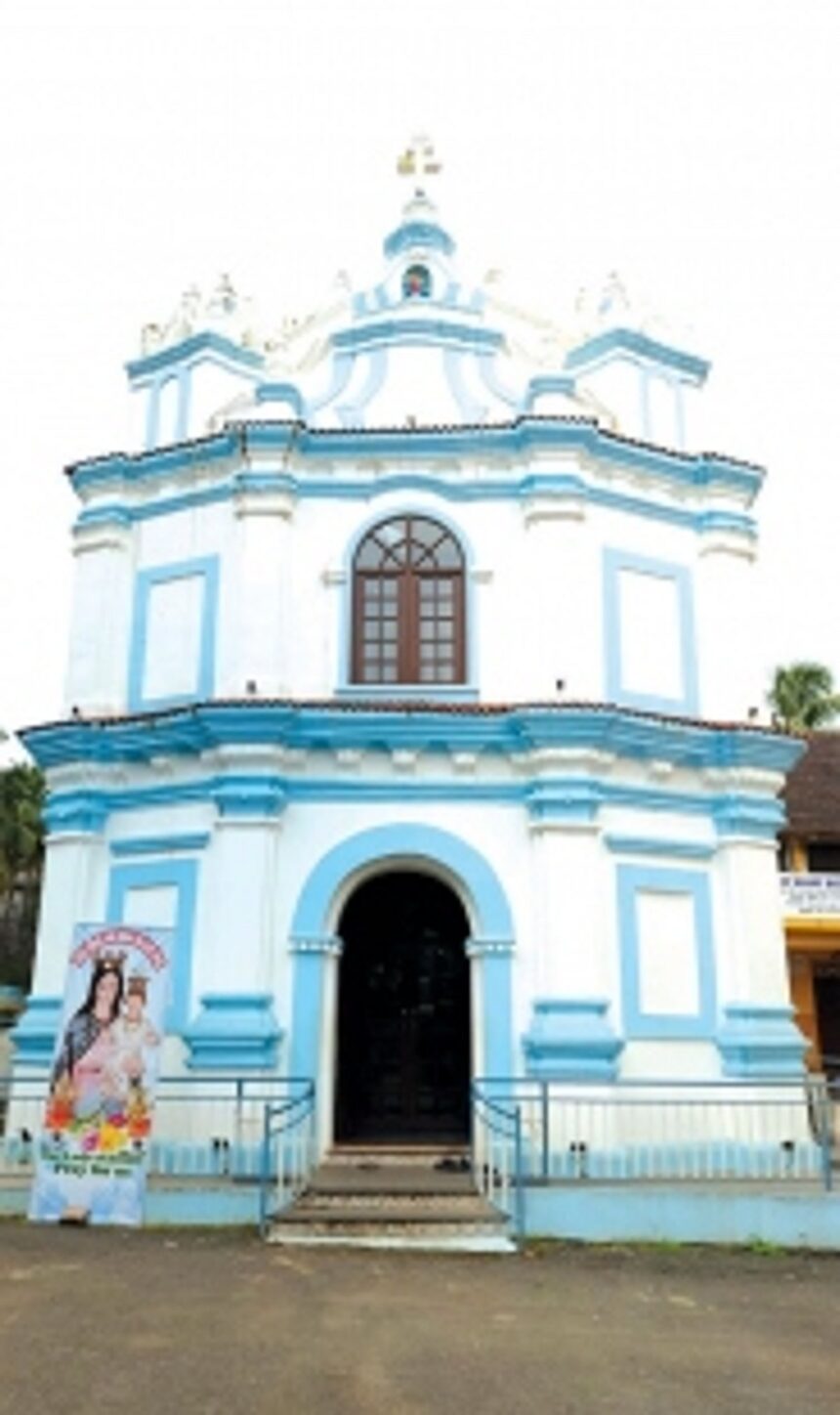
When one exits the Northern gate of the Fatorda stadium, one just can’t miss the chapel and church which greets everyone. With constant traffic flowing by and strong movement of people going about their daily chores, there is still time to stop and venerate the Our Lady of Rosary Chapel.
A little behind the old chapel lies the new church, with a well maintained and spirituality enhancing grotto in the compound. Mostly, the compound is full of school children during the day and in the mornings and evenings, churchgoers and visitors to the Blessed Sacrament and prayer room at the Oratory in the now restored old chapel.
The parish celebrates two main feasts of Mary – the birthday of Mother Mary in September and the feast of the patroness – Our Lady of Rosary which is the main feast. This year, the feast will be celebrated today, October 8.
During the ten day novena, along with the masses, parishioners united to participate in the recitation of the Rosary, the Holy Eucharist, salve and veneration of the image of Mother Mary led by the current acting parish priest, Fr Daniel Pereira. Each day a different ward or pastoral group of the parish conducted the Liturgy and order during mass.
“We understand from the writings of former parish priest, late Fr Carmo Martins, that it was in the year 1996 that the plans for building a bigger church was set rolling as the Catholic population in the parish was growing fast and the old chapel was proving to be smaller to accommodate the congregation”, informs Fr Daniel Pereira, the current acting parish priest, who was appointed after the sudden and untimely demise of Fr Carmo Martins. The other priests serving the parish includes Fr Lourenco Dias, assistant parish priest and Fr Eucaristinho Gomes, priest on the staff.
Fr Daniel Pereira was a Professor of Theology at the Good Shepherd Institute Rachol seminary. Upon the sudden passing away of Fr Carmo the former parish priest of Our Lady of Rosary, he was deputed as an acting parish priest and has been successful in getting together and guiding the parish with his deep sense of own spiritual depth and Theological studies. He shares a valuable bond with the parishioners as their current Shepherd.
It was on April 23, 2002, that the long cherished aspiration of the parishioners became a reality when the new church was inaugurated and accorded a full-fledged parish status. The old Our Lady of Rosary Chapel was affiliated to the Holy Spirit Church at Old Market, Margao.
The Fatorda parish celebrates their feast today – the Sunday following October 7, which is the actual feast day of Our Lady of Rosary. During the1960s the feast used to be celebrated in the month of May.
The old chapel:
After the new church building was inaugurated, the old chapel was used as a classroom for the school students and religious artefacts were stored inside it. The Cofre committee then took a decision to restore the old chapel without any changes to the existing structure.
At that stage, rain plants and other moss had partially threatened the 1768 structure, built by Custodio Francisco Noronha, and it remained in the same state for some time, until parishioners felt the need to brainstorm how the structure could be put to wise spiritual use once again for the generations to come.
On October 9, 2022, most reverend Cardinal Archbishop Filipe Neri Ferrao blessed, inaugurated and celebrated the Eucharist in the restored chapel blessing the oratory and declaring it as a fully-fledged prayer room. Today, the old chapel as a glittering place of worship and prayer is frequented by many throughout the day.
Many come there specially to pray the sacred mysteries of the Rosary, prayer for the sick, thanksgiving and general daily visit to the Blessed Sacrament, kneeling down respectfully at the altar. While championing the cause of restoring the old chapel, the late Fr Carmo Martins had shared his long standing dream to bring more people closer to Jesus through Mary and especially through the devotion of the Rosary.
“The practice of the Eucharistic Adoration is a century old which has evolved from being a mere act of reservation of the Eucharist for the Viaticum and Communion to the sick, to an act of worship outside mass. If we can scan through the pages of history of Christianity, we will find that the earliest Christianity reserved Eucharist for Viaticum, i.e., for the dying as strengths on their way back to God”, informs Fr Daniel, adding, “The preservation of the Eucharist in the tabernacle originated in the Carolingian period”.
According to Fr Daniel, “Jesus before ascending to heaven promised that He would always be with them, truly, He is with us still in the Eucharist, resting silently in the tabernacle of every Catholic Church in the world”.
On October 8 in the evening, there will be a Konkani tiatr, ‘Tumi Zabab Diat’, by Menino de Bandar, and on October 9, a musical programme, ‘Mogachea Kantaranchi Saanz’, by Pio Agnelo Fernandes.