SHWETA KAMAT
shweta@herald-goa.com
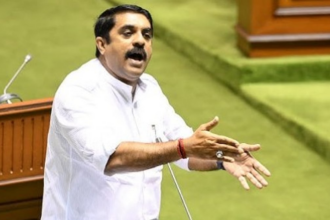
The absence of innovation in agriculture is the biggest impediment for Agriculture Minister Vijai Sardessai as he tries to revive the agriculture sector ensuring it becomes a major contributor to the growth of the primary sector in the State.
Through, the growth rate in the agriculture sector has doubled from 2 percent in 2012 to 4 percent in 2014, it has remained stagnant since then. The Manohar Parrikar led government had set a target of 6 percent growth in the sector, way back in 2012. But it is yet to achieve the same.
Government has laid stress and thrust on agriculture in its State Budget 2019-20. Doubling of farmer’s income by 2022 and bringing in around 25,000ha of uncultivated land under farming is what the Agriculture department has envisaged.
Contract farming, rice intensification system and mechanised paddy transplantation are the focus areas of the department, which is working towards increasing the State’s agriculture production giving a boost to farmers, through scientific methods. “Cashew, coconut, mango, paddy, vegetables and organic farming is what we are focusing upon for sustainable development of agriculture sector,” Sardesai said.
“By and large making Goa green is our focus and we are not moving away from it. We are taking it forward,” Minister said while admitting that attracting youths towards agriculture is a major challenge and he has accepted it.
In a bid to make Goa green, the target is to get the fallow land under cultivation.
Nagpur-based ICAR-National Bureau of Soil Survey and Land Use Planning (NBSS&LUP) has identified 13,193 hectares of fallow land in the State. Nearly 35 per cent of the total fallow land comprises of cultivable waste land.
Fallow land in Goa equals to 10.3 per cent of the area used for food crops. Of the total fallow land, cultivable waste land (CWL) is spread across 4781 hectares, followed by 4707 hectares of current fallow land (CFL up to 2015) and 3920 hectares of fallow land other than the current fallow land (FLOCFL).
“There are various reasons for large tracts of fallow lands and CWL. The prime reason is that farmers today find paddy cultivation to be less profitable. Hence, our focus is now on to make paddy more profitable by reducing cost of cultivation, cost of labour and get high yields,” a senior agriculture officer said.
The basic challenge before State government is to make paddy cultivation a profitable venture so that farmers get back to their fields. The State has been working on increasing paddy yield by using technology, for which subsidies are offered for buying agricultural machines, sources said.
Contract and community farming are a few steps in that direction. Under contract farming, they are encouraging farmers having fragmented farms to join hands thus covering larger tracts of farm land and reducing the cost of cultivation and giving proper yield.
During times when labour is dear, paddy growers can reap extra benefits to the extent of 50 per cent for an individual grower and 60 per cent to the community, by adopting mechanised transplantation techniques and also use effectively the waste land for paddy cultivation, director explained.