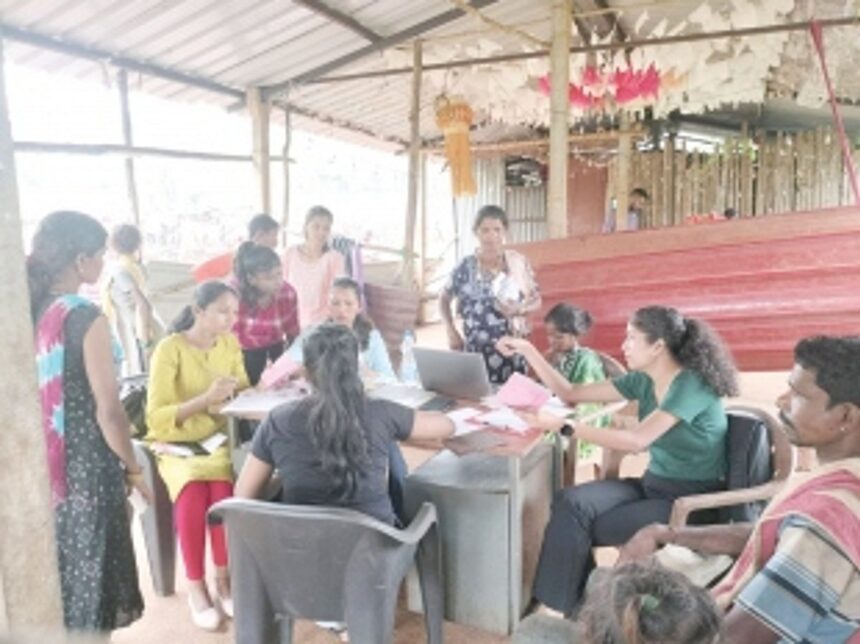
MARGAO: The Goa State Commission for Protection of Child Rights (GSCPCR) and ‘Sanvedan Kendra’ along with volunteers have been visiting the Kathkari nomadic tribal community in Virnoda and Porascadem in Pernem and Nirankal in Ponda Taluka as part of their ongoing campaign to carry out child focused development.
Their work also includes conducting detailed profiling of households of the nomadic tribal community in order to help them get their civic documents and social security schemes
Incidentally, there are around 120-odd tribal residents at Nirankal and 125 at Porascadem and Virnoda, with there being around 70 children each in Pernem and Ponda Taluka.
“For the past one year, the Goa State Commission for Protection of Child Rights has spearheaded a lot of child focused initiatives for the nomadic Kathkari tribal community at Virnoda, Porascadem and Nirankal. Various activities have been initiated in the communities which support children’s survival, growth, development, and learning including health, nutrition and hygiene,” said Peter F Borges, GSCPCR Chairperson.
One of the major and early identified problems was lack of identification documents and other civic documents which will entitle them to other social security benefits.
In late 2022, GSCPCR worked on delayed birth registration of 65 residents of the tribal community of Virnoda and Porascadem with the assistance of North Goa Legal Service Authority and Pernem Taluka Legal Service Committee and got their birth registered.
“With this success, the Commission has initiated delayed birth registration of 99 residents, inclusive of children at Nirankal. The Child Rights Clinic at G R College of Law will assist in the detailed documentation,” Borges added.
The GSCPCR has also driven access to food security through ration cards and will now also focus on getting them enrolled in Mahatma Gandhi National Rural Employment Guarantee Act 2005 (MGNREGA) which will guarantee them economic security with at least 100 days of wage employment in a financial year to each household.
“The Commission will also initiate structured programmes surrounding sanitation, hygiene, menstrual hygiene, tobacco cessation, bridge education and building other life skills of children and adolescents with the assistance of Sanvedan Kendra and Human Touch Foundation (HTF). Every child is equal under the sun. There is a need for inclusive development, where these nomadic tribals and their children can be uplifted. A focused development can help bring them into the mainstream,” said Borges.