The Ponte Conde de Linhares is a 3.2 km long causeway connecting Ribander to Panjim, a 380-year-old cultural heritage of Goa. The fundamental design consists of a series of small arch structures strengthened with trunks of zambo built to handle the load of horse drawn carriages at that time.
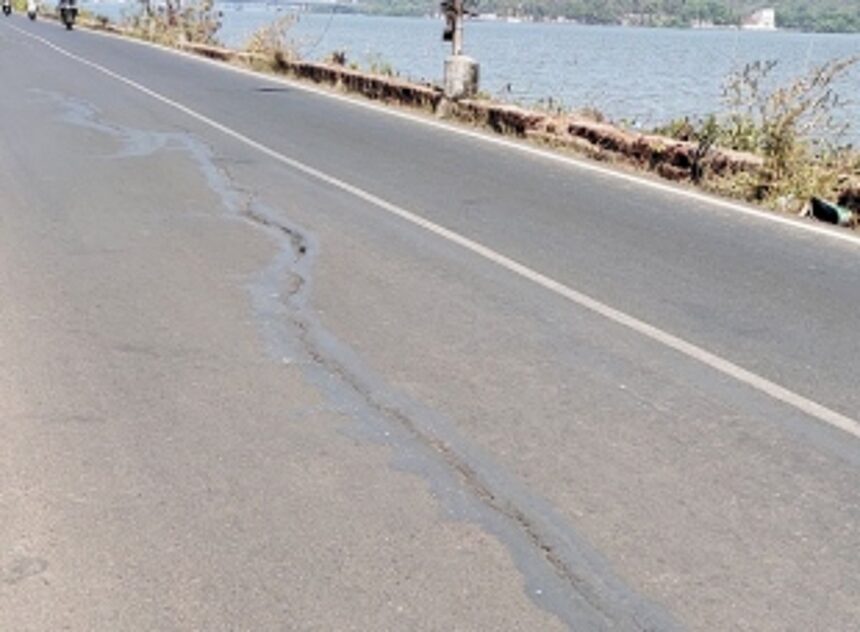
Since then the bridge has borne the brunt of ever increasing traffic load and has shown signs of wear and tear. Planting of mangroves in 1980 and further strengthening of side walls has not helped. Cracks have been developed parallel to the road that can be traced for at least 150 metres. It can be seen that the continuous widening of the cracks has also pushed the walls aside into the mangroves along with a defunct electric pole. These cracks have created linear grooves that pose threat to motorists. It is essential to note that repeated asphalt layers or patchwork done to reduce cracks adds weight to the existing structure in addition to traffic load. However, such peripheral measures hint that the authorities have failed to gauge the problem.
The constant widening of the cracks takes place due to a geological process called “creep” happening over very long time periods and is caused due to slippage along possible clay layers present beneath the road. The clay expands due to water absorption and gets slippery. Weight of the overlying material aggravates the problem of slippage, with an input from tidal variations. This part of the road has also sagged which can be sensed by the drivers.
The cracks could be the next reason for mishaps over this stretch. Therefore, it is imperative for the authorities to take a scientific recourse to solve the problem. A similar clay horizon was responsible for the Porvorim landslide in September 2007.