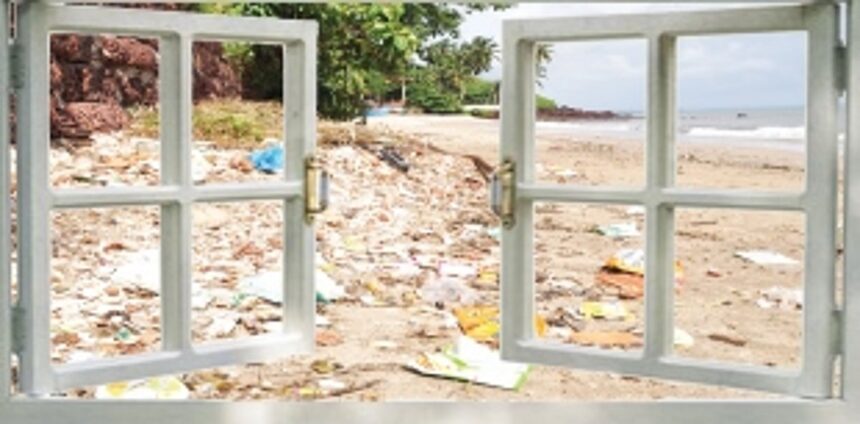
As the beach cleaning campaign ‘Clean Goa, Beautiful Goa’ was launched at Miramar Beach, other areas around the capital like Caranzalem and Hawaii in Dona Paula also have garbage littered in many places. Chips packets, chocolate wrappers, plastic bottles, liquor glass bottles, leftover food are common sight.
Caranzalem Beach, which is also visited by locals, has dead fish strewn around almost every day. Given that local fishermen still use it for their fishing activities. While some catch go to the retail fish market, a few fisherwomen prefer selling them in baskets right on the beach. At the end of the day, the shore is left dirty with the remains that attract birds and dogs.
Tar balls too are a regular feature and make their presence felt just as the monsoon begins and when it is about to end.
Absence of dustbins, which has been one of the crucial reasons for garbage-ridden beaches is soon expected to see a change as the two agencies Bhumika, and M/s Ram Engineering and Construction Company – contracted for cleaning South Goa beaches, have been tasked with placing bins on the beaches as a part of the tender.
Locals, activists and environment groups have lamented the pitiable state of the beaches on several occasions.
The beach cleaning agencies are supposed to place dustbins, segregation units, compositing pits and scientific disposal of garbage. Dustbins will be placed at every 100 metres interval while garbage will be collected from all beaches where it will be segregated into different parts such as bio-degradable and non bio-degradable.
The non bio-degradable waste will further be segregated into components such as plastic, glass, metal, etc to later stock it at a central place for further disposal. The bio-degradable waste will be converted into compost using compost pits.
Dead fish at Caranzalem, chips packets at Hawaii
They are there, yet not there. The Bainguinim treatment plant, the Patto wet waste plant and dumping and segregating facilities at Taleigao and the Heera petrol pump could have solved Panjim’s waste management issues by now. At the same time, smaller beaches continue to be used as dumping grounds of waste. So while the Chief Minister-led initiative to clean the Miramar Beach on Monday is welcomed, the move will only be cosmetic if the more crucial issues of waste treatment are not solved