With the entry of COVID-19 pandemic, the State, while anticipating that the economy will be hit due to subsequent lockdown, had constituted a “Economic Revival Committee” (ERC) for its suggestion on how to kick-start the sagging economy. The committee comprised of noted industrialists, bankers, academia, management experts etc which submitted its report to the government last week.
The report, primarily gives a thrust and push for agriculture or agro-based industries, creation of value chain, resumption of mining, development of tourist infrastructure and prudent financial management to make the State self-sufficient and progressive. Majority of the suggestions have already been discussed in the past but during the “normal days”, no action was taken. However, post COVID-19, when the economy is suffering and revenue generation sources are limited and drying up, it is the right time for the State to act upon ERC’s recommendations.
AGRICULTURE:
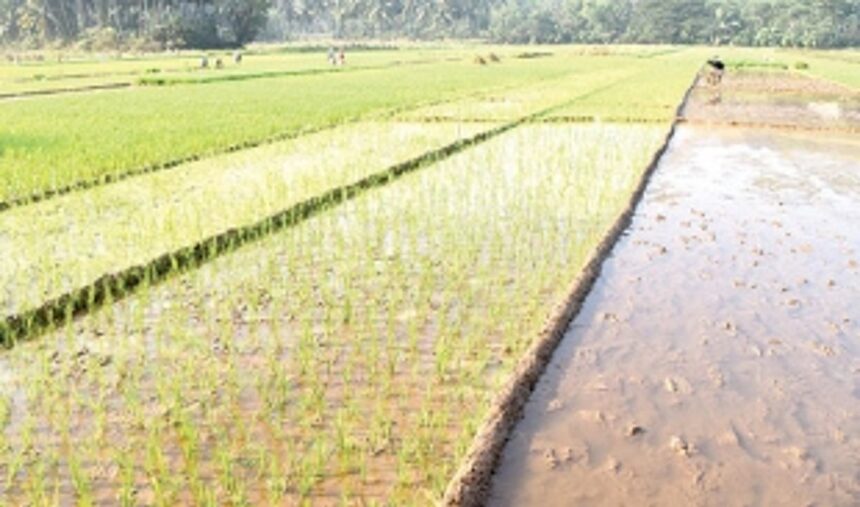
With lockdown it was observed that Goa needed to be self-sufficient in food supplies, such as agriculture, vegetables, poultry, dairy, fisheries, etc. and strengthening agriculture and allied sectors. NABARD has made number of suggestions for the revival of the economy, some of which can be implemented immediately like harvesting of Rabi crop to be facilitated with either local labour or migrant labour and by resuming local transport. Also, the Kharif season is round the corner, so it’s imperative that farmers are ensured supply of good quality seeds and other farm inputs like farm machinery for field preparation.
Suggestion have also been made that the Agriculture Dept or the State Horticulture Corporation, through their Block Level Zonal Agriculture Offices, identifies farmers with marketable produce and aggressively procure, aggregate and market local vegetables. Similarly, a procurement centres can be set up either individually or in tie up with Goa Bagayatdar or Adarsh Society for collection of cashew nuts at the MSP fixed.
Another suggestion is using taxi drivers who are also facing hardships due to the lockdown and subsequent fall in tourists. The report says taxi operators can be integrated with agriculture extension, for supply of inputs and collection of produce for reaching them to markets, horticulture dept outlets. They can be facilitated to integrate with e-Commerce operators.
Also, to encourage local unemployed youth to take up agricultural activities, to reduce dependence on labour from neighbouring States.
Even though there are many operational startups in Goa, the report suggests introducing the concept of Agri-Startups in each area of farming and cultivation with modern techniques. Steps should also be taken to encourage farmers to establish processing units in case of two major crops – cashew and paddy – and this support can be made under the scheme of MSME-CDP programme. Farmers will get to decide their own price unlike at the present, where the price is decided by traders. At the same time, the State govt will also save on support price.
While it has been discussed earlier, the report emphasizes on cluster approach for promoting value chains for select crops like coconut, cashew, mango, jackfruit, dairy products etc could be established. Mushroom cultivation as a livelihood activity can be promoted at cluster-level viz., paddy straw variety, which can be grown at the household level. Value addition to coconut via tetra packaging of coconut milk, production of virgin coconut oil, coconut powder etc to be encouraged.
Promoting Agri-Startups by integrating schemes in agriculture, animal husbandry, agro-forestry, fisheries and allied sectors with necessary modifications to facilitate more aspiring entrepreneurs in aquaculture sector including vertical crab farming, mussel cultivation, etc can transform Goa’s agro-sector.
Ease of doing Agri-business with easy mechanism of disbursal based on proposed single window clearance.
Further, Goa needs to set up an Agro-park/community with facilities such as cold storage, freeze-drying, solar drying and retort. The report recommends that the govt takes the help of NABARD Rural Development Fund to develop such facilities.
TOURISM:
Tourism is another sector, which needs to be relooked, especially after the COVID-19 attack. Goa Tourism advantage post-Mopa Airport and four-laning of highways, roads, etc needs to be ascertained by way of a study. A comprehensive plan should be drawn up for identifying new opportunities.
ERC recommends that the State makes tourism more inclusive for Goa by developing hinterland tourism and that the govt works on creating a value chain from tourism stakeholders. Considering that tourism is likely to be hardest hit by the current disaster, the Tourism Master Plan has to be implemented immediately. An Interim Tourism Board as envisaged in the Plan should be constituted and granted powers to decide upon all tourism-related activities and matters so as to facilitate revival of the industry and exercise these powers in supersession of any laws relating to tourism.
The report suggests that Cortalim could be developed as a Tourism hotspot, as the two viewing towers erected along the new Zuari Bridge would be a unique and major tourist attraction. Besides, river cruises (on the lines of the Santa Monica cruises) could be introduced and promoted on this stretch of the Zuari River. The Cortalim Jetty and unused infrastructure including building owned by the Fisheries dept, etc could be used for tourism facilities.
What Goa needs is tourism, based on carrying capacity and regulated with quality and class tourism rather than mass scale with more ecological footprints putting stress on resources. Going beyond beaches, knowledge-based ecotourism, agro-ecotourism, mangrove, crocodile safaris and nature trails in a regulated way for ecological sustainability involving locals with trained eco-guides should be promoted,” says ERC.
BANKING, FINANCE & IPB:
As part of this report, the State Level Bankers Committee report notes that it’s now an accepted norm that the situation post the lockdown is certainly a “disaster” of severe magnitude and recommends that the govt requests the Centre to direct the National Disaster Management Authority to direct the RBI and banks to extend facilities, concessions to businesses in Goa that are severely impacted by the disaster. The report says it’s clear that all industries will take at least six months, and tourism at least twelve months to regain normalcy.
While banking-related concessions are vital at this juncture, the State should consider some tax and non-tax revenue linked considerations (such as tax rebates, relief in the matter of payment of water and electricity bills), which would have an immediate impact and go a long way in stimulating the economy.
A long standing demand to make Investment Promotion Board more aggressive and laden with more power to grant all relevant permissions, which are within the domain of the govt, has been raised again in this report. It should also aid in recommending clearances required under central legislations like those from Ministry of Environment and Forest etc. The State should concentrate in creating infrastructure (plug and play) either through IDC or private industrial estates. Thereafter, the CM and his team should leverage the State at a national and international level for drawing investors.