Pejeche Fest was celebrated on Sunday at Siridao Chapel. The festival is celebrated on the first Sunday following Easter. After Easter, various saints’ feasts are observed by the Catholic Church. The season starts with the feast known as Pejeche Fest.
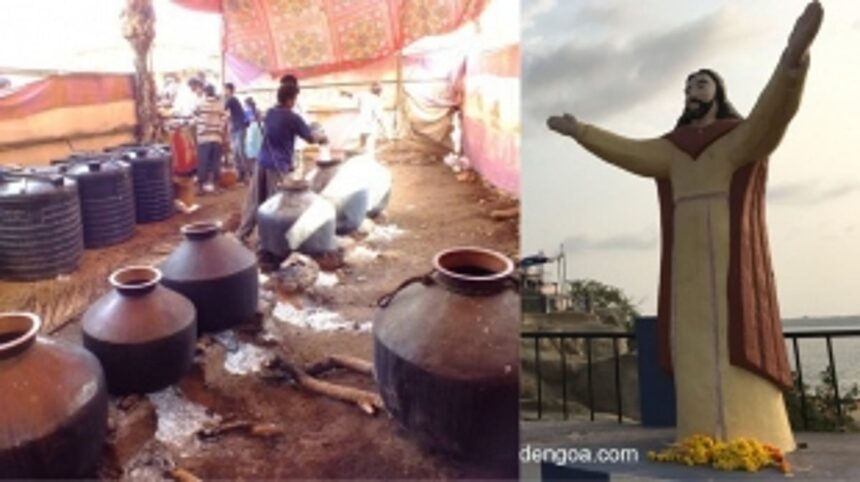
After the feast mass, the Our Lady of Annunciation statue is carried through the village in a procession. After that, people line up below the chapel to receive kanji. Canji is traditionally prepared in seven large copper pots by married women. The seven vessels are thought to have been connected to the Sanskrit tale of the seven sisters. Canji is served first at the Xim (village boundary) for the deceased souls before people are served.
As per the traditions, pez was cooked from ukkde Randall (boiled rice) in seven big moddkeo (copper pots) by married women also called Soyasini – in Mol’lancho Mattov (a palm enclosure). It cannot be cooked by widows.
It is said the seven vessels were related to the story of seven sisters in Sanskrit. It was then served in traditional Goan bowls called Maltuli or Kholeachem Aidonn. Another distinctive feature of this feast is the performance at the Manddar – a little stage set up by the villagers.
Siridao village usually comes alive on the second Sunday of Easter, filled with pilgrims pouring in from all over, either to ask for favors or to thank the Blessed Virgin Mary for favors granted, and then have pz (kanji).
In the olden days, villagers from distant places like Sanvordem and Sanguem would come sometimes sailing in voddeanim and pat’marinim (canoes and catamarans), since road travel was not so common.
Others used to come sailing along the Zuari River, tether their boats behind the chapel, and climb up the hill, while others would travel on foot the previous day. The hospitable village folks would provide them accommodation and food though they were strangers to them.
As per the folklore, the bhattkar (landlord) serves pez to atone for the Pensanvanchem Bhatt, which roughly means property bequeathed to a person on an assurance that the person will offer masses for the soul of the donor. Pez is served first at the Xim’ before serving people – a custom signifying the serving for the dead The famous ‘Pejechem Fest’ is celebrated at this chapel on the occasion of the feast.