TEAM HERALD
teamherald@herald-goa.com
PANJIM: Life could not have begun on a worse note. He lost his twin brother within six days of his birth. Now he stands to lose his right arm, affected by suspected gangrene, due to an injection administered wrongly by a nurse in GMC.
The child’s arm would have been amputated on Monday if the father had not refused. The GMC, realising the seriousness of the situation is consulting experts and is open to sending the infant abroad on its own expense if required.
According to Ashok Naik (name changed), father of the boy, there was a delay in removing the guilty needle which had caused the stopping of blood supply, which if was done could have save the baby’s arm.
Naik’s wife Sunita (name changed) was pregnant with twins and gave birth to two premature baby boys born after only seven months of pregnancy and underweight. Such was the plight that both the babies were battling for life and the smaller of the two developed respiratory complications and succumbed within six days of his birth.
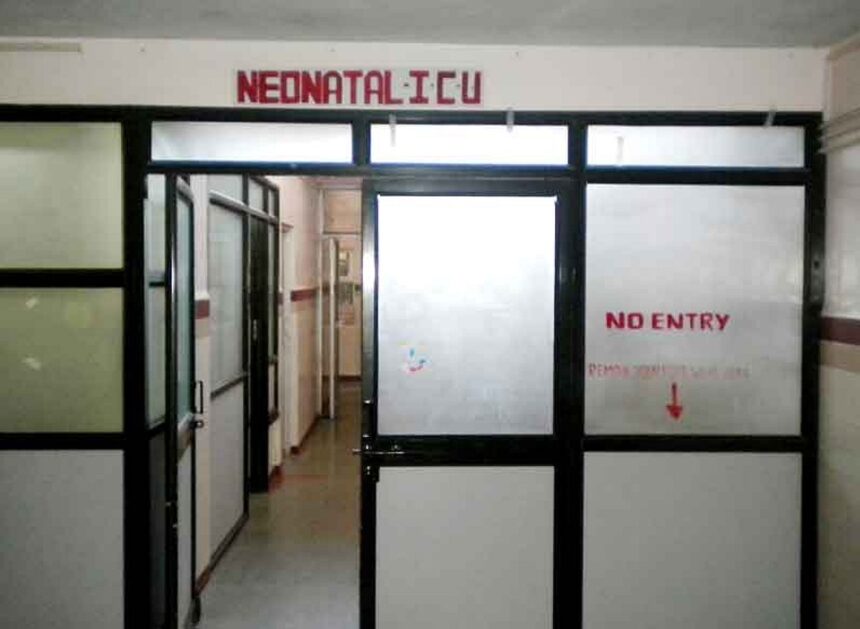
The other, the healthier of the two stabilised but was kept in an incubator in the neo-natal ICU of the Goa Medical College as he continued to remain weak, underweight and low on resistance.
On the evening of January 3, the baby was injected with what the father says was a saline solution but doctors say was an intravenous injection to help save his life.
“If the baby was not given an intravenous injection, it would have died”, a doctor working at GMC but not connected with this case said.
Naik said that he pointed out to the nurse on duty that something was not right after the baby was injected.
“I noticed something was wrong with the child’s right arm and pointed it out to the nurse, but she did nothing about it. Only the following morning the doctor noticed the hand and asked that the needle be removed”, Naik told Herald.
“After that I asked them to take corrective action, but they just ignored it”, Naik alleged.
However, senior surgeons at the GMC admit that for a newborn if an artery is blocked the only way to reopen it is through powerful medication as surgery is not an option given that the capillaries are too small to perform a bypass.
“What must have happened is the needle either blocked the artery or the medication entered the artery causing it to spasm and blocking the flow of blood. If the block was total, gangrene would have developed within six hours. As it is 20 days since the incident, either it was not a complete block or the medication partially worked to remove the block”, a senior surgeon at GMC said.
He said it was unlikely that the doctors of the department did not attempt to restore the blood supply, but that the medication did not completely work.
“It is unlikely that the father of the child will know whether the doctors tried to restore the blood supply because it is done through medication and for a child of this age it had to be through injection”, the doctor said.
Another doctor confirmed that attempts to restore blood supply were made but were unsuccessful.
Timeline
Birth, Death & Disaster
DEC 8: Sunita gives birth to two undernourished and premature male twins. Both are kept in neo-natal incubators as they battle for life.
DEC 14: The weaker of the twins succumbs to respiratory and other complications.
JAN 3: The other boy is given an intravenous drip injection to help save his life.
JAN 4: Doctors notice the one arm become cold, immediately remove the injection.
JAN 20: Doctors declare that the wrist needs to be amputated; operation scheduled for January 23.
JAN 23: Doctors postpone amputation at request of father. Dean institutes panel of doctors to probe into incident. Also promises all help to save the hand including treatment by specialists in other hospitals or abroad.