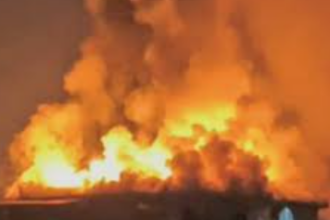
PILERNE: The full impact of Goa’s biggest fire, on January 10 at the Berger paint factory in Pilerne on the environment, ecosystems, and natural water bodies surrounding the paint factory is beginning to be felt.
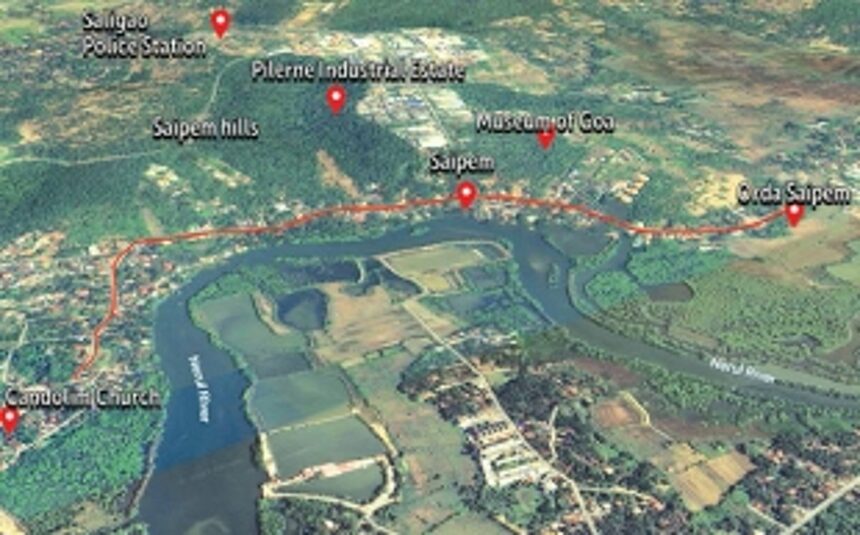
Even as the raging fire died without any casualties or all-round area destruction, the impact will be potentially damaging and even devastating, though none of it will be obvious on the ground at this stage. Areas that are impacted are the Saipem, Orda, and Candolim areas.
People there have been complaining about the damage that is caused to the Nature water bodies including the water wells which are found to have been contaminated soon after the incident.
People witnessed the colour of the water change, water smelling, leaving the locals thirsty.

The situation was such that people in the area had to vacate their houses for a few days and shift to their relative’s houses. People, especially children and senior citizens faced major difficulty in breathing.
“The air, in the surroundings, will be temporarily polluted due to the smoke emissions from the fire as well as evaporation of the organic solvents used in the manufacturing process. Water in shallow wells in the surroundings very close to the affected area may also get contaminated due to the seepage of the solvent into the ground,” Ex-Chairman of GSPCB Dr Simon D’Souza said.
People said that since the village is located at the tail point, they hardly receive tap water as a result they were completely dependent on the wells for water for consumption as well as other use.
“The factory is located hardly 100 meters away from our house. How can the government authorities give permission for such a factory without taking us into consideration? This has been a problem for several years and our well water which was fine, is now contaminated. There is no single well in the village from where we can pump the water,” a local resident said.
A youth named Suraj Naik, a resident of Saipem said that the senior citizens and children suffered badly during the fire incident. They were seen crying.
“We were forced to shift from our houses. This should not happen again. A decade ago, we had objected to setting up industry in our locality, but nobody heard us. This recent fire incident is just a trailer. We don’t want to face such incidents in the future,” Naik said.
Dinesh Morajkar, panch member of Candolim panchayat said, “People are still suffering. Our wells are completely contaminated. Water is having a bad smell, foam is coming. Since the ward is located at the tail end, we hardly receive tap water and were completely dependent on the wells,” Morajkar said.
But now even the well water cannot be consumed.
“We don’t know what to do now. The whole ward should be relocated to a safer location if these incidents occur,” Morajkar said.
Morajkar further added that since 2005, they have been facing problems as the factory is located hardly 100 meters distance from the residential area.
“Almost 90 percent of the wells in Saipem and Orda areas in Candolim are contaminated. For the last 15 years, we have been fighting because of the water pollution in our area against the company. Our village existed before the factory was set up. We want the factory to be relocated to some other place,” said Assis Cardozo, a resident and a businessman of Saipem.
Another local pointed out that the cashew plantation that he has in the area, has suffered for years due to the sewage released by the companies into his property.
“We made several complaints, several inspections and tests have also been conducted, but end result was zero since all these tests have been manipulated by authorities,” another local said.