Ibrampur is a village in Pernem Taluka and is located 22 kilometres away from Pernem town, 24 km from Mapusa town and 37 km away from the capital city of Panjim.
This village is located on Goa Maharashtra border and the villages located nearby to it at Sal (3 km away), Mencurem (4 km away), Chandel (7 km away) and Pirna (8 km away). Ibrampur is surrounded by Pernem taluka towards the west, Bicholim taluka towards the east and Bardez taluka towards the South and has a population of different communities.
Farmers in crisis
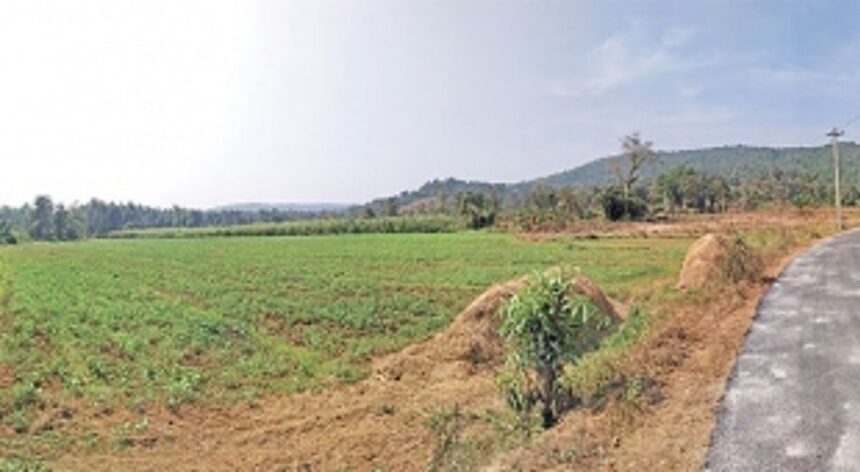
There was a time when Ibrampur was one of the major producers of coconut, sugarcane and banana crops. However, due to various circumstances, the agriculture sector has been devastated in the village and most of those involved in it are opting for different type of jobs and even migrating.
That has been met with a sense of sadness as the village has been involved in agriculture for decades now. In fact, its first sugar plantation began in this village in the year 1969 and it helped the village get its electricity supply. This was at a time when the other villages were struggling for basic services.
The village’s proximity to Chapora River was considered to be a blessing and it not only helped with the sugarcane plantation and also providing the village with adequate water supply.
Further through the Lift Irrigation Project (LIP) scheme, farmers received water supply for their different type of crops which also included arecanut.
This was a major factor in developing the village as initially the financial position of the people of the village was not good but slowly and steadily due to their farming activities, their financial status improved. Senior citizens recall that at first, it was a means of providing their own families with food for consumption and not for commercial purposes. Later, it became a major source of income and from here, the villagers began using scientific methods of farming to help sustain their livelihoods.
However, that was the story then and all that has changed now. Farmers have blamed wild animals such as bison and boars and wild birds for destroying their crops, which have resulted in them facing losses. They have pointed out that they have been unable to grow banana and sugarcane crops due to this. They have also blamed monkeys and peacocks for damaging the crops as well.
Initiatives like the electric fencing provided by the MP have not proved to be formidable deterrents.
Secondly, the water supply system has deteriorated and the irregular water supply has led to their crops dying and fields drying up.
When pointed out that they were boasting about the LIP scheme, the farmers explained that the irrigation project worked well for around ten years or so but that there were problems thereafter and that in the last four to five years, the irrigation system has been in bad shape. They added that the fault lies with the water pump failure and pipeline leakages, despite the repeated reminders to the authorities.
On that note, they lament that they have approached several departments but their pleas have fallen on deaf years.
Devastated after floods
The village was also badly affected by the recent floods to the extent that some of the villagers lost their houses, cattle and were even homeless for more than a month.
While the government surveyed the village and provided compensation to the affected villagers, the villagers claimed that they are still in the process of recovery and that the government should still provide them with additional assistance. For instance, there are three families who are still homeless as the structure of their houses may collapse any time soon.
No much change despite being adopted by MoS
In the year 2015, the village was adopted under the Sansad Adarsh Gram Yojana scheme by Union Minister of State (MoS) and North Goa MP Shripad Naik. Under this, the village was supposed to be converted into a model village but at present, it has not witnessed any major change. While awareness programme was held, several committees were formed and a village development plan was created – but locals say that due to the lack of interest by the authorities, works planned did not become a reality except for a few. The Community hall, helping dairy farmers and construction of dairy farmers are some of the activities carried out.