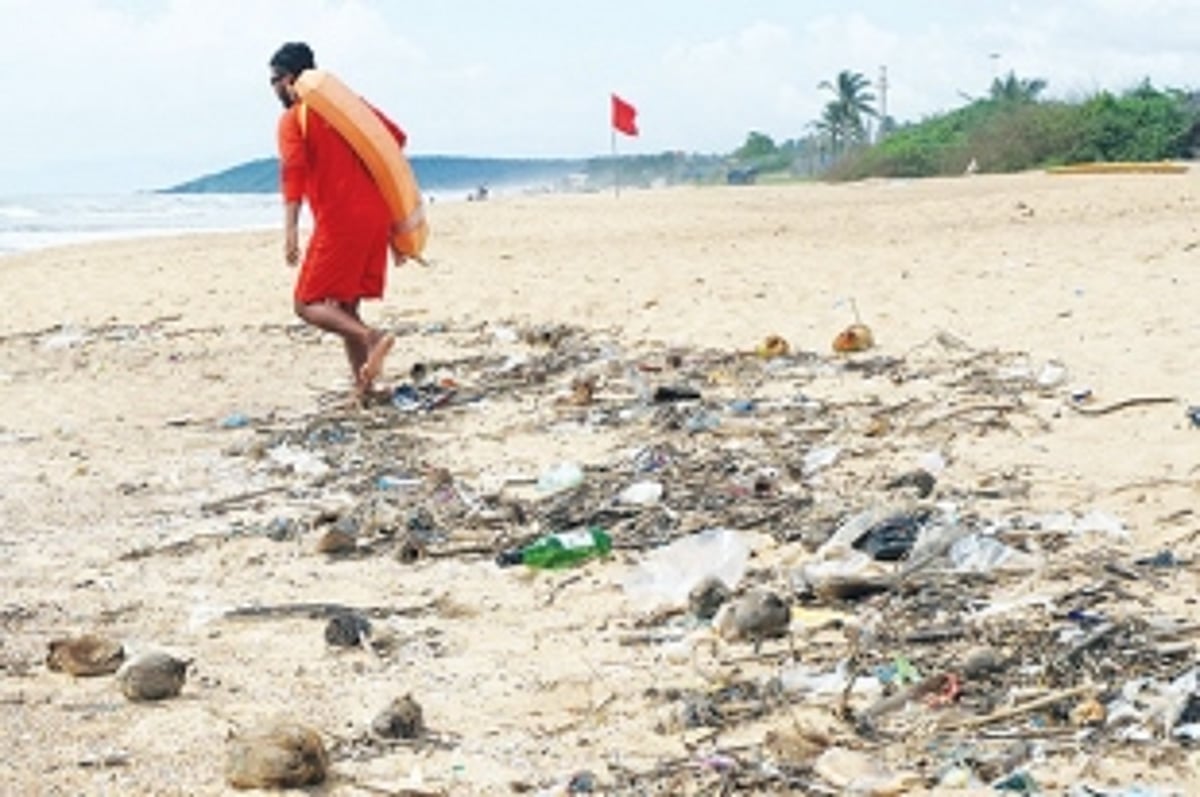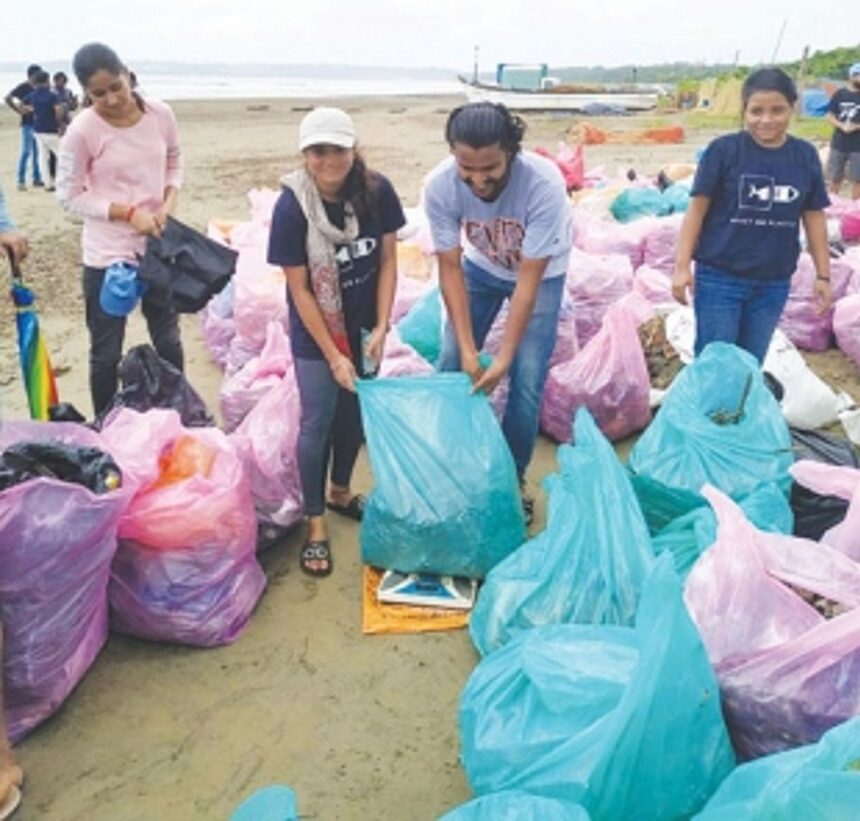
The recent collection of over 1,000 kilograms of plastic waste from just from one of Goa’s beaches (Caranzalem) by the team of scientists from CSIR-National Institute of Oceanography (NIO) has exposed how filthy our beaches are. The clean-up drive undertaken around the one-km-long beach stretch also saw the collection of 486 kg of organic waste including papers, and other organic trash, 720 glass bottles and 125 metal cans. All this only confirms our worst suspicions and the harsh reality that our once beautiful beaches have trash all over them.
According to NIO, the marine organisms along Goa’s shoreline are facing a threat from the huge plastic debris that gets washed ashore during the monsoon season. Almost 80 per cent of the beach trash is plastic in the most polluted beaches of the State, of which 20 per cent trash comes from the ocean (fishing trawler, ship derived) and 80 per cent from land-based sources including tourism.
Plastic has increased more in 10 years compared to previous 40 years
NIO Senior Scientist Mahua Saha said that the presence of plastic on the beaches has increased, more in a single decade than it has in the previous 40 years.
Scientist explains that around the world, one million plastic drinking bottles are purchased every minute, while up to 5 trillion single-use plastic bags are used worldwide every year. In total, half of all plastic produced is designed to be used only once — and then thrown away.
Saha, who was part of the team that conducted research along the beaches of Keri, Vagator and Calangute in North Goa and Colva, Mobor and Galgibag in South Goa, said that almost 80 per cent of the waste on the beaches comprises of plastic. “Of this, 80 per cent of trash is coming from land based sources including tourism. The balance 20 per cent is from the ocean,” she said.
The team of scientists has studied the distribution, abundance, weathering and chemical characteristics of Microplastic Pellets (MPPs) on the beaches of Goa, and its transport to the coast during the southwest monsoon.
The onshore plastic, plastic debris moved in during the monsoon season and ocean-based sources, may lead to major threat to marine organisms,” they said in their study.
Fishermen one of the causes but they are also the ones suffering
Though, the scientists feel that fisherman are one of the causes of the beach plastic pollution because of unawareness, they also admit that the increasing amount of plastic in the ocean their fish catch might get affected.
The increasing plastic in the sea has become a major problem for the traditional fishing community in the State, who have been finding as much of plastic as compared to the amount of fish they collect during their regular catch. The fishermen claim that after their nets pick up the fish, they have to spend time segregating plastic and the catch, as the quantum of waste that gets stuck in the net is huge and appears to be increasing.
“The problem has been worsening in the last ten years. There are times when 50 per cent of the catch is just plastic from the sea. So after we pull out the net, equal time goes into separating fish from the plastic trash as compared to the time we spent taking the fish out,” said Maria, a 45-year old fisherwomen from Caranzalem, whose family’s last two generations have been in the fishing business.
She said that she has been active in the fishing trade for the last 15 years in Caranzalem. “For the last two to three years, we are getting a lot of waste items like plastic, bottles, in our nets. Sometime, the thrash is more than the fish. People throw waste on the beach, and they don’t understand,” she lamented.
Another fisherman, Savio, conceded that ‘the plastic that gets stuck in their net, is only thrown back onto the beach only and from there it gets washed back into the ocean’. This proves that there’s no immediate end in sight to this vicious cycle.
We consume plastic through fish
It’s a world over scenario and Goa is not an exception to it. From the sea and onto our plates, plastic has been travelling into our system consistently after the consumption of fish, according to experts.
“Fish consumes microplastics that are discharged into the rivers and ocean. And from the fish, it comes into our body. So indirectly, we are also consuming the same plastic that we threw away,” said a senior official from the Environment Department.
The studies conducted world over have revealed the presence of microplastics in fish, which are usually consumed by human beings. There is no study conducted by Goa government, despite the fact that fish is part of the staple diet consumed by the populace of the coastal State.