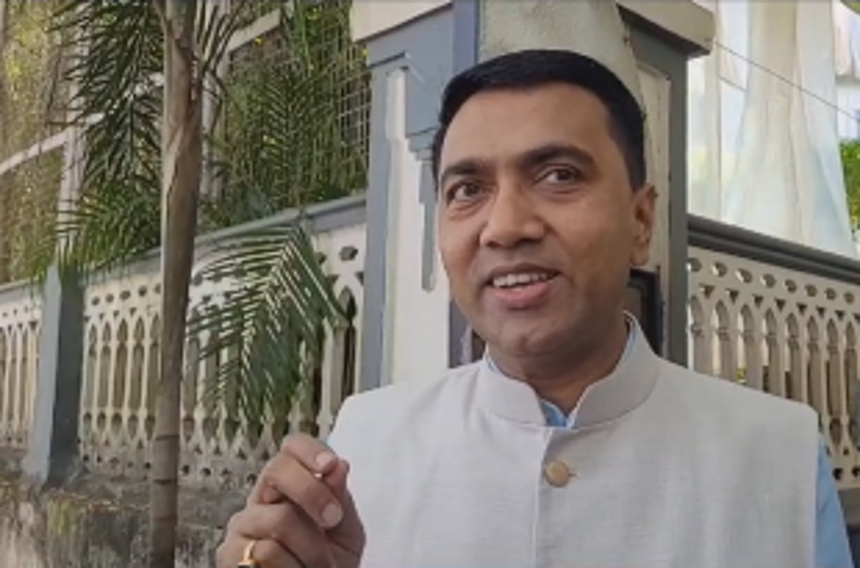
PANJIM: Chief Minister Pramod Sawant on Wednesday said that the State government has again requested the Central Environment Committee of the Ministry of Environment and Forest & Climate Change (MoEF&CC) to exclude 40 villages from ecologically sensitive areas.
Sawant said that since 2019, the government has made the same request with the Central Environment Committee, which recently visited the State to seek inputs from stakeholders over the draft notification issued in July last year.
“When I was holding Forest portfolio, I had made same request to Union Minister for Environment Bhupendra Yadav,” he said
Sawant further clarified that there will be no restrictions on the individual activities, which will continue unhindered except for commercial mining and red category projects in the remaining villages. He suggested that only 69 villages located in the Western Ghats be taken into consideration for designation as eco-sensitive areas and may add 10 more villages which are contiguous as they meet the three criteria of the MoEF&CC.
“Continuity with the Western Ghats, height and type of species are the three criteria for inclusion in ESAs,” he said adding that the government will not grant permission if they are not permitted by the Centre. Inclusion of villages in ESA is for protection environment and the Western Ghats, he added.
Stating that he had studied the matter when he was holding the Forest portfolio, Sawant said, “It is possible to exclude 40 villages from the list and 10 more villages can be added to the list of 59 remaining villages, to include total of 69 villages under ESA.”
In the draft notification, the Union Ministry had proposed that 99 Goan villages spread over 1,461 sq km be declared as eco-sensitive areas. The Mhadei, Netravali, Cotigao, Bhagwan Mahaveer and Bondla Wildlife Sanctuaries have been included in the eco-sensitive areas.