Polling for the Zilla Panchayat (ZP) elections across Goa recorded an overall voter turnout of 70.81 per cent, with North Goa registering 72.66 per cent and South Goa 68.93 per cent, according to official data.
The elections, held for 50 constituencies, began at 8 am and concluded peacefully at 5 pm. Long queues were witnessed outside several of the 1,284 polling booths across both districts from the early hours of the day. Over eight lakh voters were eligible to cast their ballots.

A total of 6,15,581 voters exercised their franchise, including 2,95,720 men, 3,19,859 women and two voters from the third gender category, reflecting higher participation among women voters.
Several constituencies reported notably high turnout, with Latambarcem topping the list at 88.29 per cent, followed by Querim (87.99 per cent), Nagargao (86.71 per cent), Pale (86.58 per cent) and Honda (85.53 per cent). Other areas with strong participation included Arambol (80.43 per cent), Maem (79.69 per cent) and Sanvordem (79.21 per cent).
Urban and coastal constituencies recorded comparatively lower turnout. Taleigao registered 59.44 per cent, Colva 59.97 per cent, while Navelim saw one of the lowest turnouts at 55.29 per cent. Velim and Cortalim also remained below 57 per cent.
In absolute terms, Sancoale recorded the highest number of votes polled at 18,176, followed by Corlim (16,066) and Socorro (15,786). Corlim had the highest number of polling stations at 35, followed by Sancoale with 33.
The elections saw participation from major political parties including the BJP, Congress, AAP, Goa Forward Party (GFP), Maharashtrawadi Gomantak Party (MGP). The Congress and GFP contested the polls in an alliance, while the BJP fought in alliance with the MGP.
A total of 226 candidates are in the fray — 111 in North Goa and 115 in South Goa — including 62 Independents. The BJP contested 40 seats, while AAP and Congress fielded candidates in 42 and 36 constituencies respectively. The GFP contested nine seats. Counting of votes is scheduled for December 22.
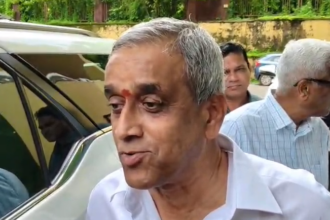
At Taleigao, Panjim MLA and Revenue Minister Atanasio Monserrate reiterated the need to empower Zilla Panchayats, endorsing Chief Minister Pramod Sawant’s assurance to grant greater authority to district-level bodies. He said ZPs are constitutionally vested with responsibilities but have been given little authority in Goa, despite members representing large segments of constituencies.
However, the polling process was not without shortcomings. Persons with disabilities reported inconvenience at some polling stations due to the absence of basic facilities such as wheelchairs and dedicated transport. Pregnant women were also reportedly made to stand in regular queues at certain booths, as no priority arrangements were in place.
In Salcete taluka, polling witnessed a steady turnout, but voters expressed widespread concern over the limited powers vested in Zilla Panchayats. Many described the institution as weak, with minimal authority over funds and development decisions.
“Voting is our democratic duty, and that is why we are here,” said Ramesh Naik, a voter from Salcete. “But a Zilla Panchayat member hardly has any power. A village panch member can take quick decisions, but a ZP member has to run from one department to another.”
Residents noted that this lack of authority has contributed to declining public interest in Zilla Panchayat elections. Custodio Fernandes said people no longer see tangible outcomes from these polls, while younger voters stressed the need for decentralisation to strengthen grassroots democracy.
Senior citizens recalled a time when Zilla Panchayats played a more active role in district-level planning, arguing that excessive centralisation has diluted their purpose.
Despite the criticism, voters said they participated with the hope that their mandate would eventually lead to reforms. Many urged the State government to clearly define the role of Zilla Panchayats and empower them with adequate financial resources and administrative authority.
Polling concluded peacefully across the State. The State Election Commission had set up 1,284 polling stations — 658 in North Goa and 626 in South Goa — where voters exercised their franchise using ballot papers.