The village panchayats of Cotigao, Gaondongrem, Loliem, Khola, Agonda and Poinguinim in Canacona taluka are surrounded by heavily forested areas. Cotigao wild life sanctuary which is also present in the region houses thick vegetation and a plethora of flora and fauna.
Residents of the area live here peacefully but there are occasions when their sleep is disturbed by wildlife. Being educated folk, the residents don’t resort to violence against the animals as a retort but instead they inform the forest department to come in to catch the stray animal. The trapping of a leopard at Maxem in Canacona on July 31 by forest department personnel was not an isolated case.
The striped cat is a regular visitor to the villages from the forest and makes forays into houses, cattle sheds and yards. The carnivorous nature of the animal makes it a threat to the residents and their pets. Besides, meat eaters haven’t taken a liking to leopard meat either. Hence, hunting the animal for food isn’t an option. There have been instances when leopards have attacked and hunted domestic animals but there haven’t been reports of attacks on humans to date.
Canacona forest ranger, Prakash Naik, when contacted informed that these forays by wild animals into human dwellings are primarily because domestic animals are an easy target and are available in abundance as compared to heavily forested areas. He went on to note that once the animal catches its prey, it returns to the forest after devouring it and returns the following week for another kill.
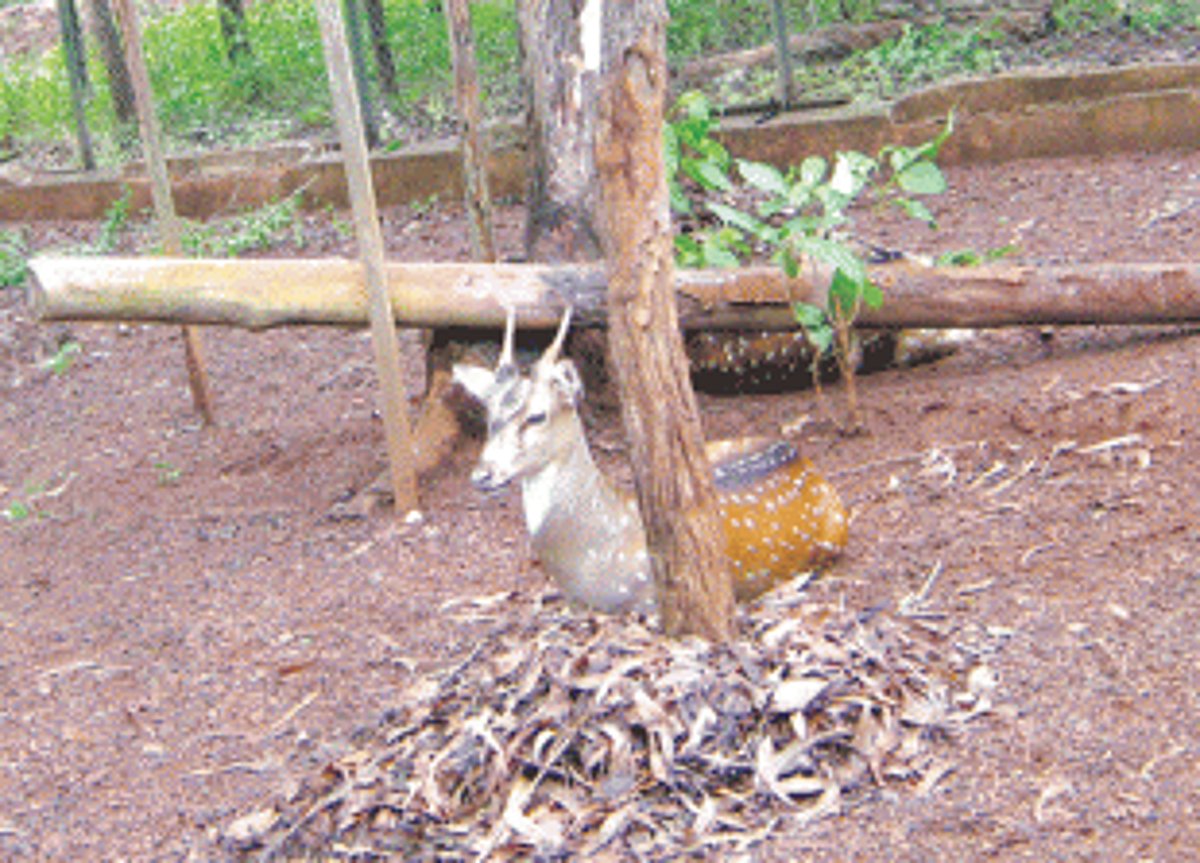
People promptly report to the forest department regarding wild animals but there have been no instances of sightings of wild boars, deer or other species of animals which humans consume. It has been learned that poachers are informed of the locations of these animals by various sightseers following which they poach the animal and sell the meat, primarily bought by politicians.
It was also noted that some forest department personnel were hand in glove with poachers. However, environmentalists of the area highlighted the poaching issue in 2001 and repeatedly followed up. Questions raised at the Goa Legislative Assembly also helped slow down the illegal hunting.
Poaching still occurs in the area but is much subdued. A paltry 10 forest guards are placed in a 352 sq km area to keep tabs on illegal hunting. Poachers, however, easily outnumber the officials and are well armed with un-licensed guns, high beam torches mounted on their foreheads, hand held torches and well trained sniffer dogs. The forest officials on the other hand are equipped with a baton and a low beam torch which is hardly enough to scare poachers.
Sniffer dogs are used for hunting due to their ability to track prey. They bark and march fervently towards the target. This alerts the poachers who shine their flash lights at the target and shoot at it from two different angles, keeping in mind the safety of their colleagues. The hunted animal is chopped up, the unwanted parts fed to the assisting canines and the meat is taken back to be sold.
Although poaching usually occurs at night, most of the men scan the area during the day for tell tale signs of the location of the animals. Pug marks, excretes, hair on barks of trees etc are looked for. The wild boar which is a naturally itchy animal rubs itself on the barks of trees and leaves behind clumps of hair in the process. Bison dung is also looked for.
Some of the poachers usually cut branches of trees and leave them in a path as they tread through the forest in order to find their way back. This way they do not get lost even if the dogs lead them astray due to the movements of unwanted prey. Poachers usually disguise themselves as villagers collecting firewood as they come armed with sickles and traverse through the forest rather than using the main roads even after dark.
They carry unlicensed weapons which are cheaper than branded guns and available in plenty all over the country. Besides, if caught, ownership of an unlicensed gun cannot be traced. Many poachers who were arrested carrying wild meat managed to escape the law due to loopholes and witnesses turning hostile.
Deities of the tribal people who inhabit the region are placed on top of the hills. The annual festival – jatra is celebrated for a whole week and for this, the food for the devotees consists of the meat of wild animals. The blood of the slain animal is sprinkled around the temple while the meat is cooked and eaten by them.
Forest department personnel are well aware of these rituals by the tribals but are too afraid to confront them and venture into their territory fearing their wrath. Besides, these rituals are usually conducted after sun down and the devotees are usually in a frenzied mood by then. That apart, they have the blessings of their political gods who patronize them in order to receive votes.
With electricity being provided to almost all hamlets in the area, meat can now also be effectively stored in refrigerators. Prior to them receiving electricity, they would semi-cook the meat and marinade it thoroughly with salt and preserve them in earthen pots, tie it with cloth and hang the pots to the roof of their kitchen. This way the meat would remain edible for days.
Exotic meat lovers from all over Goa visit the tribals in Canacona and accompany them on their poaching trips. They pass by check posts as picknickers following a poaching trip and load the meat into their vehicles once they have passed the check post and manage to evade authorities.
Apart from guns, poachers also use crude bombs to kill carnivorous animals. The bombs are wrapped with the intestines of chicken and are placed at specific locations where animals like wild boars foray. On taking a bite, the bomb explodes and the animal is killed instantly. Poachers wait for the sound, rush to the spot and collect their booty.
There is a lot of deception that occurs in the exotic meat market as well. Poachers sometimes sell country-bred pigs that have thick skin and hair as wild boar meat and sometimes brown dogs are killed and their meat is sold as deer meat. Country fowl are sold as wild fowl and the gullible meat eaters buy the meat at exorbitant rates. The peak season for poaching is right after the rainy season at night.