TEAM HERALD

PANJIM: Though tons of newspaper reams have been dedicated to the issue, agitated gram sabha discussions have rocked villages and various initiatives have been thrashed by the government, the satisfactory garbage management has eluded Goa over the past few decades with the latest initiative too having bleak prospects, in terms of being a tangible solution.
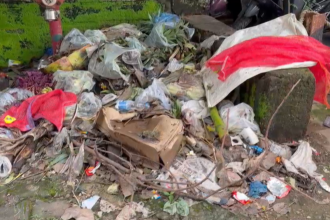
Though Goa was once described as a paradise of swaying palms, evergreen hills and sun kissed beaches, it may soon be known for garbage dotted highways and carelessly littered beaches.
In the latest initiative, a committee headed by the Environment and Forest Minister, Alina Saldanha has given directions ~ for phase one of the garbage collection ~ that various departments should be responsible for various sections of a designated highway.
“Littering is a punishable offence,” Goa State Pollution Control Board member secretary, Levinson Martins told HERALD, adding, “The Pollution Control Board has written to Collectors ~ North and South ~ about the issue.” The authorities had threatened to impose a fine of Rs 5,000.
However, there is no word on the progress made on this front. Referring to the Goa Non-Bio-degradable Garbage Control Act 1996, he says that there are powers conferred to certain authorities and Collectors can instruct magistrates to take up this issue.
The Goa State Pollution Control Board is monitoring garbage management in many coastal villages and other areas as mandated by the courts.
The Pollution Control Board has also been speaking to panchayats and municipalities to get their act and see to clearance of garbage within their jurisdiction.
Earlier, a contractor had been appointed, but he apparently absconded and the authorities are contemplating on releasing another tender to appoint a professional agency to collect garbage.
In the first phase of the new drive by various departments that was finalised at a meeting by the environment minister, officials told media that the progress was made as seen in the tables on January 21 and 22 along the highways.
According to reports sources of Municipal Solid Waste are broadly divided into:
Residential: Apartments, duplexes, houses, bungalows;
Commercial: Office buildings, shopping malls, warehouses, hotels and restaurants;
Institutional: School and educational institutes;
Others: Medical facilities, prisons;
Industrial: Packaging of components, office waste, kitchen and canteen waste.
Types of Waste include Domestic / Trade / Institutional waste: Food waste and other discarded material such as paper, plastic and glass and metal, rags and packaging material.
However, though a lot of it is collected by local bodies, some of it is dumped along highways, commercial enterprises such as construction firms and restaurants too dump debris and wet waste along highways clandestinely. Plastic is another culprit.
Within the jurisdiction of the CCP itself, there are approximately 11,000 households & offices, 500 hotels & restaurants, 110 hospitals & clinics and 8 schools and it generates 50 tons per day (biodegradable 30 tons per day and non-biodegradable 20 tons per day.)