VITHALDAS HEGDE & KARSTEN MIRANDA
Citizens label Minister Dhavalikar’s comments on night-time electricity ‘unreasonable’, ‘ill-timed’ and ‘out of touch’; argue evening power is a necessity, not a luxury; night workers & EV users challenge the logic behind the 20% surcharge; higher bills await smart meters.
Though the hike in power tariffs has evoked sharp criticism from consumers and opposition parties in the State, sources in the electricity department said the revised rates for domestic consumers will be applicable only after smart meters are installed.
The State government has issued a work order to an agency to install smart meters for domestic consumers, which may take at least another year and a half to impact six lakh consumers with increased power tariff.
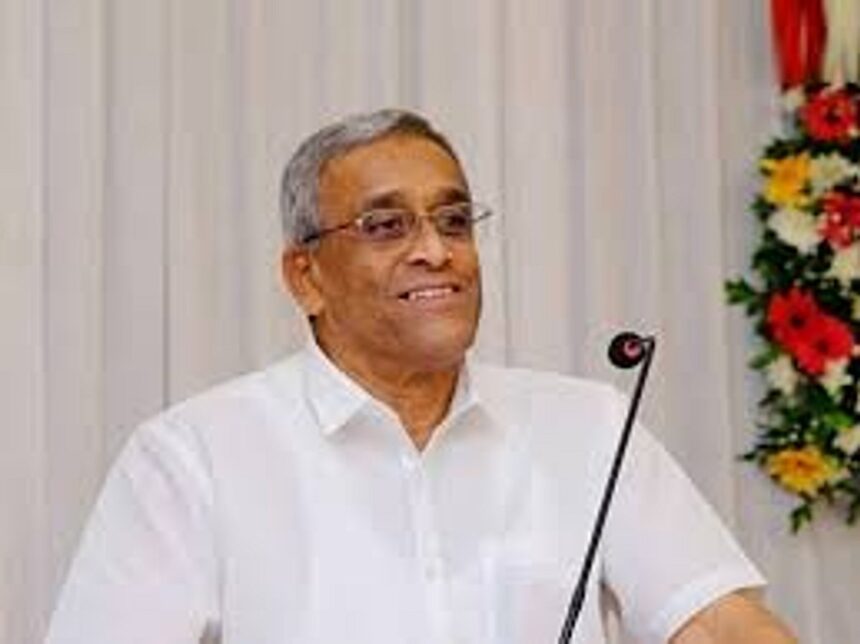
Power Minister Ramakrishna ‘Sudin’ Dhavalikar’s statements on responsible power usage have come in for flak. An Electricity Department official clarified that revised billing will start only after the process of installing smart meters for domestic consumers is completed. Implementing increased power tariffs for nearly six lakh domestic consumers during the current financial year is difficult, the official added.
High Tension consumers, i.e., industries, are currently billed as per the time of metering (TOD), and the new tariff will be immediately implemented for them under the revised Tariff Order issued by the Joint Electricity Regulatory Authority (JERC).
As per the new Tariff Order, barring agricultural consumers, the timings for domestic consumers have changed. Currently, domestic consumers are charged a normal rate for power consumed from 9 am to 5 pm; this has now been hiked to 120%.
Citizens across Goa have reacted sharply to Dhavalikar’s remark that those “misusing” electricity after 5 pm could face a 20% surcharge, calling it unreasonable, ill-timed, and completely out of touch with reality. From coastal villages to urban centres, Goans said the remark ignored how families rely on power mainly after sunset and revealed little understanding of the State’s long-standing power woes. Many have taken to social media to voice their anger, turning comment sections into a stream of frustration and disbelief.
For many, the message was simple — evening electricity use is a necessity, not a privilege.
“No one wastes power. Power is a necessity after sunset, not a luxury,” said Adelmo Fernandes.
“That view was widely shared online. ‘Waste or use, electricity is needed mostly after sunset. That is its purpose. What is the end game – dark ages?’ asked Meenacshi Martins.”
The proposal, several pointed out, fails to account for ordinary work hours and daily life.
“The common man goes to work during the day and returns home only after 5 pm. After that, they do all their household chores. This hike will target ordinary families,” said Norvin Menezes.
Others like Melvin D’Costa of Fatorda described it as detached from reality. “We reach home after 5 pm, switch on the lights, cook, wash, and study – that’s not misuse, that’s life. It’s like taxing people for eating dinner after dark,” he said.
The reaction was even sharper among those who work nights. “We finish our shifts around 10 or 11 at night. That’s when we use electricity for basic needs,” said Adlino Dias, a hotel worker from Colva. “If this rule comes in, it will punish the very people who keep Goa’s tourism industry alive.”
Electric vehicle users also found the idea absurd.
“So if I charge my EV at night, when the grid load is lower, I’m wasting power?” asked Rohan Mascarenhas of Panjim. “That’s not conservation, that’s confusion.”
As outrage spread, many questioned the very premise of the proposal and whether it could even be implemented fairly.
“Can you define ‘waste power’ and explain what it even means?” asked Sahid Beg.
“How do you know if the power is wasted or used? Who decides that?” asked Rajesh Parvatkar.
“How can anyone differentiate between misuse and genuine use? What is the criteria?” asked Jerome Pinto.
Others suspected the statement was a precursor to something else.
“First, they call it misuse. Then they install smart meters, and suddenly the bills go up,” said Clesito Fernandes of Mapusa.
Beyond the content of the remark, its tone too drew anger. Many felt it sounded patronising and misplaced.
“It sounds like people are being scolded,” said Melvin Pereira from Margao. “Officials should help citizens manage consumption, not threaten them.”
The frustration extended to broader issues of accountability.
“Before talking about wasting electricity, stop ministers from misusing their power in other ways,” said Valeriano Carvalho.
Others pointed to visible waste within the government’s own systems.
“And what about the streetlights that are on even during the day? Is that conservation?” asked Rayelle Rodrigues.
Residents in several villages shared similar examples. Gayatridas Gauthankar from Bicholim said, “In our village of Mulgao, streetlights stay on till 12 or 1 in the afternoon, and at night they are switched on only after 10 pm.” She added that complaints to the local office had gone unanswered.
For many Goans, the controversy hit a raw nerve because it came against the backdrop of frequent power cuts and poor voltage.
“We spend nights without power and still get blamed for wasting it,” said Anil Kamat of Mapusa.
“If there’s truly a shortage, improve the supply first. We already pay enough for poor service. Don’t call us wasteful for simply turning on the lights,” said Lloyd D’Souza from Chinchinim.
Others described the remark as tone-deaf to citizens’ hardships.
“When people are already paying high bills and living with constant outages, such statements feel like a taunt,” said Marcel D’Silva of Ponda. “It’s the government that should account for supply failures, not the people.”
A number of Goans also highlighted how life in the State naturally extends late into the evening.
“Goa doesn’t stop at five,” said Domnic Pereira. “People working in hotels, casinos and restaurants come home late. We need electricity at night – not lectures.”
Amid the anger, calls for transparency grew louder.
“If the department truly conducted a study on consumption, share it with the public,” said Rohit Kamat of Panjim. “Put the details in the public domain and explain why citizens were not consulted before floating such an idea. Tell us how you define misuse – because citizens are not the problem; planning and infrastructure are.”
Some felt the announcement was a distraction from deeper, unresolved issues.
“Every time people complain about outages or tariff hikes, something new is announced,” said Nilesh Naik of Margao. “First smart meters, now surcharges – anything except improving the grid.”
The timing too, many noted, could not have been worse.
“Perfect timing,” said Aaron Noronha. “Just when Goans light up for Christmas, they’ll tell us we’re misusing power.”
Others dismissed the idea as simply impractical.
“If they really want to conserve power, start with government offices that keep air-conditioners running even when empty,” said Savio Fernandes of Vasco. “Why target ordinary people for using lights after dark?”
Across social media, the anger shows no sign of fading.
“Before preaching about saving electricity, fix the street lights and cables that waste it daily. Goans don’t want gimmicks – they want steady power,” said Melvin D’Costa.
As one widely shared post summed it up:
“Goa doesn’t waste electricity. Goa wastes patience waiting for the lights to come back on.”
Meanwhile, Opposition parties have criticised the government’s decision to hike power tariff for domestic consumers in the State.
The Goa Pradesh Congress Committee said the additional 20% charge on electricity consumption from 5 pm to 9 pm was an anti-people decision by the BJP government.
“This is nothing short of daylight robbery on hard-working Goans, who are already burdened with skyrocketing prices, unemployment, and economic slowdown,” GPCC Media Department chairman Amarnath Panjikar said.
“This move will directly hit households, students, small shopkeepers, and business establishments who depend on electricity during these peak hours. Instead of providing relief to citizens, the BJP government has chosen to punish Goans for its own failures and inefficiency in managing the power sector,” he added. He demanded that the government immediately withdraw the 20% hike, failing which there will be widespread protests across the State.
Condemning the hike in power tariff, Goa Forward Party president and MLA Vijai Sardesai said,
“Electricity is a necessity, not a luxury. A 20 per cent hike on night usage hurts EV owners who charge responsibly at night. While Union Minister Nitin Gadkari promotes EVs, Dhavalikar discourages them. Such policies defeat India’s green goals. This government knows how to squeeze people and generate revenue.”
AAP State President Adv Amit Palekar slammed the government, saying the move exposes BJP’s insensitivity towards the common man. Displaying an actual electricity bill, Palekar revealed that Goans are already paying more than 25% extra charges over the base tariff, even before the new surcharge comes into effect.
He called it an anti-people and anti-middle-class decision that will further burden already struggling Goans.
“BJP wants to take people of Goa back to the Stone Age and use lamps during the night. Already, over 25% extra charges are being applied to the base power fare and I have a bill here to prove it. And now, this government wants to penalise people further by charging an additional 20% surcharge,” Palekar said.
He added,
“BJP wants to stop you and your family from having a good time together. They want to stop you from watching TV with your family or having dinner together. They don’t want Goans to live with comfort — they want to take us back to the Stone Age.”
Palekar also raised concerns for EV users, saying the surcharge will discourage people from adopting electric vehicles.
“People charge their EV cars and bikes at night after work. This new rule will directly impact all EV users. The same government that encouraged EVs now wants to penalise those who use them. This shows the hypocrisy and incompetence of this government.”
Taking a dig at the Power Minister, AAP National Youth Vice President Siddesh Bhagat said,
“People of Goa should take their EVs to Dhavalikar’s house and charge them there. If he wants to penalise citizens for using electricity, he should first provide reliable and affordable power. This government has failed on every front — from power to employment — and now wants to punish people for its own inefficiency.”