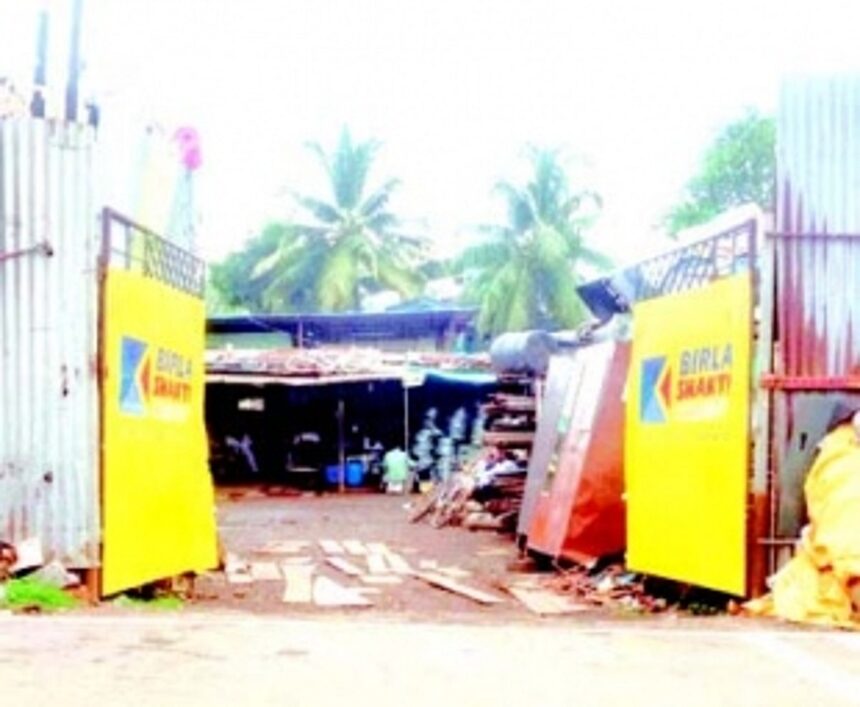
PANJIM: Scrap dealers voiced their complaints regarding getting licences and complying with proposed rules for scrap-dealing enterprises and appealed for a single-window clearance system for registration during the meeting held to finalise Goa’s new scrapyard policy.
It may be recalled that the government is in the final stage of preparing the policy, which is attempting to relocate scrap yards that are dispersed haphazardly throughout the State. The earlier policy had lapsed in 2019.
In this regard, the Goa State Pollution Control Board (GSPCB) convened a meeting at its head office in Pilerne with stakeholders where the All Goa Association of Recyclers (AGAR) conveyed their grievances. They pointed out that they faced a big challenge in getting permissions but added that they would have no issues if they were to fall under the new regulations.
They reiterated their demand for a single-window clearance system, as they pointed out that presently, it is quite a cumbersome task to get permissions from multiple departments.
The recyclers’ group brought to the notice of the authorities the fact that there is no policy in the scrap industry, which makes it difficult for dealers to register or get land for the establishment of scrap processing facilities. It requested that scrapyards in industrial estates be given land. Despite their decades-long experience in the industry, the scrap merchants claimed that they were having trouble having their permits renewed.
They further added that some panchayats issue them licences, but many panchayats do not do so.
In response to the objections they encountered from individuals while collecting scrap metal, the scrap dealers also asked that identity cards be issued to scrap collectors.
Besides AGAR members and scrap dealers, the meeting was also attended by representatives of private waste management companies, Indian multinational consumer goods companies, reputed NGOs working in the field, and officials from the Goa Waste Management Corporation (GWMC), panchayats, municipalities, corporations, and the Goa Industrial Development Corporation (GIDC).
It may be recalled that in November 2023, the GSPCB released proposed rules for scrapyards. The draft contains a number of requirements for scrap dealers, including that the land used for waste collection be kept dry, fenced, and concretized; recyclable waste should be sent to approved recyclers; and non-recyclable waste should only be disposed of through authorised channels, such as processing at cement kilns, etc.
According to the proposed rules, registration will be required with the Town and Country Planning Department (TCP), the Directorate of Fire and Emergency Services, the panchayat or municipality, GIDC and other departments like Revenue, Health, Labour & Employment.
Feedback will be integrated into the draft policy: GSPCB Chairman
PANJIM: Goa State Pollution Control Board (GSPCB) Chairman Mahesh Patil, stated that the board has shared its recommendations for finalizing the draft scrapyard policy with the Goa Waste Management Corporation (GWMC).
Additionally, Patil highlighted that the state government’s initial plan to relocate scrapyards to industrial estates faced obstacles due to limited space and challenges for scrap dealers in acquiring plots within these estates.
Speaking about the outcome of the consultation with stakeholders, Patil assured that the feedback received would be integrated into the draft policy. Emphasizing the collaborative efforts of the board and GWMC, he noted the initiation of the first scrap dealers’ inclusion policy.
Acknowledging the significance of the existing waste collector license as a landmark policy, GSPCB officials pointed out the need for concentrated efforts in addressing the diverse status of approximately 800 scrap dealers in Goa, ranging from illegal and informal to formal.
The officials shared that their meeting aimed to comprehend the current status of scrap dealers in the recycling supply chain, the challenges they face during formalization, insights from similar initiatives nationally and globally, and considerations for the upcoming policy. The officials added that their intention was to understand perspectives from various stakeholders, including government entities (urban local bodies, panchayats), waste generators, industries, and the formal waste management ecosystem.