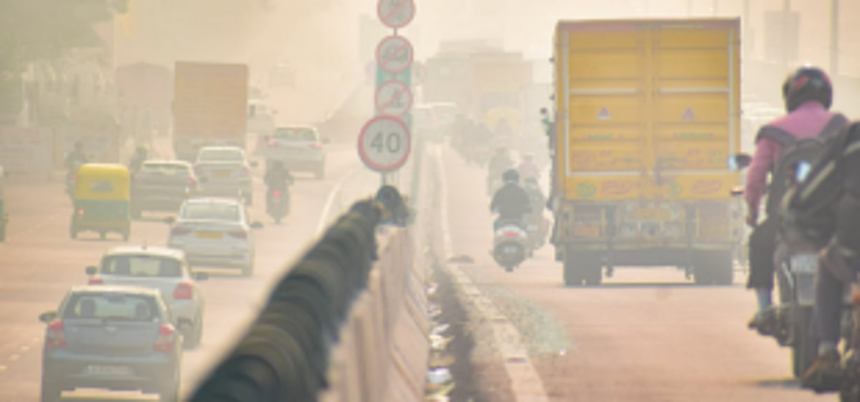
PANJIM: The Goa State Pollution Control Board (GSPCB) has roped in Indian Institute Technology (IIT) Goa to conduct a two-year long comprehensive study to understand the air quality across the State and recommend mitigation measures.
IIT Goa has already proposed the need for deploying sensor network for more efficient air data collection and analysis. States namely Maharashtra and Meghalaya have already adopted concept of senor monitoring of air quality on trial basis. The sensors will monitor particulate matter (PM10, PM2.5), ozone, oxides of nitrogen (NOx), and sulphur oxides (SOx).
The sources informed that the scope of the study includes a complete study to understand the air quality data across various zones — industrial, residential, commercial, port, mining belts and coastal area.
Sources said that various techniques including the existing methodology and available data will be used to study the air quality and recommend mitigation measures.
“An interim report is expected shortly, following which approval will be given for deploying senor-based network,” sources said.
Currently, the ambient air quality monitoring is conducted through a manual method (analysis of pollutants measured once every six days where data is transferred manually) and through continuous method (automatic real-time data collection of pollutants measured).
Manual monitors to measure air quality have been used since 1984-85 by the Central Pollution Control Board (CPCB), which was later renamed the National Air Quality Monitoring Programme (NAMP) network.
Low-cost monitoring sensors measure ambient air quality based on light scattering technology using much smaller equipment as compared to existing air quality measuring technology.
The Centre for Science and Environment (CSE) in its recent report has revealed that 13 per cent of the total deaths reported in Goa in 2019, were attributed to air pollution.