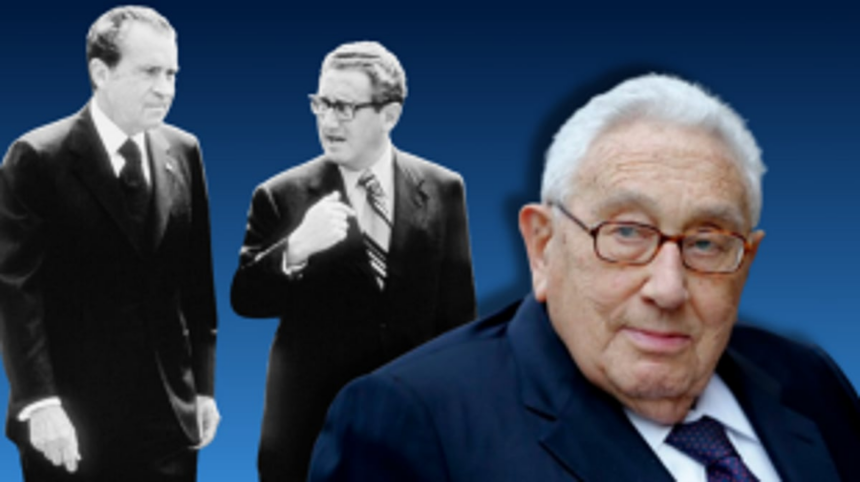
Renowned diplomat Henry Kissinger, known for his influential roles as a national security adviser and secretary of state under two U.S. presidents, passed away at the age of 100 at his Connecticut residence on Wednesday. The news, confirmed by his geopolitical consulting firm, Kissinger Associates Inc., did not disclose the circumstances of his death. Kissinger’s legacy includes a controversial Nobel Peace Prize, awarded for his involvement in key global events during the 1970s, such as the U.S. diplomatic opening with China and arms control talks with the Soviet Union.
Despite his centenary, Kissinger remained active in recent years, participating in White House meetings, publishing a book on leadership, and addressing a Senate committee on North Korea’s nuclear threat. His unexpected visit to Beijing in July 2023 to meet Chinese President Xi Jinping highlighted his enduring influence. Born in Germany in 1923, Kissinger fled to the U.S. in 1938, eventually becoming a naturalized citizen. A Harvard faculty member for 17 years, he played a pivotal role in facilitating communication between the Johnson administration and the Nixon camp during the Vietnam War.
Kissinger’s diplomatic contributions extended beyond Vietnam, with his involvement in the Arab-Israeli conflict and the historic U.S.-China rapprochement. However, criticism arose for his support of anti-communist dictatorships in Latin America. His 1973 Nobel Peace Prize, shared with North Vietnam’s Le Duc Tho, sparked controversy, leading to resignations from the Nobel committee. Despite accolades for his brilliance, Kissinger faced accusations of war crimes.
Following Nixon’s resignation in 1974, Kissinger continued as secretary of state under President Ford, maintaining a strong influence on foreign affairs. His diplomatic prowess played a role in the Vladivostok summit with Soviet leader Brezhnev, leading to a strategic arms pact. However, challenges in the India-Pakistan War of 1971 and controversies surrounding U.S. interventions in Latin America marked this period.
Post-government service, Kissinger established a prominent consulting firm, offering advice to global corporate leaders. Despite being chosen by President George W. Bush to lead an investigative committee after the 9/11 attacks, Kissinger stepped down due to conflicts of interest. Married twice, Kissinger leaves behind a complex legacy, remembered as both a diplomatic force and a figure surrounded by controversy.