SHASHWAT GUPTA RAY
shashwat@herald-goa.com
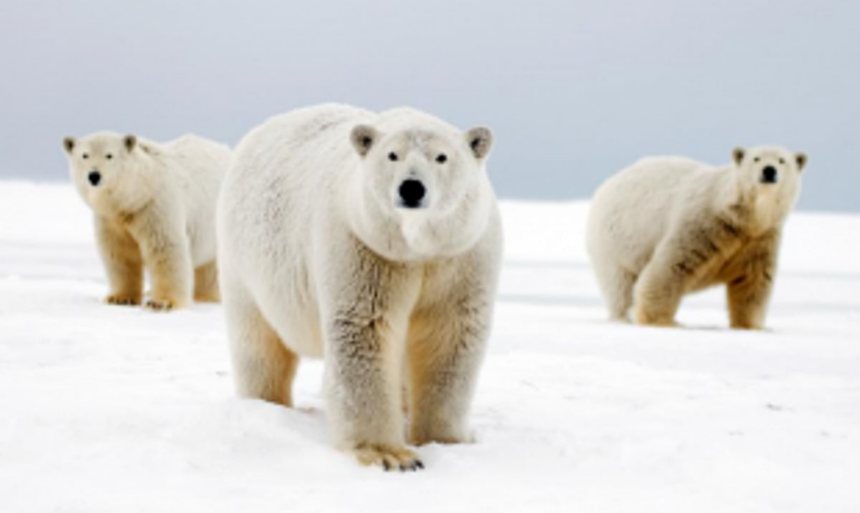
VASCO: Melting of Arctic Sea ice due to global warming is shrinking the habitat of polar bears, which is changing their hunting behaviour and forcing them to come near the human settlements around the Arctic Research Station at Svalbard in search of food.
This in the long-term not only poses a threat to the existence of the wild animals and birds, but also to the safety of scientists as it increases chances of encounter with the polar bear.
This has been observed by scientists from National Centre for Polar and Ocean Research (NCPOR) over the years from 2008 onwards from the various visits to India’s Himadri research station at Svalbard, Norway.
“The sea ice in the Arctic region is melting fast due to global warming. This has resulted in shrinking of the habitat of animals and birds, especially the polar bear. Due to this, the hunting behaviour of polar bears is changing,” Group Director, Arctic Operations NCPOR, Dr K P Krishnan told Herald.
He said, “They are coming to the human settlement areas at Svalbard, where they can get food,”
The NCPOR senior scientist said that the polar bears tend to create a hole in the sea ice to catch the seal as soon as it pops up. But due to thinning of ice mass, the polar bears aren’t able to do so. Due to this, they are looking for newer ways to find food.
“Due to thinning of ice, these polar bears don’t have any platform to stand on and hunt. This has increased the chances of citing a polar bear is much higher than before, this increases the chances of encountering the bears,” he said.
Considering this situation, new safety advisories have been issued for the researchers visiting Svalbard for their research work.
But enough precautions are being taken to ensure the safety of researchers going to the Arctic for conducting their studies.
“Now the new safety rules are more stringent. Advisories have been issued to the researchers visiting Svalbard to be more cautious in terms of where we go, what we do and what we leave behind. For example, what food you carry to the camp. We have to be more careful regarding certain things,” Dr Krishnan said.
Whoever goes to Svalbard has to undergo weapons training. Mostly, it is about understanding the behavioural pattern of the bear.
“The safety norms were there earlier also. But now it has become more stringent now keeping in view the changing scenario in the Arctic region,” Dr Krishnan said.