PANJIM: The beach, river points and the roads leading to them in Panjim were a mess on Tuesday morning. Processions to immerse Ganesha idols in water, after the five-day festival, left an additional four to five tonnes of garbage, leading to CCP planning to impose a fine and fixing responsibility on waste generators.
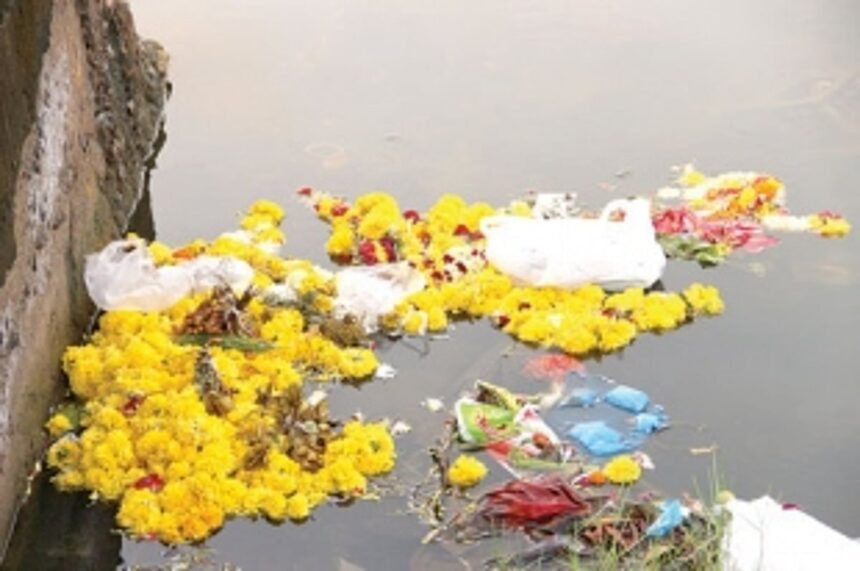
On Monday, several Ganesh idols were immersed at Miramar beach, Panjim ferry point, Dona Paula, leading to a number of plaster of Paris (PoP) idols floating on the water, broken earthen pots, rotting flowers, tattered pieces of cloth, sodden coloured paper, crackers on the beach and river banks, leading to environmental problems, as well as water and air pollution.
A large quantity of insoluble waste like wood, plastic, flowers and toxic material remained floating in the water as devotees left the area having performed the rituals bidding adieu to their beloved god. On Tuesday morning, CCP garbage collectors were seen busy collecting the waste and cleaning the area.
CCP assistant engineer Sachin Ambe said that during the immersion period across the city, four to five tonnes of additional waste is generated and collected. “On a routine day, we collect on an average 70 tonnes of garbage from the city. The additional waste is not only collected from the beach and river side but also from the roads leading to them, which are littered with garlands and crackers,” he said.
Ambe said that to develop some discipline among citizen, CCP has drafted by-laws, fixing responsibility on the waste generators. “The by-laws speak about imposing fines on the people involved in waste generation. This will also include the festive season,” he said. The by-laws are currently before the DMA for approval.
Meanwhile, GSPCB has collected pre-immersion water samples from twelve sampling points, where idols are immersed across the State.
The parameters to be tested in the analysis of water pre-and-post immersion are BOD (biological oxygen demand), COD (chemical oxygen demand), total dissolved solids, dissolved oxygen, calcium sulphate (CaSO4) and pH besides chloride.
GSPCB chairman Jose Manuel Noronha said idols should be made of traditional clay and not of baked clay, PoP. “PoP idols don’t dissolve completely in water and cause clogs and other problems in the river. It causes irreversible environmental effects on the coastal ecology,” he said.