PRATIK PARAB

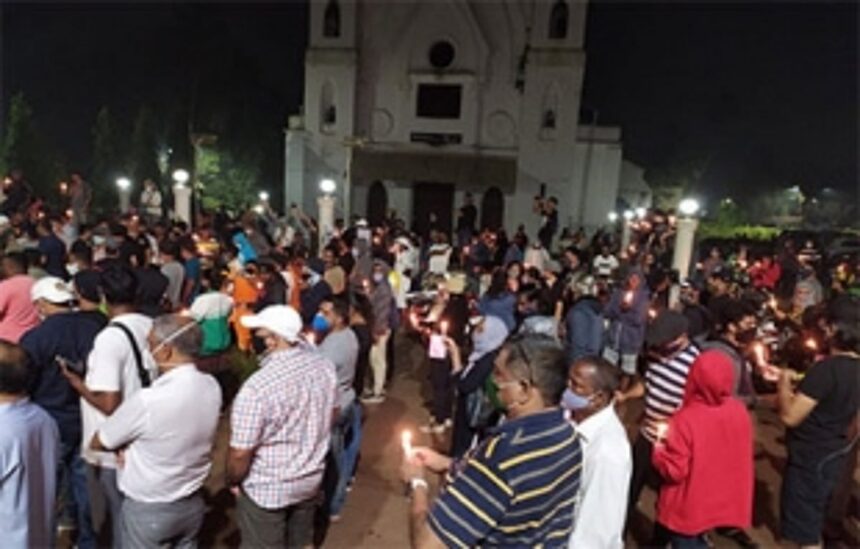
CHANDOR: As the midnight hour approached on November 1, the usual silence of the still night on the grounds of the Chandor Church was broken by a cacophony of candour. Young girls, who would have spent time hanging with friends or having a night out at the town, college students and their teachers; dyed in the wool activists, many of them ageing, politicians from AAP and the Congress, housewives, government employees, singers, musicians, footballers and coaches were on the Church grounds. It was almost as if a dose of FOMO brought them all here. FOMO, for the uninitiated, is the Fear of Missing Out. No one wanted to stay away that day.
The South-Western Railways had sought and received permission to carry out work along three railway junctions all aimed at speeding up the double-tracking work pending in these parts.
After more than an hour of speeches, with the crowd listening in, shouting slogans and songs, many with candles in their hands marched to the adjoining Guirdolim station tracks, with many seating themselves across in a symbolic exhibition of not allowing double-tracking to take place.
A sensitive government would have seen the basic purpose of such actions. They were not aimed at damaging property or obstructing government servants from doing their duty. If there was a common intent, it wasn’t to cause disruptions but to send a strong message that anti-people decisions will be challenged.
Ultimately, work on double-tracking planned for that night had to be called off. The governments had a clear strategy of retaliation. Out of more than 3000 people, they cherry picked just 6 and slapped case under significant sections. Section 143 and 145 dealing with “aggravated forms of unlawful assembly”. Those chosen were carefully chosen. Cresson Antao, the Convenor of the Goencho Ekvott and Abhijit Prabhudesai the spearhead of the Goyant Kollso Naka and four others.
In effect, 6 people have been charged with aggravated unlawful assembly in a swelling passionate crowd of 3000. It defies all logic.
But then they slipped in Section 149 of the IPC too. Section 149 of the IPC states: ‘…every person who, at the time of the committing of that offence, is a member of the same assembly, is guilty of that offence.’
It is obvious that the Sawant government of Goa is leaving no stone unturned to make sure the movement dies off. Tricks of diverting attention from the main agitation have also been used but the government using the police and the police making statements in favour of the projects that are opposed have increased the anger among the people even more.
Since when has a sitting Director General of Police ever made a comment on government projects certifying that they were cleared after much ”research”. What is his empirical data to certify this.

Agitations and struggle have been a part of Goa’s history
Be it the struggle for Konkani as an official language, for Statehood, for the medium of instruction, or even for half ticket for students, Goa has brought in the change that the people want only with State-wide agitations. In the case of the anti-coal agitations, a similar fight has been put up by the Goans.
The veteran agitators and persons who were involved in movements have said that the Government using law enforcement agencies is not a new phenomenon. The Goencho Ekvott along with several small and big groups in Goa has completed its 58th awareness meeting recently and shows no signs of stopping. As the Railways did not move from their target the agitators held big but peaceful protests which created ripples in the State and the country as well.
But the veterans who were a part of similar agitations are not amused. Herald spoke to Adv Radharao Gracias, a senior lawyer who has been a part of various agitations in Goa. Radharao said, “The Government has its own policies and programmes and the public if they don’t like, they resort to agitations. All successive governments have used these kinds of methods of stopping the agitations.”
Adv Gracias also stressed that the BJP too did it in the past and came to power, the same things were done to them by the previous governments. The same method is being used by the BJP.
He said that treating protestors as criminals is a common practice in Goa.
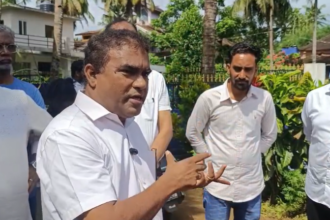
Abhijit Prabhudesai of the Goyant Kollso Naka who responded to the police summons against him, in spite of a serious accident the previous day, nursing his bruises and cuts through his body said, “This is a false FIR and is filed against only 6 persons as so many of them were present at the protests.”
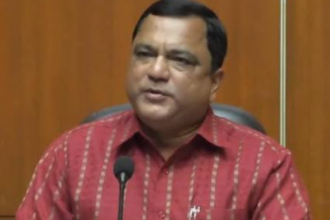
Even Curtorim MLA Aleixo Reginaldo Lourenco said, “I express my solidarity with the protestors. There were so many people who were present there and FIRs are filed against only 6.”
Senior Advocate Cleofato Coutinho said, “In all agitations, the governments use these methods to take a chance and get agitators browbeaten,”.
He said, “There are chances of agitations getting violent, they should be ready to face FIRs and violence too and I am sure they are.”
The sad reality is that battle lines have been drawn. The State versus the people. This is the tragic unending irony of fighters for the land, facing a weapon often misused by the government- the law of the land.