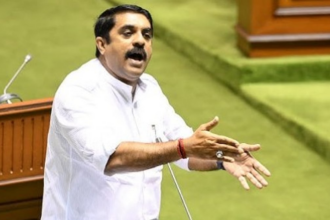
PANJIM: Chief Minister Pramod Sawant on Friday announced that the government will restart the housing loan scheme for the government employees.
Speaking at the inauguration of the Kautilya Lekha Bhavan, the newly constructed office building for the Directorate of Accounts at Porvorim, Sawant said that the new housing loan scheme will be more compact unlike the earlier House Building Advance (HBA) scheme which was stopped as it had many loopholes. The HBA scheme, started in 1988 was withdrawn by the State government in May 2020. The new housing scheme is likely to be implemented through the Economic Development Corporation Ltd (EDC).
Embracing Goa’s and India’s rich cultural heritage, Sawant said that the name ‘Kautilya’ was chosen for the new Accounts department building. The investment of Rs 44 crore in Kautilya Lekha Bhavan underscores the government’s commitment to provide state-of-the-art facilities for efficient financial management, he added.
In line with the digital era, Sawant announced the comprehensive digitisation of all departments, incorporating UPI-enabled cashless facilities. He emphasised collaborations with empanelled nationalised banks to seamlessly implement various schemes and subsidies across government departments.
Expressing his gratitude, Tourism Minister Rohan Khaunte said that shifting of the Directorate of Accounts to Porvorim signifies a positive step towards development and infrastructure. A good infrastructure provides job satisfaction, he added.
All the former Directors of Accounts were felicitated at the hands of the Chief Minister.
Earlier, Dr V Candavelou, IAS, Principal Secretary welcomed the gathering while, Siddhi Upadhye compered the function and Director of Accounts Deelip Krishna Humraskar proposed a vote of thanks.
Kautilya Lekha Bhavan is the state-of-the-art building having interior public space characterised by the presence of hand painted murals depicting various dynasties that had presence in the State and the mudra that were prevalent during those eras.