PANJIM: The government of Goa came down with all its might to rain blows, hold innocent and peaceful protestors by the scuff of their neck and rough up and shove even senior citizens into police vans, for their ultimate crime – peacefully protesting, for justice for a brother warrior.
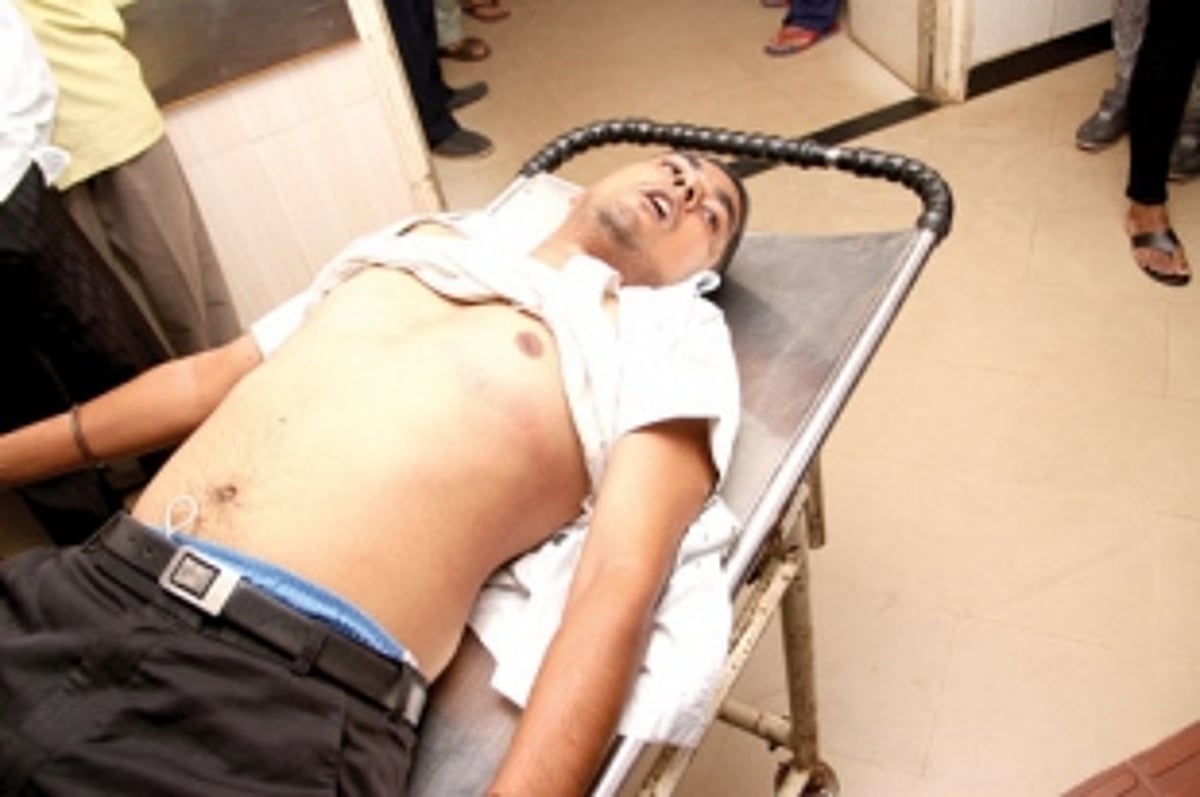
While there were many stories on this black Saturday, when a permanent wall was built between the government of Goa and the people of Goa, fiery activist Sudeep Dalvi’s cry that he was chased, brought down, punched on the face and shoved into the police van by SSP north Umesh Gaonkar and beaten again in the van, stood out as one of the defining images of state terror.
More than 300 people, out of a much larger count of people who lent support and walked the streets, were shoved into police vans and taken to the Porvorim and Anjuna police stations. The total ‘arrests’ were 105 of which 48 were men and 57 were women. Of this 15, including the priest in residence at Siolim, Father Jevino Pereira, were taken to the Porvorim police station and the rest to Anjuna. But while the math of how many were “arrested” and detained is the stuff of record books, one score was definitely settled. The people of Goa have called this the beginning of the end of this rule of power.
The sheer sight of middle aged and elderly women dragged to police vans, elderly men, old enough to be grandfathers of policemen roughed up, brought tears on the faces and rage in the hearts of ordinary people who love Goa.
Responding enthusiastically to the call of a peaceful protest which included a prayer, the symbolic show of black flags in protest against the slow pace of investigations into the death of Fr Bismarque, and the singing of songs, individuals from all walks of life were spotted wearing black and showing black flags.
An additional police force was summoned to the spot as the number of silent protesters increased. Even persons quietly standing near the roadside were picked up by the armed police and pushed in the van. Activists have condemned the police action with a woman activist alleging that police manhandled women.
“We were shoved into police vans and manhandled for doing nothing. We were standing around silently,” she said. Another activist, refusing to name himself said the police dragged them into the police vans. “We were held tightly by our hands. Some of them were pulled off by their shirt collars and trousers, and pushed into the police vans,” he alleged.
“We were told to go near the cross at the jetty, speak and say slogans. When we took out the banners of Fr Bismarque, the police refused to let us display or put them up. We then said, pull down all IFFI banners and advertisement hoardings. Can’t a son of the soil who is martyred have his banner displayed in a peaceful agitation? This was the flashpoint,” said activist and an ally of Fr Bismarque, Kennedy Afonso.
The manner in which the police reacted shocked everyone. While Dalvi narrated how SP North Umesh Gaonkar chased him down, a middle aged lady said her blood pressure shot up when she was getting roughed up. Seeing her condition the police was forced to rush her to GMC instead of taking her to the Anjuna police station.
Even those who were alone and not in an assembly of four or above which would attract section 144, like the Priest in Residence at Siolim Father Jevino Pereira, was held and goaded into a police van while he was speaking to an activist on the road near the ferry point. The shocked priest asked, “What am I being arrested for?” to which there was not reply. He then said that he was priest and was met with cold silence.
The government was at work
The scene then moved to Anjuna as seven police vans packed with innocent men and women, including the elderly and infirm sped to Anjuna, out of Panjim’s zone of glitter, to ensure that Goa’s very own men and women did not come in the way of the IFFI, the annual carnival, and its posh VIP’s. At Anjuna the protesters were confined and detained for hours. Architect Dean D’Cruz was furious that his wife and daughter were among those picked up and kept the station.
Quite obviously the order from the political bosses was to keep protestors at bay and not to slap charges because they had done really nothing to be booked under serious offences.
By this time the seriousness of the police action spread like wildfire across social media with pictures of police brutality uploaded on Facebook and Twitter. The anger then multiplied manifold. The number of protestors jumped by many thousands by the time the police decided to let everyone go.
It was dark. But one got the feeling that the sun had truly set on the BJP empire in Goa, as the dawn of a new people’s movement to reclaim Goa, rose from the ashes of this black Saturday.