Resumption of Mining activities: Biggest Challenge
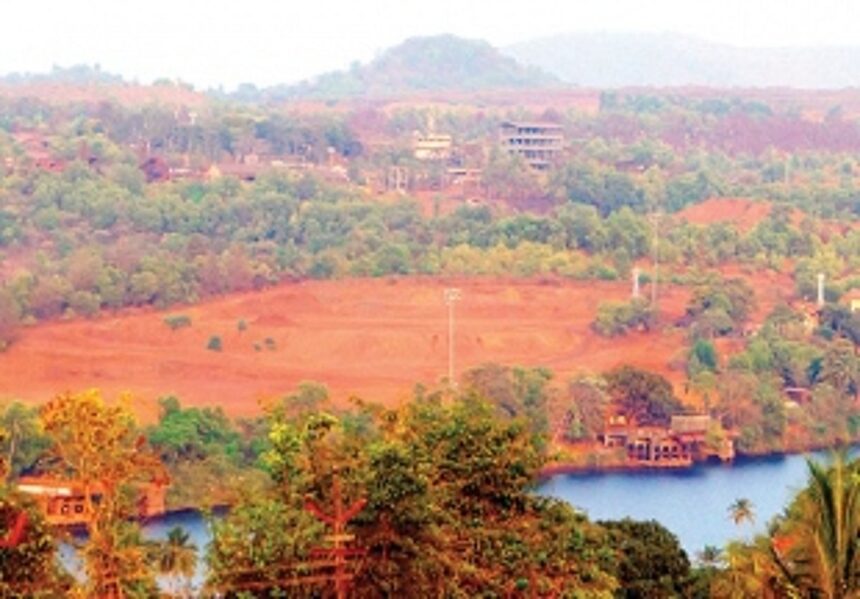
For any prospect of mining to resume in this year and the decade ahead, the biggest challenge the industry and the government is legal arena. Mining has been shut since March 2018, after the Supreme Court quashed the second renewals granted to 88 mining leases terming it as “illegal”.
Since then, the government has been exploring options to recommence the once-flourishing iron ore activities, which serves as livelihood to a population of nearly three lakh. On top of this, mining used to be the biggest source of revenue generation for the State. But with no clear plan in mind, the government is in a fix as how to resume the extraction activities.
“The future of the mining industry for the next ten years is bleak, if it isn’t commenced in a professional manner. Also, with the lack of government planning and willingness, we foresee no future for this sector in Goa,” Goa Mining People’s Front (GMPF) leader Puti Gaonkar said.
Options before the Government
Mining Corporation:
The Pramod Sawant-led government is exploring the possibility of forming a ‘Mining Corporation’, as it finds no other way to resume the iron ore activities in the State. But the question is whether it is viable. Starting and running the government-run Corporation, to be headed by the Chief Minister cum Mines Minister, isn’t likely to be an easy task. Though, the Corporation can be put in place through a legislation, to ensure its effective functioning; without having any professional experts in the setup, it could lead to further disaster for the sector.
“We have a Mines Department in place, but it is not in a position to function effectively because they don’t have the required engineers, advisors and other experts. If the department itself is lacking on this front, who will run the corporation?” questioned a Mine owner, on request of anonymity.
Another mine owner Harish Melvani feels that Corporation is the best solution. “The government will have to get onboard extraction contractors, who are capable of getting surface rights, contractors for marketing and empanelment of beneficiary plants. If everything works out well and is done in strict supervision, then only the Corporation will be a solution to ensure sustainable mining in the days to come,” he said.
Auction of leases:
Neither the government nor the industry experts are in favour of this option. In today’s world, it is impractical to take away a mine from the existing operators, as most of the infrastructure is owned by them. So, it may not be possible to auction the mines. If the plan to auction Goa mines is aimed at increasing revenues, then the Central Government can increase royalties and taxes at any given time.
“Auctioning is a lengthy process and it will require at least another two years. Considering the past records of Goa mines, it will also be very difficult to get the bidders, as no one would like to invest in something, which tomorrow can be marred with litigations and opposition,” environmentalist Rajendra Kerkar said.
Legislative Solution:
For which, the Central government is not keen on. Goa is seeking the Centre’s legislative intervention in the Mines and Minerals (Development and Regulation) 2015. One contention is that the Goa leases ought to qualify for the deemed 50-year period granted to mining leases under Section 8 A (3) of the MMDR (Amendment) Act 2015, and be valid until 2037, and not come up for auction prior to that year.
Further, the State is contending that the Goa Daman and Diu Mining Concessions (Abolition and Declaration as Mining Lease) Act, 1987, currently pending challenge before the Supreme Court – was retrospectively applied to the leases from 1961 onwards, rather than prospectively from 1987.
“The legislative solution could offer the fastest relief for both the State and the people dependent on the industry,” Melvani said.
Wait for the Judicial outcome:
The State is currently banking on two different petitions that are pending before the Supreme Court.
An appeal filed by a mining company (challenging the 1987 Mining Abolition Act), is likely to be heard by the Apex court on January 8. Vedanta had moved the Supreme Court challenging the 1987 law, which abolished mining concessions granted by the Portuguese government. Union Mines Ministry, had in March, filed interlocutory application (IA) for an early hearing in the batch of matters related to Goa, Daman and Diu (Abolition and Declaration of Mining Leases )Act 1987. Goa Mining People’s Front had also filed IA in the matter.
Secondly, the State government had filed a review petition in December, challenging the Apex Court order banning mining activities in the State through an order dated February 7, 2018.
184 mining leases expiring in March
For the industry, this is something that definitely worrisome. While, there appears to be no future for those 88 mining leases, which are quashed by the Supreme Court, there are 184 more leases expiring on March 31. The State will be heading for a serious crisis in this sector in the days to come.
Of these, 124 leases can be taken up for ore extraction activities in the future through an e-auction, for which the State government has not initiated any process.
Of the total 184 non-working mines, there are 60 leases that fall in the protected areas of Wildlife Sanctuaries and national park, within the buffer zone and hence cannot be taken up for mining in future. The remaining 124 mining leases can be taken up for mining in the future through an e-auction.
As per the Central government’s directions, the e-auction process of these mines had to be initiated in September (last year), to ensure that by the time of the leases’ expiry, they can be immediately put in operation.
“The government is yet to take a decision on these leases,” informed a senior official from the Mines Department.
E-auction of extracted ore
With bidders showing lack of interest in Goan ore, almost four million tonnes of extracted ore in 2012, is still lying at various jetties, sites, etc. The e-auction process, which had begun in January 2014 following the Supreme Court’s directions, has been held so far in 23 phases with 11 million tonnes of ore of the total 15.5 millions, being sold, generating a revenue of around Rs 1042 crore.
Unless the government e-auctions the balance ore and ensure that all the e-auctioned ore is transported from the sites, Government cannot resume fresh iron ore activities as per the directions of the Supreme Court.
Lost Market
In the past decade, when Goa’s mining industry was struggling, Australia and Brazil made a fortune ramping up their iron ore production to meet the never-ending demand from China, which was the State’s only biggest market for low grade ore.