PANJIM: The State-run Kadamba Transport Corporation Ltd (KTC) barely manages to earn 50 percent of its total expenditure. As such the Corporation, despite having several earning resources, depends almost completely on government grants.
As per information available with Herald, since April 2014 KTC has had a total loss of Rs 268.09 cr. In 2014-15 the Corporation made a loss of Rs 71.5 cr, in 2015-16 a loss of Rs 84.11 cr, in 2016-17 it suffered a loss of Rs 87.83 and 2017-18 (up to June) a loss of Rs 24.65 cr.
However, the Corporation’s accounts take a very different view of the financial situation, as the Corporation considers the government grants as its income and thus reduces the losses on paper. (See table)
As per KTC, it made a loss of Rs 18.26 in 2014-15, a profit of Rs 5.19 in 2015-16, again a loss of Rs 7.56 in 2016-17 and a loss of Rs 2.08 cr until June this year.
To make up for losses the State government has given the Corporation crores of rupees in grants. In 2014-15 a grant of Rs 60 cr, in 2015-16 a grant of Rs 70.97 cr, in 2016-17 Rs 90 cr and in 2017-18 (estimated) Rs 78 cr were given.
The grants to KTC are in form of subsidies (fixed Rs 60 cr), Goa Bus Replacement Scheme and subsidies to commuters for monthly pass system.
KTC earnings
KTC major revenue is from bus transport, parcel service and luggage, shops and licence rents. However, this revenue hardly makes up the Corporation workers salaries.
In 2014-15 KTC’s transport income was Rs 86.86 cr, in 2015-16 it was Rs 76.97 cr, 2016-17 Rs 75.78 and in 2017-18 Rs 20.78 (until June).
Besides this, KTC’s other income comes from profit on sale of buses and other vehicles, crane hire charges, other income, transfer fee, condemnation certificate, stand fee, parking fee, pass application fees, fine recovered from employees, forfeited deposit, EMD, RTI receipts, postal commission etc.
Rent of advertisement displays/hoarding at bus stands, ground rent, toilet fee collection, hire receipt of hall, payment gateway fees, sale of scrap, interest income dividend received, insurance claim also add to KTC’s income. These resources have added another Rs two to three crores to KTC’s annual income.
Expenses double of income
While KTC’s revenue hardly touches Rs 80 cr annually, the expenditure seems to be double that. Moreover, the revenue hardly even makes up for salaries of the employees.
In 2014-15, KTC’s expenditure was Rs 161 cr as against revenue of Rs 89.5 cr, in 2015-16 the expenditure was 163.41 cr against revenue of Rs 79.30 cr, in 2016-17 the expenses was Rs 167.38 against revenue of Rs 79.55 cr, while till June this year the expenses were 46.03 cr against revenue of Rs 21.38 cr.
The major expenses are through salaries, operational and maintenance expenses, interest on borrowing and depreciation. The Corporation’s salary bill in 2014-15 was Rs 87.9 cr, Rs 97.23 cr (2015-16), Rs 93.82 (2016-17) and Rs 25.80 (2017-18 up to June).
KTC MD says….
After failing to get a response on phone, Herald approached the KTC Managing Director Derrick Neto for his comments on the functioning of the Corporation but he refused to speak.
As the reporter approached him in his office, he refused to meet saying come with an appointment but later enquired on what subject the meeting was sought. When informed that the Herald needs a clarification on the finances of the KTC, he replied, “We do not want to speak anything on the functioning of the KTC.”
Chairman speaks…
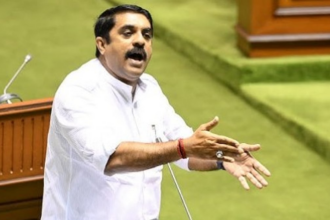
KTC chairman Carlos Almeida, however, explained that the losses are generally due to the depreciation on buses. “It’s not that we are only making losses, the losses are generally because of depreciation on buses,” he said.
When pointed out that the Corporation was depending heavily on government grants, he said, “The state-owned transport sector will not make profit anywhere in the world. We have to depend on grants as we are serving the non-profitable routes linking the rural to urban areas,” he said, adding, “However, the Corporation is trying to use its other resources to earn revenue.”