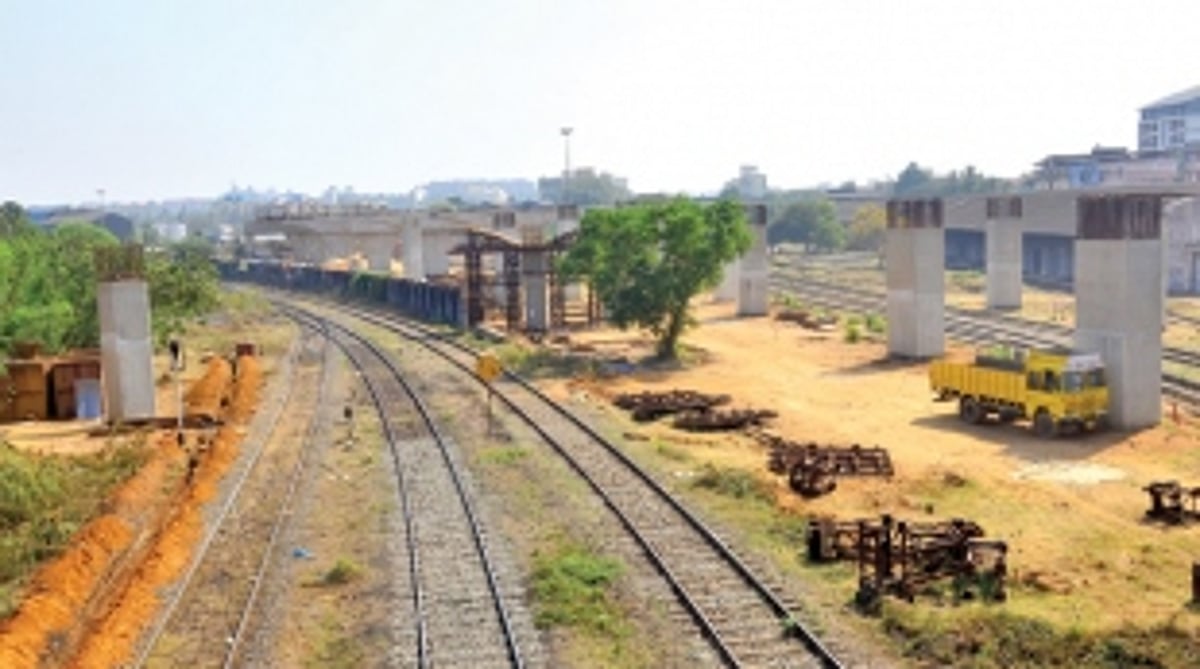
The Ministry of Environment (the Ministry of Environment, Forests and Climate Change) on 29th August 2017, gave Goa’s state government permission for diversion of 5.18 ha of forest land in Loutolim for the construction of a 40m wide, and 3km long “Missing Link” four-lane highway.
The letter also stated that a “compensatory afforestation shall be raised over 5.18 ha of identified non-forest land in Sy. No 23/1 in Rumbrem village of Sangem Taluka at the cost of the user agency.”
Compensatory afforestation happens when a forest land is diverted under Section 2 of Forest Conservation Act 1980. The agency using the land for non-forest purpose is supposed to, with the help of the state’s forest department, identify a non-forest land of equal measure and provide appropriate funds for its afforestation.
However, the 5.2 ha land identified in Rumbrem village, survey 23/1, is already a regarded as a forested region, with thick vegetation, and fully formed canopies. In a telephone conversation, Mr. Shetgaonkar said, “It could have thick vegetation, and afforestation is not compulsory. Once it comes under Forest Department we will conserve it.” But Compensatory afforestation on forest land is a violation of guidelines under Forest Conservation Act 1980.
Therefore, the manner in which the preparatory steps have been taken to construct the missing link appear arbitrary. At the same time, villagers questions certain developments which only serve to strengthen the belief that this is a pattern.
“All roads of Loutolim have six metre wide roads. If we wanted this link, we would max have a 12m road. What in the world is the point of a 40m metre road??” questions Ramiro, a villager. “Also, couldn’t they construct a bridge, instead of destroying our forests like this?” he asks.
This reporter who was tracking some of the locals and other stakeholders who were looking for more information on the project Missing Link project, noted one PWD Division 14 official flatly say, “This is a matter of cost-benefit analysis. A road will cost us 1.25 lakh per sq m, and a bridge will cost us 14 lakh per sq.m. You do the math and see it for yourself.”
But the damage to the ecology and environment of Loutolim is also heavy. The top soil of the forested slopes of Loutolim is laterite in nature, and therefore acts as a sponge during monsoon season, recharging the water table and acting as a natural aquifer. Below it is hard basalt. Getting rid of this soil is detrimental for the water supply of Loutolim.
One concerned resident noted that the filling of the low lying land will stop the natural flow of the water gushing from the sluice gates into the khazan land. “Our fields will get stagnant, the soil will become marshy and unusable,” he lamented.
Interestingly when the Sarpanch Inacinho Fernandes was asked about the “missing link” being built for the transport of coal trucks, he said the road was being constructed to reduce vehicular traffic on the narrow village roads, and that it was a “good thing.”
But villagers aren’t ready to accept this. “We have managed to keep our village concrete free so far,” says Mario Pereira. “We will do whatever it takes to keep the peace alive,” he signs off