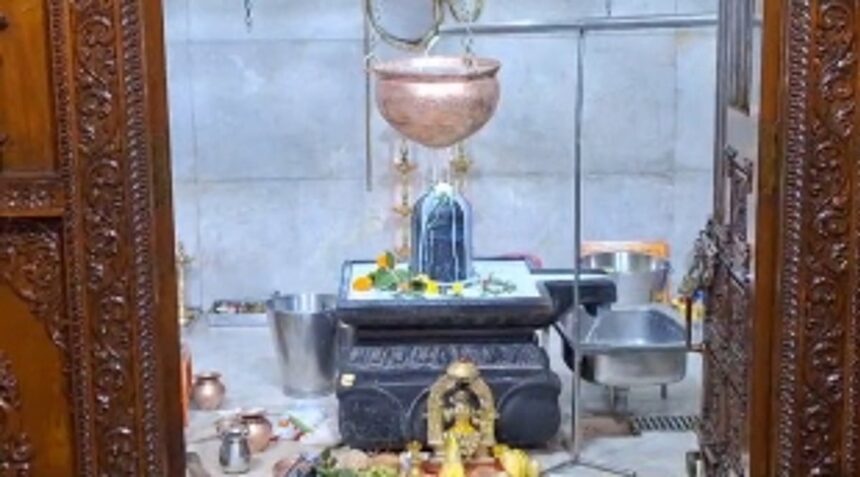
The fourteenth day of the Phalguna month on the Hindu calendar is celebrated by Hindus as Mahashivratri, with great devotion and religious fervour. On this day, the devotees wake up early and worship the Shiva Linga by offering cold water, bael leaves and milk to the god. It is believed that worshipping Lord Shiva on this day helps one achieve moksha.
The day begins with a dip in a water body close to a Shiva temple. The festivities continue until late that night by reading holy scriptures and partaking in fasts. Several Shiva temples across the state celebrate the festival and have a night-long vigil, wherein devotees sing hymns and devotional songs in praise of Lord Shiva. They break their night-long fast in the morning, after their prayers.
Many flocked to nearby lord Shiva temple in the morning, where the pundits performed the pooja, and gives prasad. This day is in the honour of Lord Shiva, who destroyed the ego and battle of supremacy between Lord Vishnu and Lord Brahma. As per another legend, Lord Shiva got married to Goddess Parvati on the night of Maha Shivaratri and hence, this night was in the honour of the union of Shiva and Shakti.
According to Hindus believes, Maha Shivratri is the night when Lord Shiva performed the cosmic dance of creation, preservation and destruction. It is the popular beliefs associates Maha Shivratri with ‘The Legend of Neelkanth’. A pot of poison besides other things was created during the Samudra Manthan or the churning of the ocean. Lord Shiva drank the poison to save the universe from its annihilating effects. The other Gods danced all night to protect Lord Shiva from the harmful effects of the poison and keep Him awake. Though the poison didn’t harm Lord Shiva, it turned His neck blue in colour, which is why, He is called the ‘Neelkanth’.