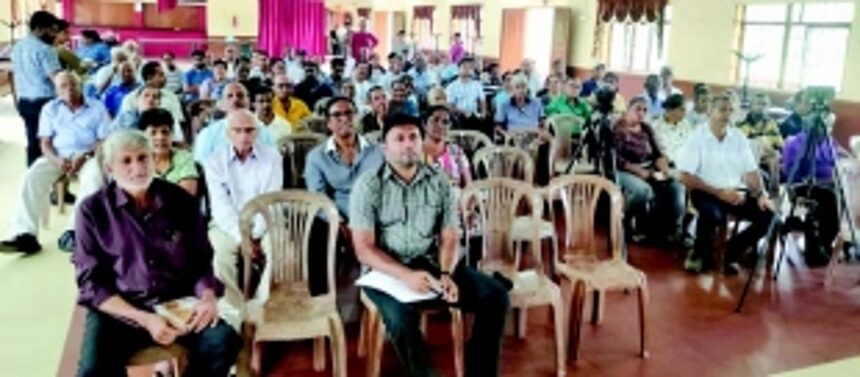
MARGAO: The Majorda-Utorda-Calata village panchayat in Goa organised a special gram sabha meeting to gather suggestions for the State’s draft Agriculture Policy. The meeting, which lasted over three hours, was chaired by Sarpanch Linet M Vaz and attended by various officials. Farmers and villagers actively participated in the discussion, sharing valuable insights and recommendations.
Vincent, a dedicated farmer from Majorda, highlighted the role of Goyche Fudle Pilge Khatir (GFPK) in initiating discussions at the panchayat level. He emphasised concerns such as labour issues, delayed subsidies, and soil erosion affecting local crops.
Jack Mascarenas, GFPK President, presented 105 suggestions from GFPK’s expert committee, underscoring the need for a Land Use Policy in Goa. He cited the example of Saudi Arabia’s transformation from a desert nation into a wheat exporter through modern farming practices.
Amancio Fernandes, a retired deputy director of Agriculture, discussed the importance of self-sufficiency. He advocated for the ‘Green Revolution’ in paddy and other crops, the ‘White Revolution’ in dairy/milk production, and the ‘Blue Revolution’ in fish farming. Empowering Zonal Agriculture officers and establishing vibrant farmers’ clubs were also emphasised.
Carmelito Andrade, a farmer and certified drone pilot, promoted the use of technology in agriculture, including GIS mapping and early disease identification using drones. He stressed the fusion of traditional farming knowledge with modern technology.
Santan Pereira, GFPK Secretary, encouraged youth involvement in the panchayat and agriculture sector, citing Indian Constitutional amendments as a source of authority for the panchayat to work effectively for farmers’ welfare.
The meeting resulted in several suggestions, including addressing field access issues, ensuring timely availability of tractors and harvesters, standardising labour pricing, providing direct subsidies to avoid delays, creating farmers’ clubs for Utorda, addressing cattle grazing concerns, reserving spots for farmers’ children in educational institutions, incorporating agriculture as a school subject, and offering subsidies on both water pumps and electricity for farming equipment.
These suggestions were documented and will be forwarded to the State Agriculture Department. The Sarpanch expressed gratitude for the active participation of villagers and GFPK members, highlighting the importance of considering the concerns and ideas
of the farming community in the state’s policy-making process.