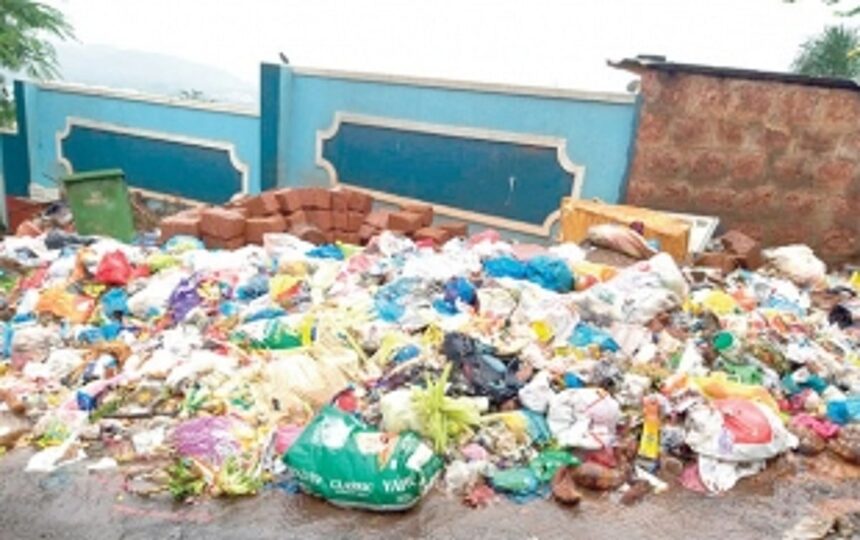
MARGAO: The Margao Municipal Council, on Thursday, sent at least 30 tonnes of wet waste to the treatment plant at Sonsoddo. However, the Margao town seems to be not falling in line with segregated waste supply. Heaps of mixed waste was lying in Margao till late Thursday night. This waste will reportedly be sent to the Sonsoddo dump in the end.
The MMC has managed to notch up the amount of wet garbage sent to the plant. By afternoon the MMC trucks took 20 tonnes of garbage to the plant which increased to 30 by evening. Now, since the plant is a composting type the wet waste will be lying at the plant for over 20 days after which it will be finally processed.
It is also being claimed by Fomento that they have manually removed at least a couple of tonnes of plastic from the wet waste.
Margao MLA Digambar Kamat is expecting more responsibility from the residential areas as social media is flooded with photos of garbage strewn in different places in Margao.
MMC officials informed that the garbage wasn’t picked as it was mixed in nature. Photos of at least three major residential areas overflowing with mixed garbage surfaced on the social media. One was a photo of a heap of mixed waste on Monte Dongor downhill garbage bin and another of the garbage spread on the main road opposite old Hari Mandir. The third picture was of an area near the Costa Factory in Aquem. Besides, there are other areas where heaps of garbage was unpicked.
Commenting on the scenario, MLA Kamat said, “Emphasis needs to be placed on putting the system of picking garbage from residential areas in order. That will solve 50% of the problem the town is facing.”
Speaking on the ‘politics of garbage’ Kamat said, “The problem needs to be addressed with groundwork which my team of councillors and I are putting in.”
He also said that after the MMC hires the labourers the problem would be resolved to a large extent. The Margao MLA acknowledged the fact that the mixed garbage is not being picked and rightly so. “The problem is of the garbage coming from commercial establishments at nights and in secret. Until some penal actions are initiated against such defaulters, the acts will continue,” Kamat added.