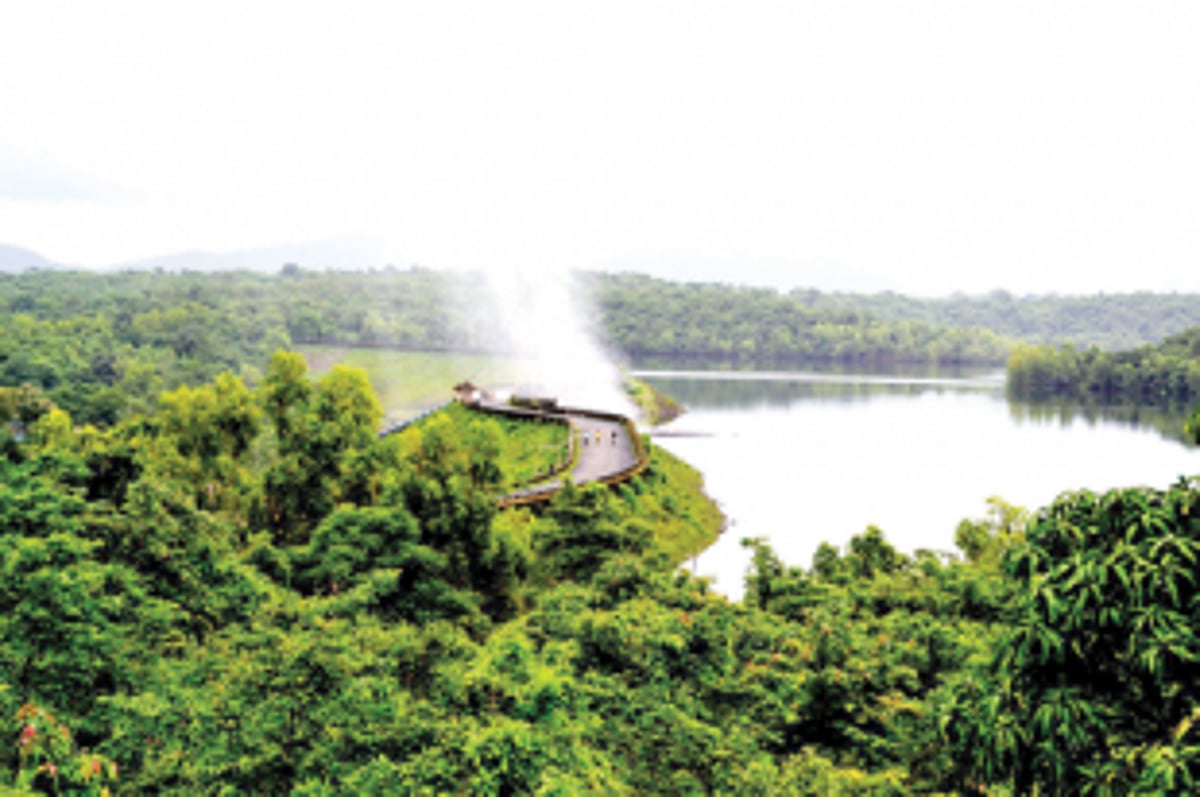
2012 – The year of the mining ban is significant as the manganese content had reached six times the permissible limit. PWD had conceded that this was due to the mining dumps stacked alongside the rivers feeding water to the reservoir that were getting washed into it due to rains and that it was difficult to control the run-off as it has been coming from several places.
At that time, when the issue was raised in the assembly, the PWD minister Sudin Dhavalikar stated that he had the department direct the mines and the forest and environment departments to clear all mining dumps located within 200 meters of Selaulim dam along with an assurance that the house that concentration of manganese in Selaulim water will be brought to below 0.5mg.
The then chief minister Manohar Parrikar had gone to the extent of stating that there was nothing to worry about as the water that is finally supplied to the consumer’s passes through the filtration process.
Parrikar had further pointed out that process of shifting the intake source was not easy and that their report indicated that at least 15 feet of the usage section of the storage is already filled with mud which was serious.
His predecessor Laxmiant Parsekar was the then health minister and more importantly, the head of the Goa Legislative Assembly’s adhoc committee on forests. That panel had suggested that that water quality in Selaulim dam be monitored as mining rejects from nearby dumps flow into it.
Parsekar had in 2012 said that the government should have an appropriate mechanism to undertake regular inspections to prevent the flow of mining rejects in river bodies, especially in the vicinity of Selaulim dam at Sanguem.
However there was hardly any action on the ground to match the lip service.
Two years later, in the year 2014, the CAG report tabled in the assembly session stated that the manganese content in the water of the Selaulim reservoir was much higher than the acceptable limit.
The report further stated that manganese deposits in the Selaulim dam water has been one of the major constraints faced by the department (Public Works Department) in the Selaulim water treatment plant.
The CAG report made reference to reports from the PWD and observed that “manganese deposit in the dam water was due to concentration of many mining activities in the surrounding catchment areas of the dam as the mining dumps percolate to the dam water during monsoon and remains in the water in soluble condition”.
The CAG report had called for immediate action to ensure that the water treated at Selaulim conforms to acceptable standards
Incidentally before the mining ban was imposed for years environmentalist and anti mining activities were crying hoarse about the illegal mining and how it was affecting the catchment area of the Selaulim reservoir and water bodies and rivers across the state and how it was affecting drinking water as well. In the year 2010, the Ministry of Environment and Forest (MoEFF) received the official report from the Goa Team on Western Bypass.
The MoEF Western Ghats Ecology Experts Panel chaired by Dr Madhav Gadgil that had had illustrious members including Claude Alvares had recommended and insisting that all the Mining leases in the buffer of Selaulim Dam to be terminated.
Claude Alvares had stated that The National Environmental Engineering Research Institute (NEERI) had established that the Selaulim dam water has iron and manganese in excess of norms. Claude had blamed this on the small intensively mined area within the catchment areas of the reservoir.
Towards the end of the erstwhile Congress government, former chief minister Digambar Kamat had replied in the assembly that there were 19 mine sites are located within 500 m of Selaulim water reservoir, from which 17 were within 200 m of the reservoir and nine of those mines extracted iron ore and manganese from those sites.
Later on, the Justice Shah Commission had identified three mines around Selaulim dam area, covering 83 hectares operating since 2003, working without valid mining leases.