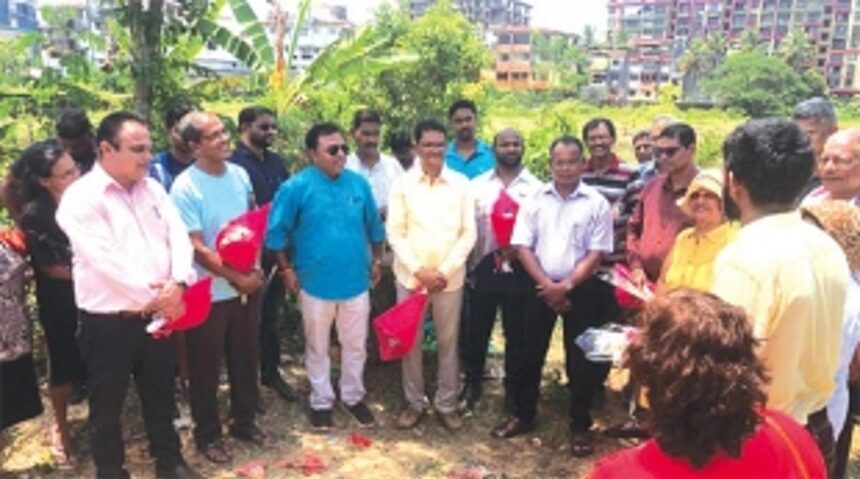
MARGAO: In a milestone that marks the end of a 35-year-long hiatus, the long-abandoned fields surrounding Saipem lake in Navelim are finally being revived. Farmers from the Saipem lake area, supported by the Navelim panchayat’s Village Development Committee (VDC) and the Don Bosco Agricultural Unit, commenced work on a swathe of one lakh square metres of fields on Tuesday.
Before the commencement of labour, Fr Gabriel Coutinho, the Navelim Parish Priest, blessed both the fertile soil and the farmers.
Fr Coutinho highlighted the various agricultural initiatives already underway in different parts of the village and expressed his firm belief that Navelim has the potential to become a model of agricultural prowess and greenery for the entire State. He reassured the community of the Church’s support and assistance.
Fr George Quadros of Don Bosco reiterated their commitment to the project and assured the farmers of their guidance throughout the initiative, by drawing from their successful experience in similar projects across Goa.
The Navelim VDC issued a stern declaration, warning that if the issue of untreated sewage discharge into Saipem lake persists once cultivation resumes, the panchayat will hold all relevant authorities, including the Public Works Department (PWD), Sewerage Department, and Margao Municipal Council (MMC), accountable on behalf of the local farmers. The farmers’ decision to resume cultivation comes after years of abandonment due to the contamination of Saipem Lake and River Sal with raw sewage.
Navelim Sarpanch Paulo Pereira recounted the history of the project and shed light on the hardships faced by farmers in the past. Elected representatives from neighbouring villages, including the Zilla Panchayat Member, were present at the event.
Farmers in attendance celebrated the revival, expressing pride in continuing the legacy left by their ancestors. They said that restarting cultivation would secure the fields’ future, ensuring their dedicated use for agricultural purposes. Several farmers expressed suspicions that the deliberate release of sewage into the fields was a ploy to discourage cultivation and pave the way for future real estate ventures.
The farmers acknowledged that success would require time and several crop seasons,
but their determination remained unshaken, in the shared vision of a greener and self-sufficient future.