PANJIM: The BJP-led State government has decided to introduce the National Education Policy (NEP) 2020, beginning with the “foundation stage” – that includes three years of pre-primary school, Class I and II – from the coming Academic Year 2021-22, across all government-run schools. Aided schools would be directed to implement the new education system, as per infrastructure availability.
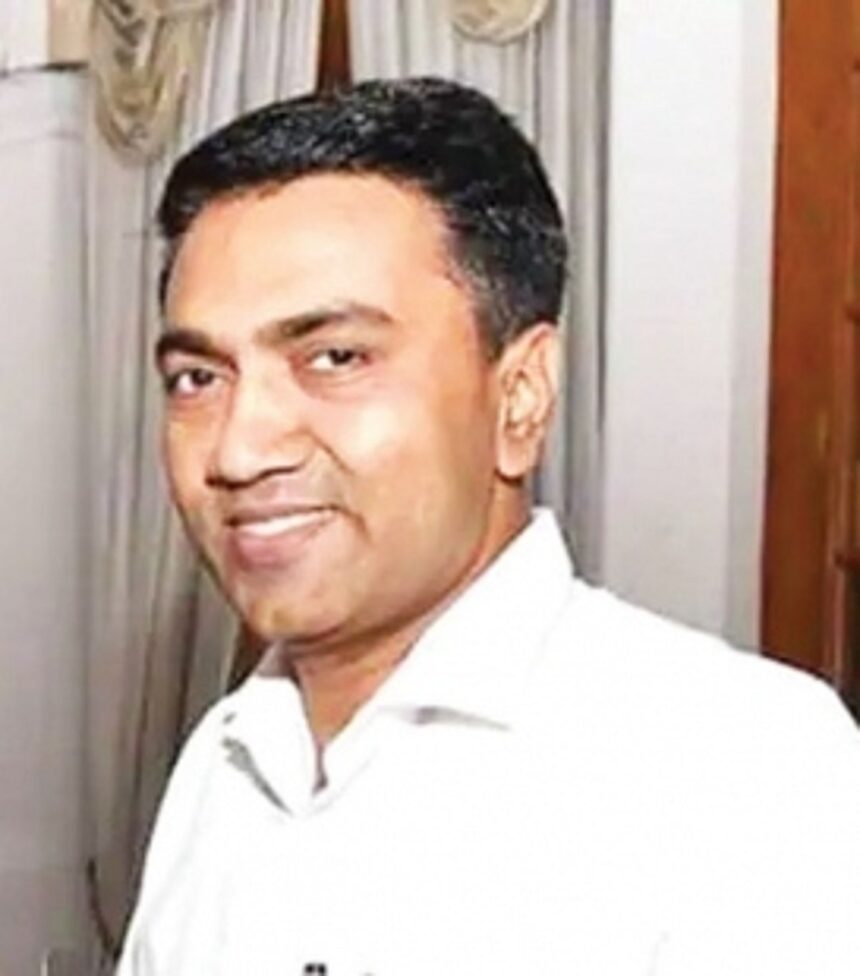
The preliminary decision was taken during the Empowered Committee meeting on NEP, chaired by Chief Minister Dr Pramod Sawant. The meeting, however, has kept on hold the decision with regards to higher education considering that the Centre is yet to issue clear guidelines on the same.
The meeting was attended by the chairman of Task Force appointed to draft the road map for school education MLA Subhash Shirodkar and for higher education former CM Laxmikant Parsekar along with Director of Education, Higher Education and Technical Education.
Speaking to media persons post the meeting, the Chief Minister said that the preliminary decision has been taken to implement the foundation course, including three years of pre-primary school and Class I and II, from the coming academic year onwards.
“It would be implemented across all the government-run schools that have classes from I to X. We will bring the pre-primary classes also under the same roof. Similar directions would be also issued to the aided schools,” he said adding, “The notification would be issued within a fortnight after taking all the stakeholders into confidence.”
The new education policy proposes new curricular and pedagogical structure, with 5+3+3+4 design covering the children in the age group 3 to 18 years. Under this there is five years of the Foundational Stage: 3 years of pre-primary school and Grades I, II.
As per the current education system, Nursery, Lower KG, Upper KG is under pre-primary category, while the primary includes Class I to IV.
The policy aims to universalise the pre-primary education (age range of 3 to 6 years) by 2025 and provide foundational literacy and numeracy for all by the same year.
Speaking further, Sawant said that implementation of the foundation course, will help to understand the shortcomings and requirements, over the next one year. “We will be looking into the infrastructure requirements, availability and teacher strength,” he said.
Responding to a question, the Chief Minister said that almost 90 per cent schools are equipped with the required infrastructure. “There will be issues pertaining to 10 per cent schools, where the government is ready to intervene and resolve it,” he said adding, “The aided schools in fact should have all the material in place, considering that they run classes from I to X.”
He further said that the government is yet to take any decision on the higher education level. “There is no clarity from the Central government as how to go ahead with it. So we are waiting for their decision, until then we cannot take any call,” he said.